Ongoing Challenges in Learning

.

I’m so behind in blogging, and I miss it.  I’ve been teaching the girls a lot.  Rather, I’ve been teaching them how to study.   We are making new starts, with English as their language of study.    We made this change from Bengali for many reasons.  One is that I was never able in five years to find anyone to take over the responsibility of managing their course work, homework, tests, study methods, etc.  And coming from the US, I had zero credibility with the Bengali teachers I hired.  As the girls get older, some of the fundamental weaknesses show up.

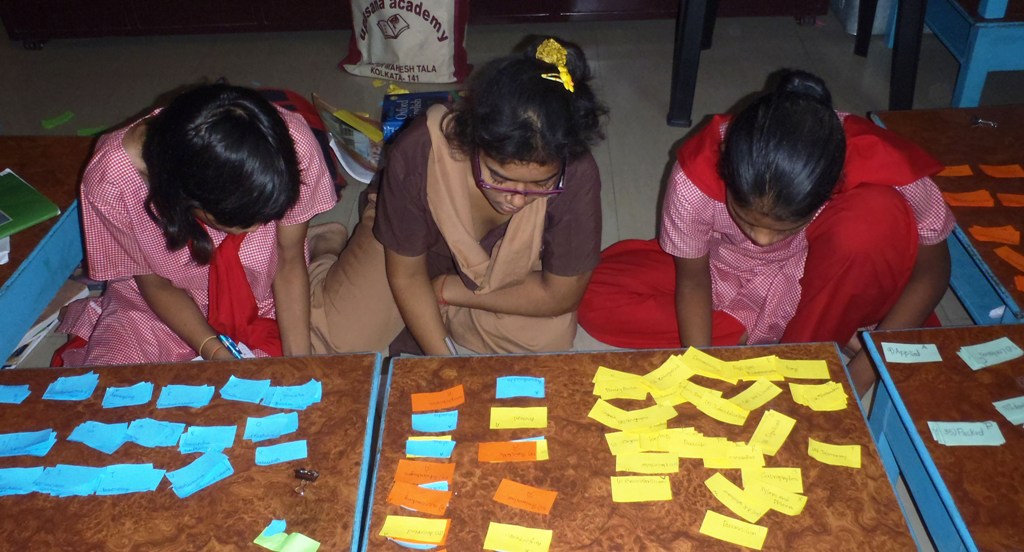
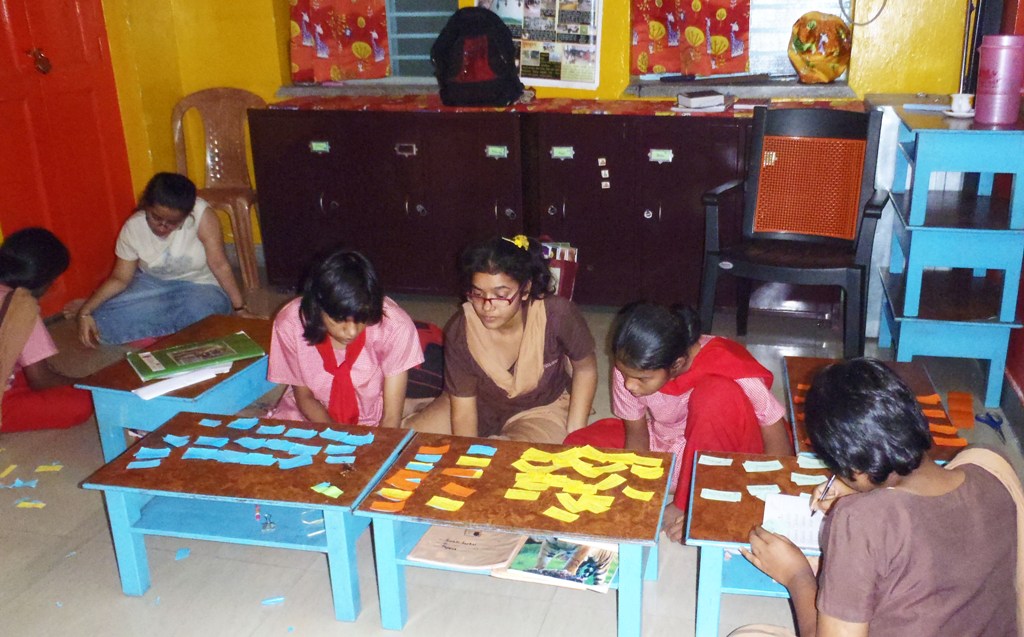
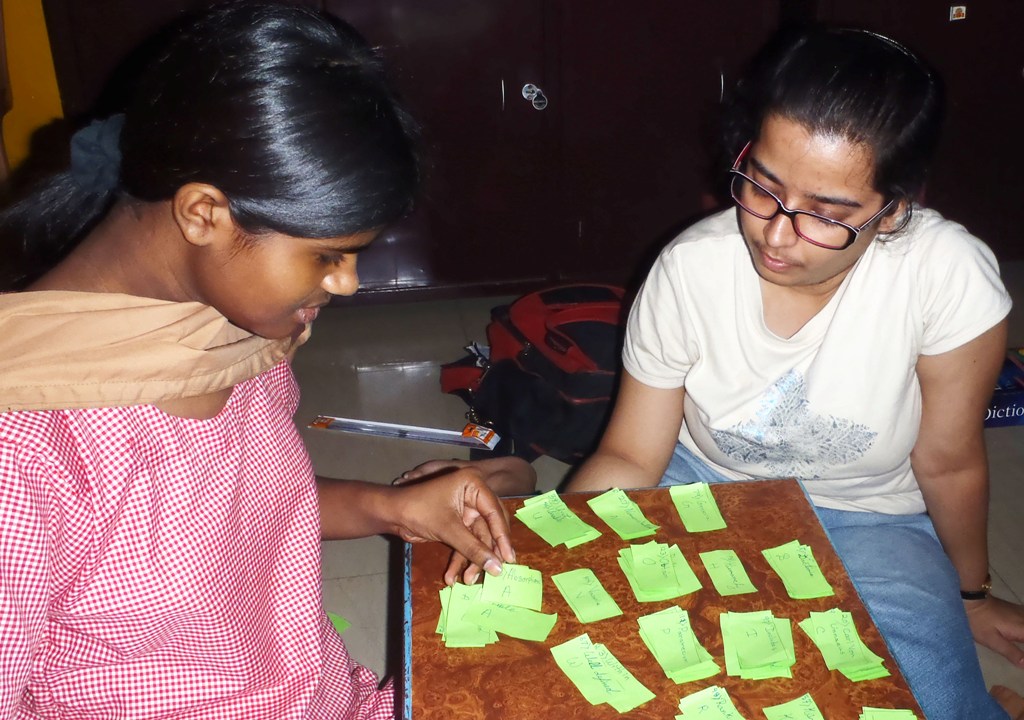
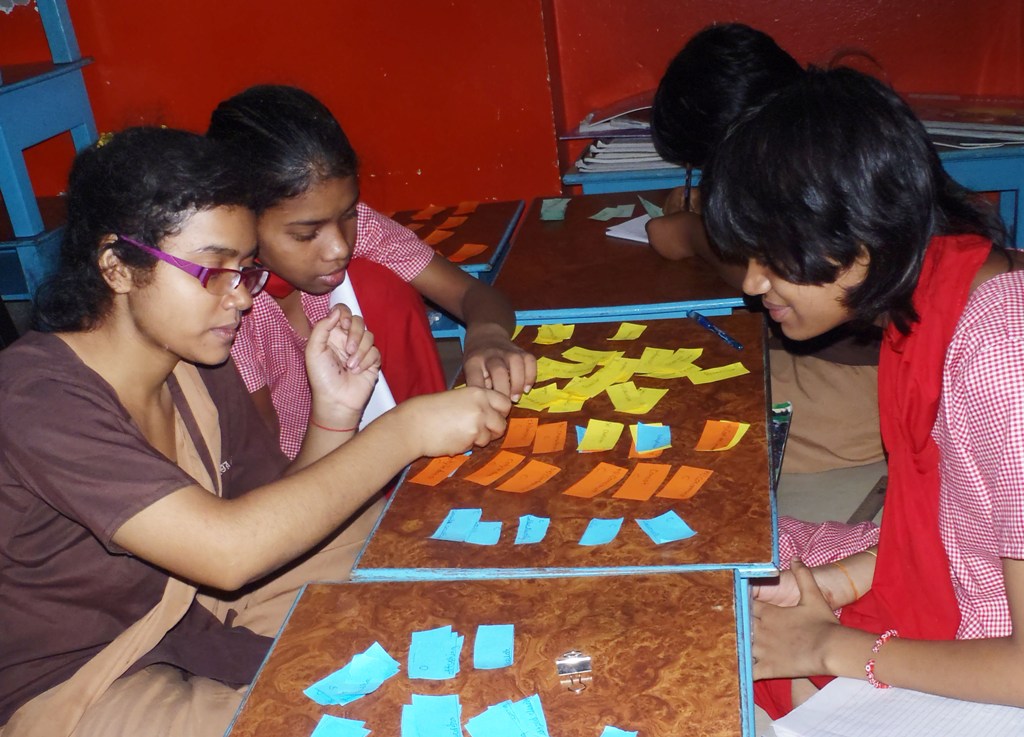
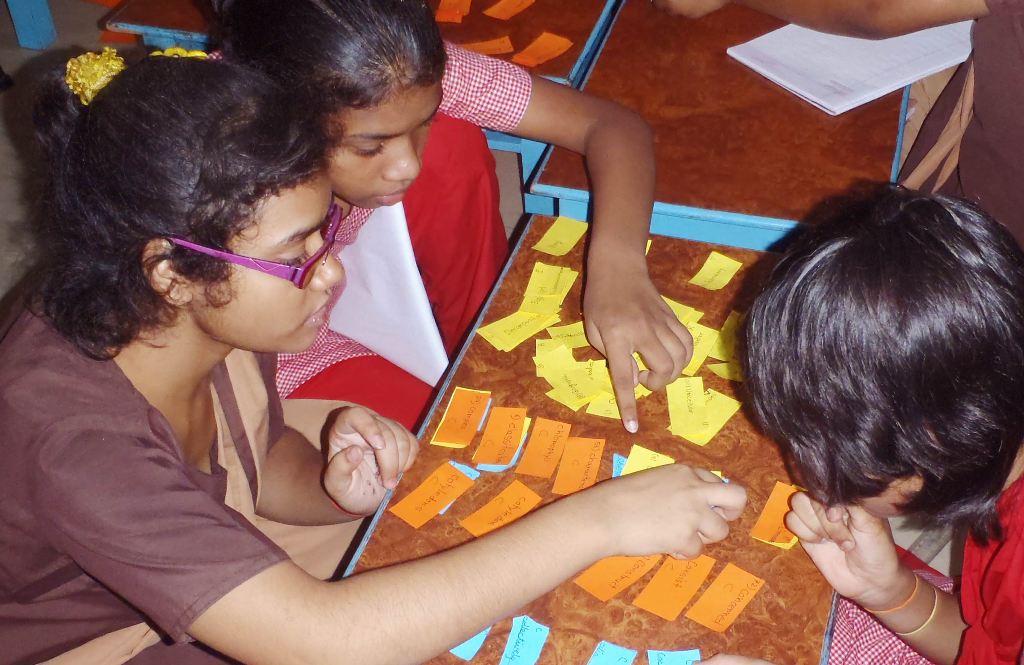
We have a strong teaching staff for the big girls now especially with Dr. Purba Rudra joining us, and with Maggie.   I hired a young man to be my assistant, Sudipendu Dutta as he has experience in admin.  But he turns out to be an incredible teacher also, so I get less help, but our teaching is stronger.  The part I bring is really more about how to study, how to learn, how to help each person learn her own way to get the information into her brain so she can use it, recall it, think about it.  In the pictures above the girls had put together lists of words they didn’t know, and then I had them put them on flash cards, different colors for each girl.  Then they alphabetized them.  It was just a way of getting them to actually examine the  words, letter by letter, and a way to think of them as groups related to a letter and a sound.

I’ve tried some of this before.  I’ve talked with them about how to find what a paragraph is about, the when where, why, how, who, etc., but they are listening more now.  They are taking me more seriously.  I believe that fundamentally they do not believe they can succeed, but they are beginning to realize their failure to convince me!  I just keep saying, “OK, so then we have to try harder, or a new way.”  The ones who really cannot learn are doing other things, including training as helpers to the special educators.  And they are helping with the little ones, giving them big sister care… and also getting special treats along the way.  Recently they have asked for some teaching and so they are getting some low stress teaching.  But my hard core smart kids who have tried and tried to convince me they cannot do the work, and now applying themselves more and asking questions more. It’s not a smooth process.

The early deprivation has taken its toll.  I’ve had to try to understand  how they are thinking, or not thinking.  They tend to compartmentalize as if each subject is a separate language.  My favorite recent problem was in physics, and Big Bang.  They didn’t connect Bang of Big Bang with bang as in, “Don’t let Rani bang her head.”    They thought it was a proper name.   In their early childhood, and also in their Bengali education, children and teachers didn’t engage in discussion.  It was only, lecture, memorize, repeat back.  The repeat back had to be exact, whether it was understood or not.

Well, this isn’t exciting stuff, but it’s the stuff of my days.

We are churning out (slowly) grant applications;  we are almost done with the website.  In fact our part is done but there are lots of little things to be fixed which aren’t getting fixed without many phone calls, Google chats, and emails.

I will write more, as it is, as it happens….

Michelle

Our Visual Voices – Via Widgit Software (c)

These are my thoughts as I finish the website, and explain our use of  Widgit (c) symbols in our work. First I ask you to read

OUR VISION:  A society where orphaned and abandoned children, those with abilities and disabilities are not segregated but are respected as necessary members of our society.

 It’s nice, with lots of honing of words and meaning in putting it together.  Is it memorable?  I’m not sure.

Now read Our Vision below,  illustrated with symbols, and you know exactly what I mean.  Hopefully it is more memorable.

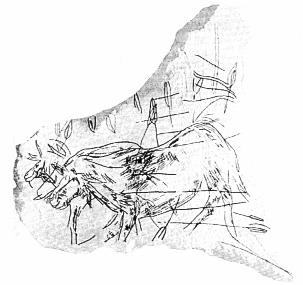
More than 30,000 years ago, before our written language of letters and alphabets, we communicated in drawing and symbols, on mammoth teeth and bone, in caves, and probably many other places lost over time. These were our expressions of meaning, communications, aesthetics, our visual voices etched to last over time.

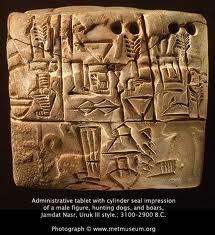
More than 5000 years ago, the Sumarians used symbols and drawings on clay to communicate, to express themselves, to tell and pass on stories to those who would follow. Art and symbols have never been replaced by written language.

Rather they have complemented each other.

 Symbols have become an accepted and integral part of communication in the disability community, as part of what is called assistive and augmentive communication, but at the same time acquiring a status of “lesser” than regular.  But symbols enhance meaning, add aesthetics, and add to the community of people with whom we can communicate. Shishur Sevay uses the language of Widgit for just these reasons.

The blog is my “thinking out loud.”    Our website will be Widget enabled in two ways.  First, we have a license to use the Widgit symbols on the website (Insite) and also here in the blog.  Second, there will be a way for symbols and spoken voice to appear when the cursor hovers over a word, called Point.

We have worked hard to have a site that is accessible to hearing impaired, visually impaired, and also the language impaired.  In a way I think of this as people who understand more by JPG than by DOC.  My minimal understanding was that the Apple frame was more based on image, on a form of JPG, and DOS on more linear byte building. (WikiMe requests info on this.)  One of our  older girls is severely dyslexic, still doesn’t know the alphabet or meaning of numbers, but she wins at memory games that require matching images of cards turned over.  For her, the use of Widgit symbols allows her to understand, to follow what is being read.  We’ve also used it in teaching English, using the symbols of up, down, in, on, under, etc.

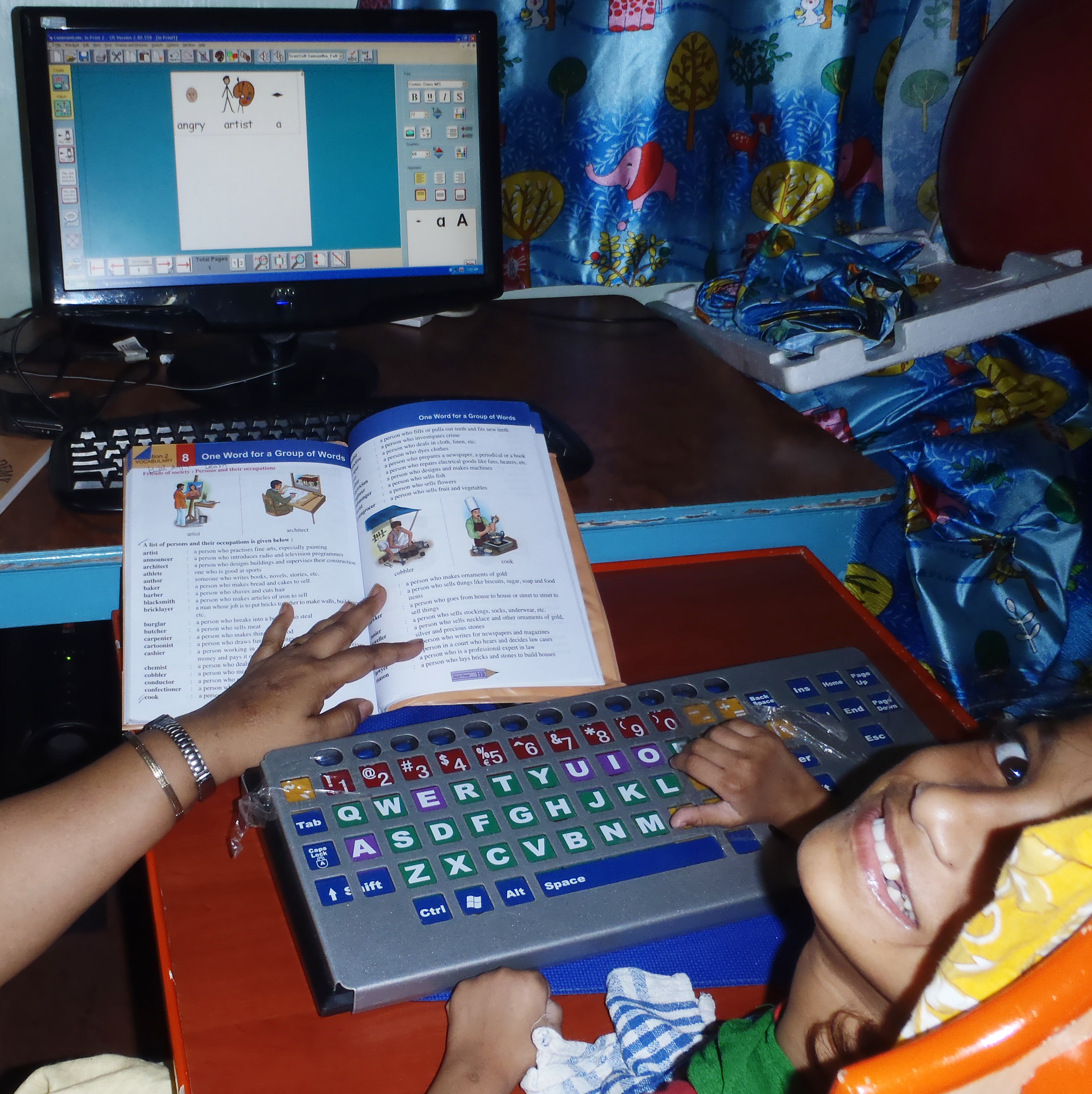
But our biggest user has been Ganga, about whom I’ve written a lot before.  Currently she is in Class III in a regular school with the other girls, and is the only child there with motor disability.  Ganga is very bright and loves to study.  She makes sounds, but not words.  When the teacher asked all the children who had seen a globe, Ganga called out loudly.  In her class she was the only one.  How does she use it?

In this picture, Ganga is practicing her typing, and also learning what has been taught.  As the keys are pressed, the program voice sounds the letter, and then the word, and then the sentence.  So there is constant feedback visually and aurally.   And it is fun.  Sometimes she is naughty and presses many numbers, and then the spacebar and giggles as the voice tries to read off zillions, trillions, billions…  sounding like random syllables.

If you click on the link below you will see a story I wrote in Widgit for Ganga.  It’s about why she has a disability.  To me, the illustration makes the story what it is.

ganga cp story-2

I like the aesthetics of the Widgit symbols, the cuneiform markings, similar to the Sumarian writing.  (I just learned about the cuneiform aspect of writing today — the triangle shapes that are part of the Sumarian script, and some in the Widgit).  It is similar to Hieroglyphics.  I have a children’s story I wrote some years ago and I want to write it with the Widgit symbols.

I looked at a number of symbol systems before I chose this one.  It was a big decision as it is costly for the software and now for the licenses to use it on the website and this blog (if we can get it to work on the blog).  I want this site to be truly accessible, even as I struggle to define what that means.  But the challenge is also to make it accessible, including with symbols, without creating a “cumbersome” aspect that will cause the “normals” to click off the site.  Isn’t that what it always is with a minority (even if the minority is the majority)?  It’s about power in part, those with power not wanting to be “slowed down” or have their thinking or reading interrupted because of something useful or even necessary for those with disabilities.

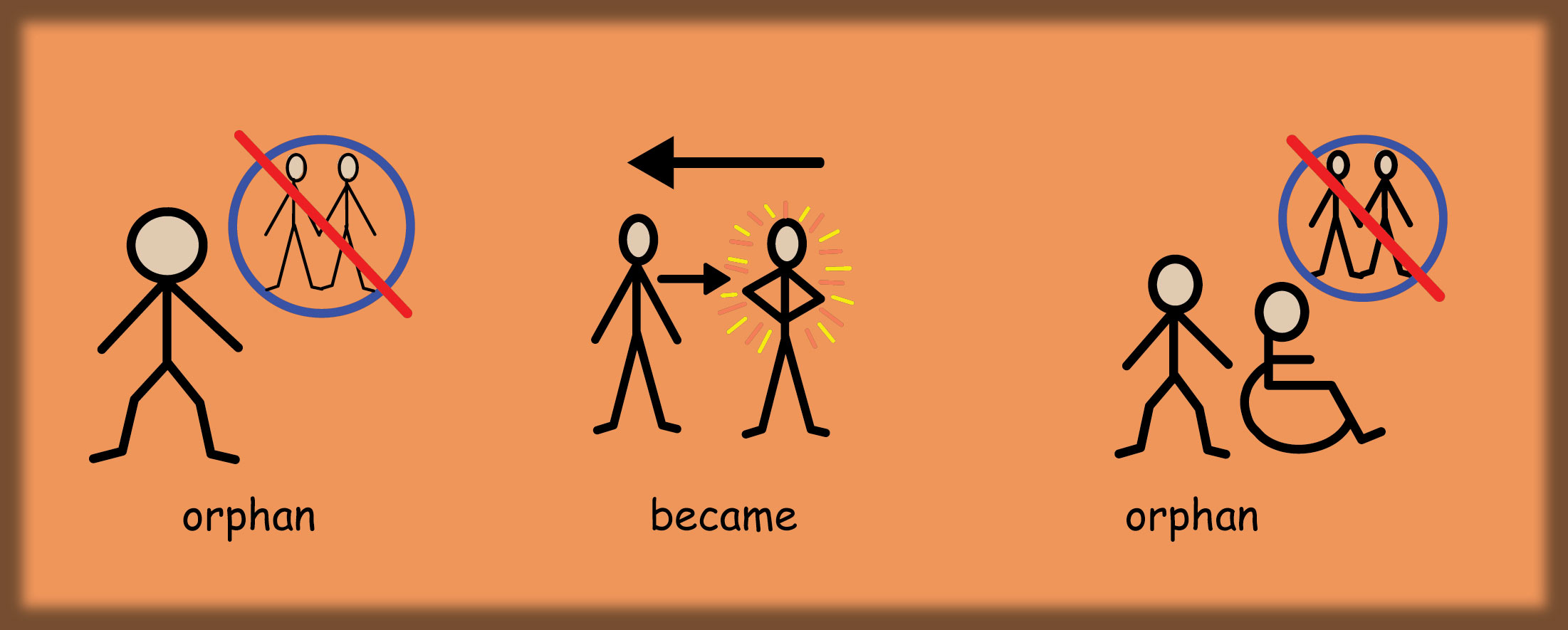
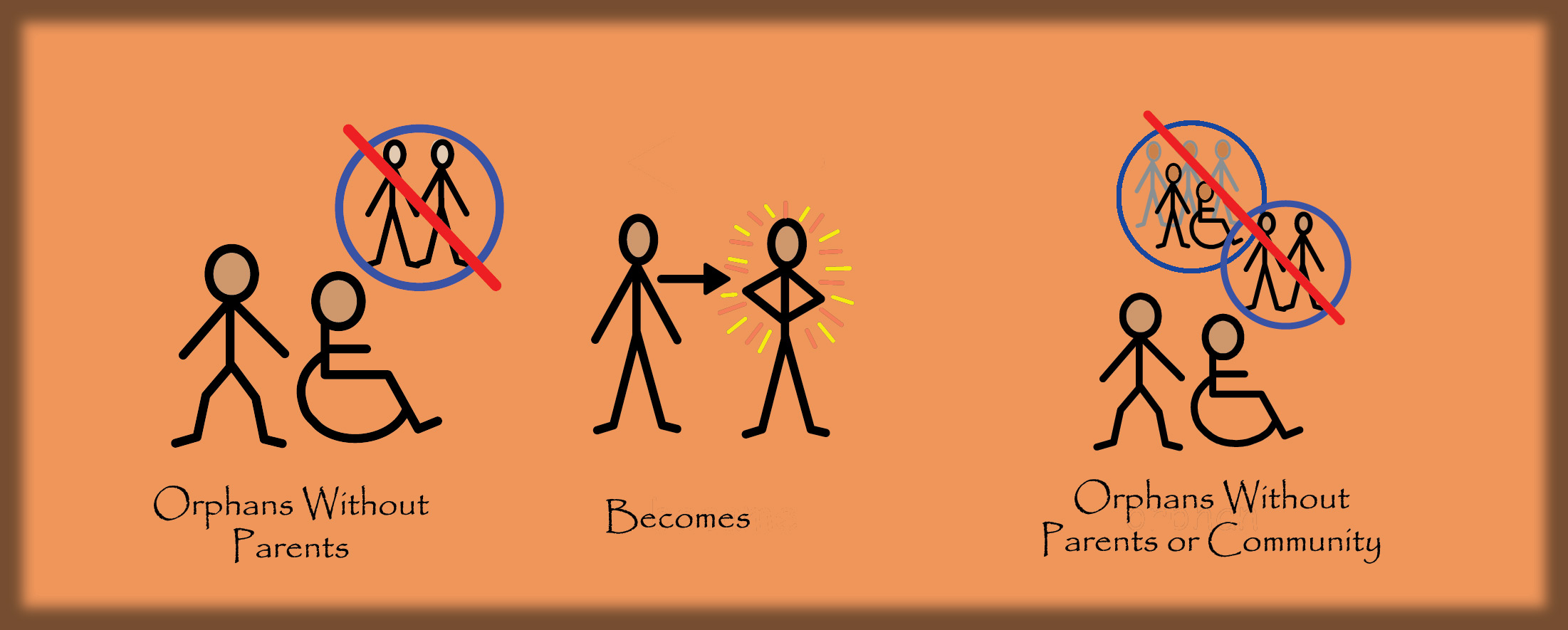
What I like about symbols is that they are less ambiguous.  When I started using Widgit a couple of years ago, their symbol for orphan was a child, and no parents.  I talked with them and they made a new symbol, orphan with two children, one in a wheelchair, one without, and without parents.

But now that I look at it, I realize there is one more step in the creation of the orphan line of symbols.  For our children it’s not just the loss of parents.  If you look back at Our Vision, you will see a symbol of “community” but it’s that community, or society that our orphans do not have.  Yes, first is a loss of immediate family, but then to end up in an institution there is also the rejection, actively or passively by the community.  So the symbols really should be:

Understand now?  These are the girls we brought here. lost, abandoned, living in an institution, but nothing can say it better than the symbol  Well, I feel I’m closer to what I’m trying to say.  I’d be grateful for comments.

Widgit software (c) is at http://www.widgit.com.    We have the icon for the website and it will go up with that.  We haven’t been able to get Widgit working on the blog, or I’d be writing much more in Widgit.

This blog is my thinking out loud, and my conversation with  interested parties, whomever they may be.

Sending Food for Aunty’s Children

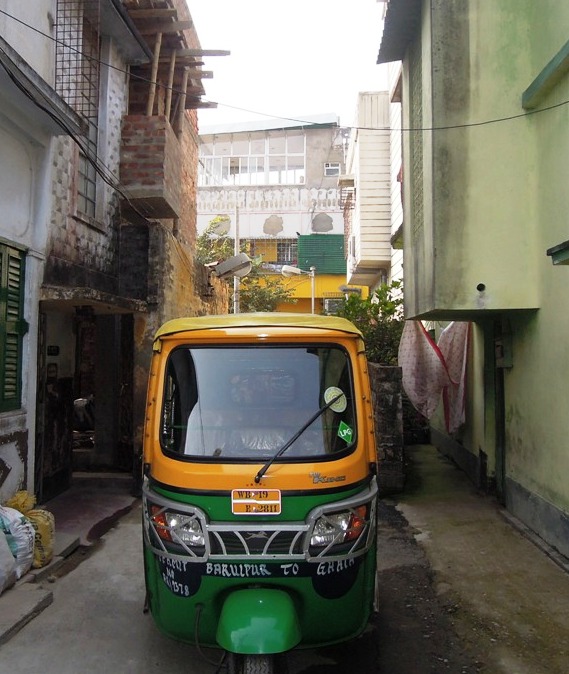
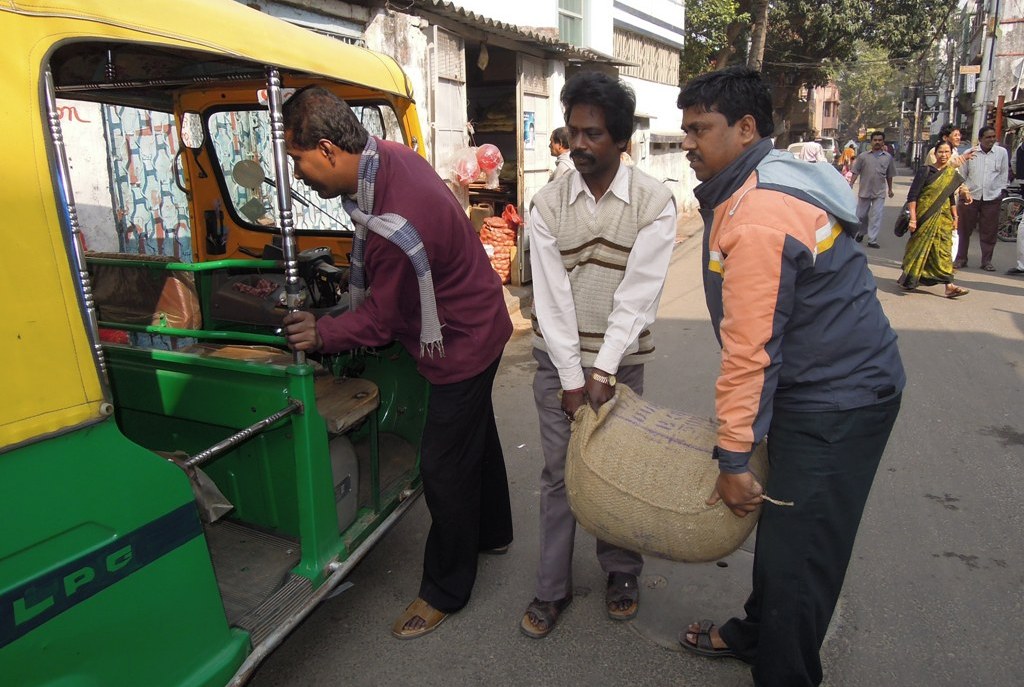
Aunty sent an auto-rickshaw for supplies yesterday morning.  That’s it parked in the lane in front of Shishur Sevay.  I sent Bijoy to the store and we bought rice and other staples that should last about five days.   

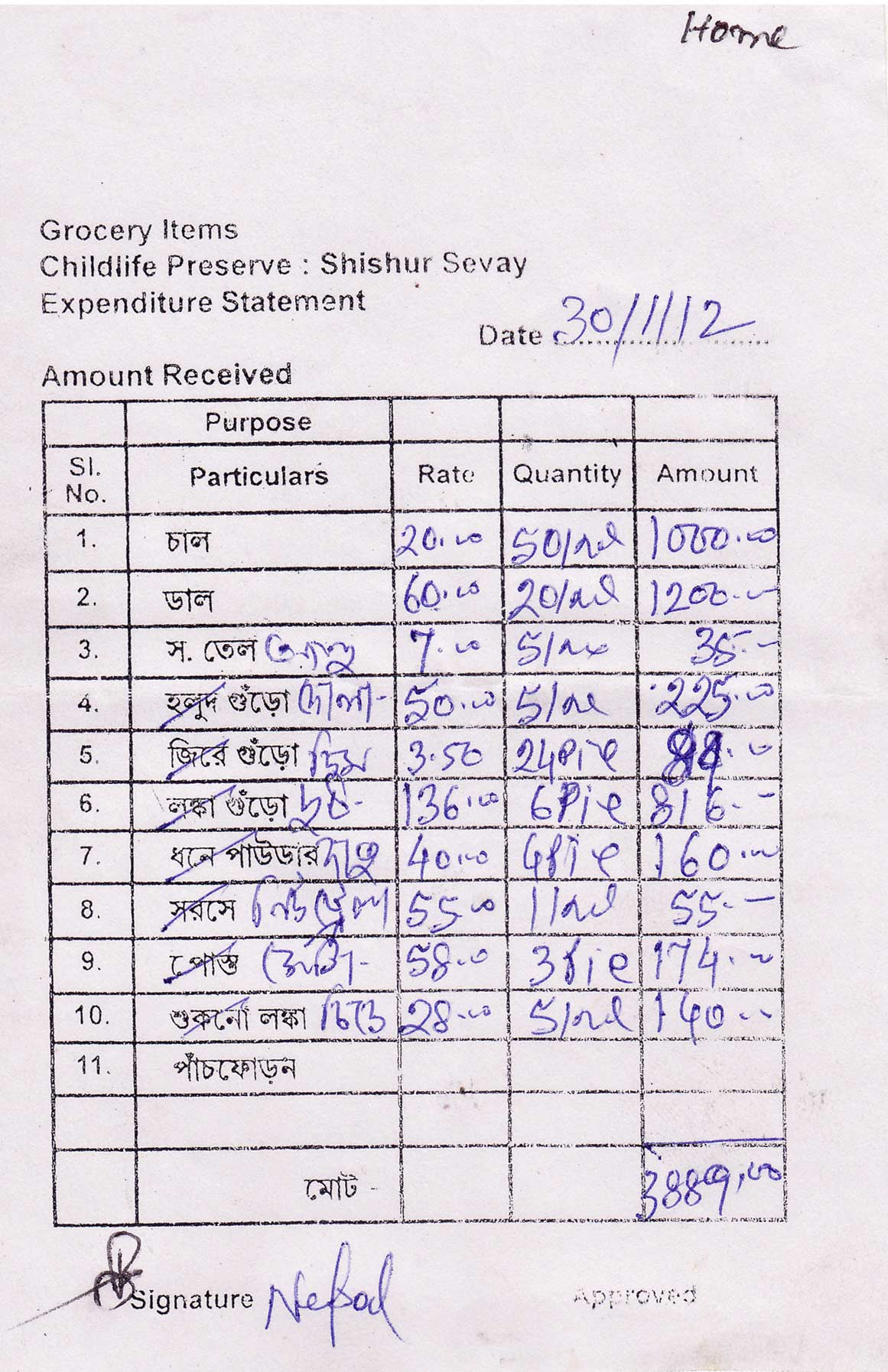
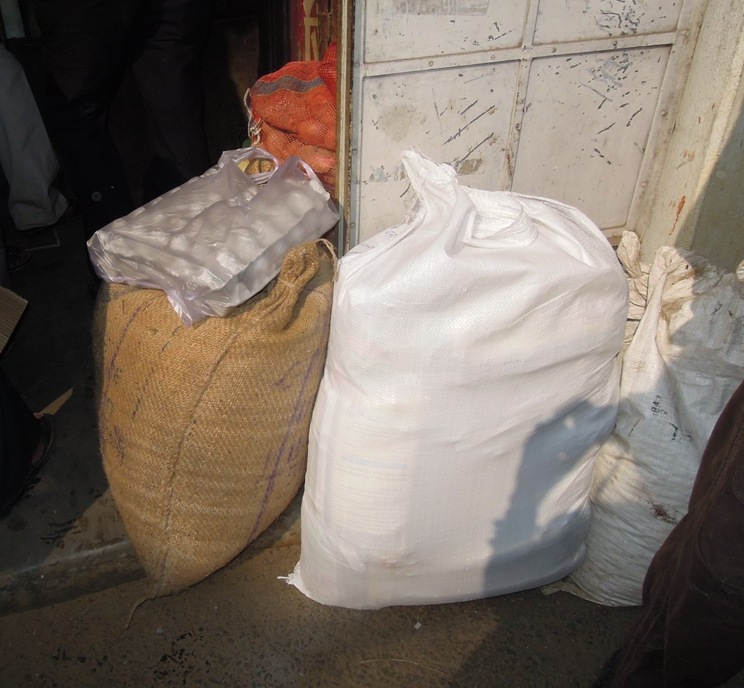
We sent rice, Maggie Noodles, Dal, Chana Dal, eggs, powdered milk formula for babies, neutrala, a soy product, chira (flattened flaked rice) potatoes, and sattoo (powdered chhana).  The cost was Rs. 3889, or USD about $80.

I’m planning to visit there tomorrow.  I’m bringing someone from a home that is considering taking one of the severely disabled boys.  It’s a good home, like ours, and we do this by keeping the number of children within our resources. Knowing our limitations is one of the most important components of success.  Saying no is painful.  So, we live with that, and once in a while we find reason to stretch a bit.

The biggest obstacle to feeding the children is an attitude by the staff that because the children are so starved, you cannot give them much food of they will vomit and have diarrhea.  So, they let them be hungry.  I cant’ seem to get past this with anyone!  I’ve tried to de-worm them but so far it hasn’t happened.  I’ve suggested frequent small meals but that hasn’t happened.  I brought two dozen bananas the day we took the sickest ones to CWC, and the bananas were still in the office at night.  One day I was told that the boys have an “emotional” problem over food.  I said it’s called starvation.

I know it is painful reading this, as it is painful living it.  There are problems with the government and problems in the home.  And no one cares!  The best chance those kids have now, the ones I can’t place, is in that home — if we can manage the problems.  If we can’t, I still don’t know.  Over the weekend I talked with friends here and heard terrible stories about other places they knew.  One friend said, ‘The government doesn’t care if they live.”

Lots of thoughts in my head, and probably some of the same in your heads.   Tomorrow is another day.  I’m so totally swamped with work at Shishur Sevay, but I’ll go to see the children at Aunty’s.  Balance in my life? Nope, and not yet time to rest.

We Hired An Ambulance

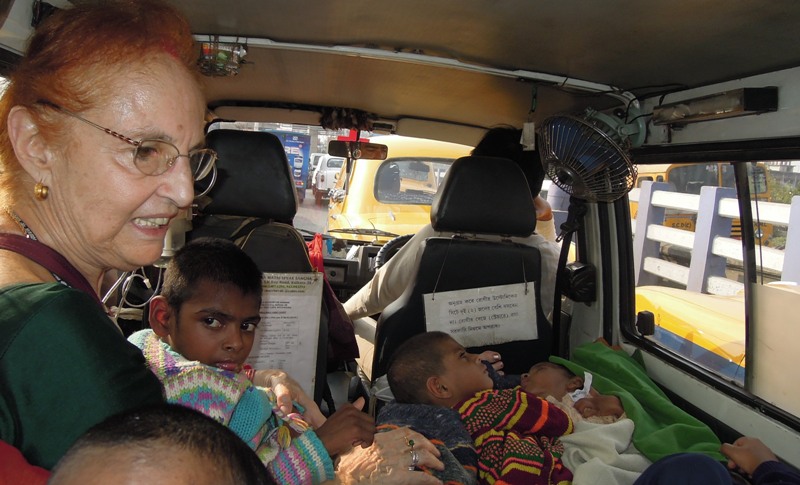
How long do we wait for “something to happen?”  We hired an ambulance to take us to Aunty’s, pick up the sickest children, and take them to CWC.

I insisted we take them into the building.

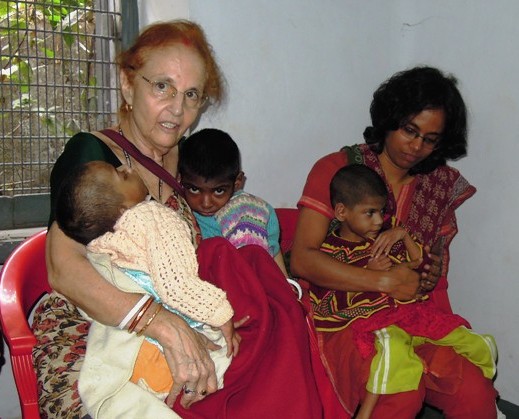
The waiting area was interesting, as usual.  The kidnapped girl was there again, and she really smiled when she saw me.  The adoption people were back, this time with a mother whose husband had died.  She was giving up her two children so they could have a better education.  The little one in her arms was about two.  The older girl looked about ten or eleven.  I tried to figure out how this agency was going to insure their education and “better lives”.  These were the same people who had given Aunty two children with disabilities, and they had stopped paying sponsorship.

We were called into the room.  The Committee was clearly uncomfortable with the children there.  They kept saying, “The children should go out.  They will be happier, and I in my cheerful little way said, “Oh that’s ok, they are fine.”  We were there about three hours.  Many phone calls were made.  The Committee said we would have to take the children back to Aunty’s.  They were quite horrible to Aunty, but they had no solutions other than sending the children back home with her.

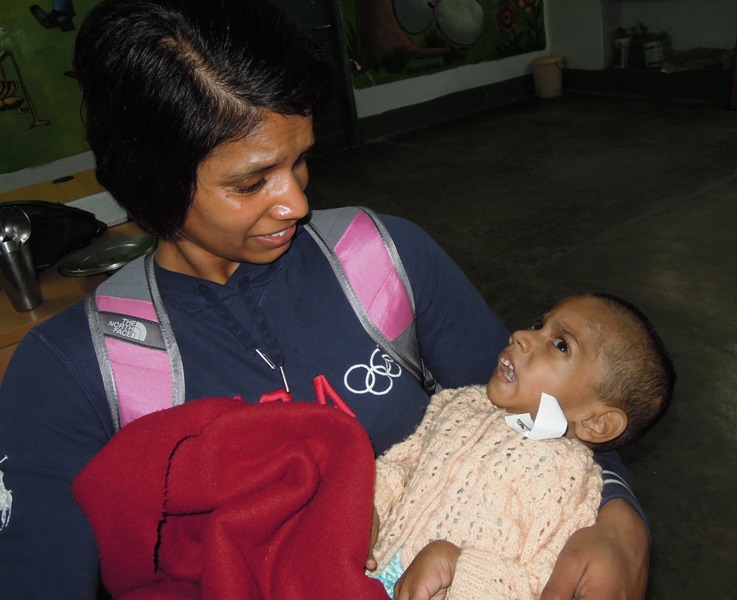
Maggie tries to tell the CWC that 25 years ago she was this child, but they aren’t listening. 

I  asked the Committee, “Are you saying there is no government place for children with disabilities?”

“No, there is no place for these children.”  I was shocked at this admission.

I said, “But you are the highest authority.  What do we do?”

They told us that in a week there would be a large delegation of legislators planning to visit Aunty’s home and they should give funds.

“But what if they don’t?  What happens then to the children?”

One of the Committee members seemed to get it.  She was back on the phone.  I was asked to make a plea to the Sister at Mother Teresa’s.  I did.  Two children would be accepted there on a temporary basis.  I chose the two weakest, thinnest, and sent them in our ambulance.   Seema and Aunty took them to Mother Teresa’s, but just for a temporary basis.   We waited around as more calls were made.  Bijoy watched some of the children out in the hall.

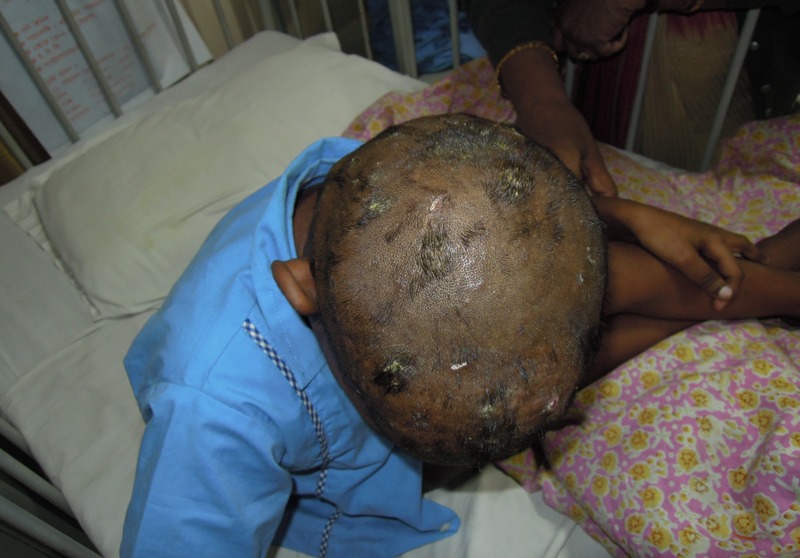
Soon another group of people showed up, a kind of rescue group, and they arranged for the child with the head infection to be admitted to a hospital.  So one group went in their big ambulance back to Aunty’s.  Bijoy took our group home.  Seema and I went in our ambulance to the hospital with the sick boy with the head infection.  This evening Seema and I went to see him in the hospital.

We aren’t sure where he will be going when he is better.

Previous Older Entries Next Newer Entries

August 2026
S M T W T F S
 1
2345678
9101112131415
16171819202122
23242526272829
3031