What is G.K. ? (a.k.a. General Knowledge)

GK is a school course in Indian schools.  I first was introduced to it when I was staying with Gibi’s family and helping Jugal with homework.  I’d been puzzled by the questions he seemed to be studying, one day movie stars, and the next day flags of different countries… seemingly random questions and subject matter.  Well, that’s what it is, random, and what you would study if you were preparing for a general quiz.  Quizzes are very popular here.   This year is the first year the girls are studying in English, so I am more able to see what they have to learn.  I’m working with all their subjects to help them find ways to learn, remember more, get higher grades (that’s being blunt).  They are capable of doing better than they are, at least the ones we have in an outside school.

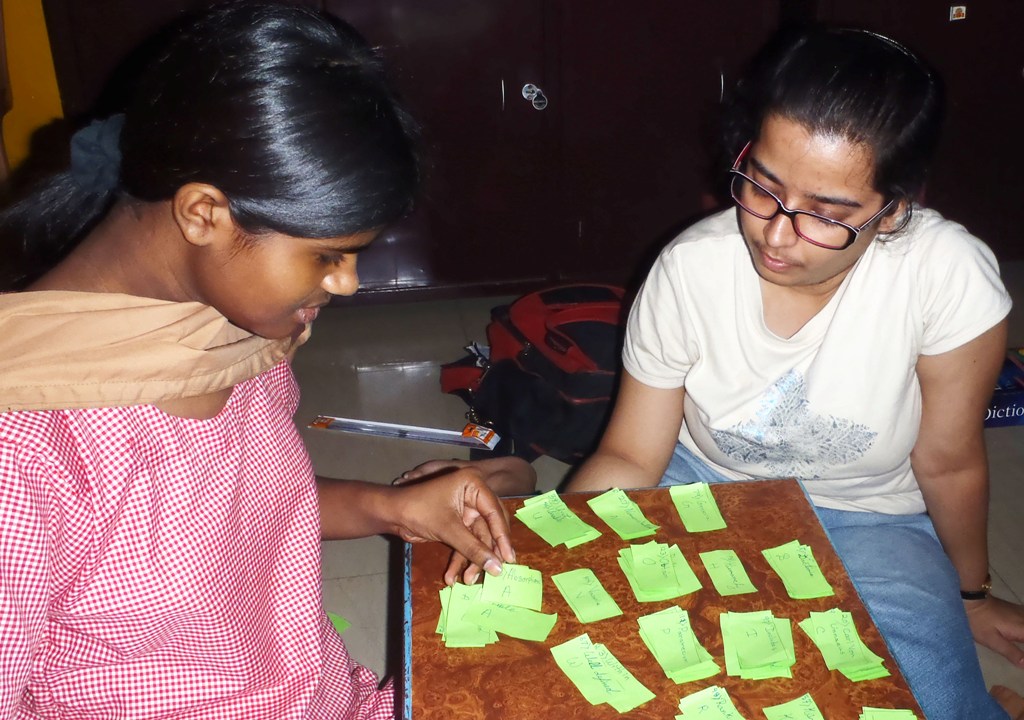
Thursday is a GK test, so I suggested we begin a few days early preparing.  They showed me three pages in their GK book.  One is about animals, facts about several different animals and where they live.  This included polar bear, jackal, pangolin, hyena, armadillo, gibbon, bactrian camel, and opossum.  This evening we went online to look at images and a few videos of them.  Then there is a page of water animals and fish, and last is the page I’ve copied below.  Well, part of the page is here.  There was even more.  The task: to learn what these abbreviations mean.  They don’t have to know anything about the subjects or the organizations, just the names and abbreviations.

I asked, “How will we find the answers?”  I was concerned about how they would find all these names, how I would help them, but there was no reason to worry.  They opened the book to the last pages and showed me all the answers to page 33.  It’s how they had found all the names of the animals, from the back of the book.  “Aha!” I said, and then asked them to leave a copy of the book with me so I could scan it.
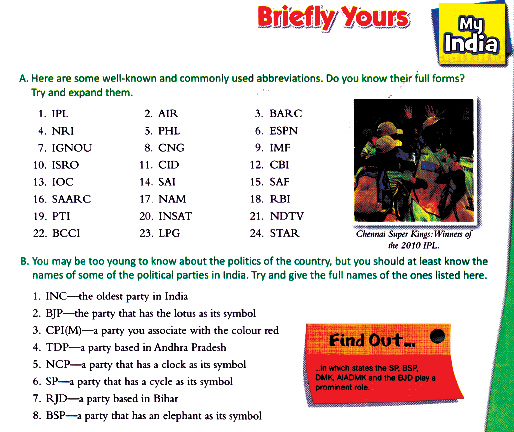
To be learned for a test this week.

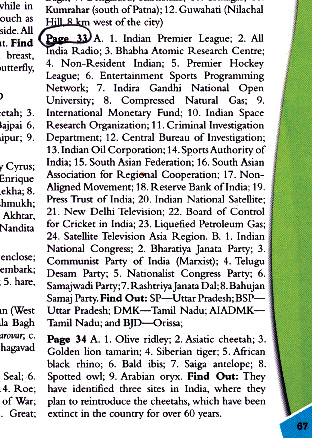
Next, the answers from the back of the book.  They are random.  I also had to explain the differences (?) between organizations, corporations, associations, companies,  bureaus….  So these are the answers below and they have to make lists of the abbreviations and the names.
It’s now the 4th of July, night time, and today there was a crisis at the school.  A teacher said to our girls, “You eat grass from a field?”  Then, “Where do you find your teachers, on the road?”  The girls have been demeaned a lot, and picked out as a special group for demeaning.  Actually there is a lot of demeaning going on in the school.  It seems to be the default attitude among some teachers.  So I went to meet with the admin, and took Gibi along.  I decided we would approach the school as “sad” and that was fairly effective.  We got apologies, as the school admin does not want this kind of behavior.  But it’s the culture of schools.  This school has taken it seriously.  They asked why I didn’t come earlier and I said simply I was afraid, and the girls were afraid that there would be retaliation.  But today the girls broke down in class crying, and Ganga’s teacher saw them and called me.

Well, now at 11 pm they are still studying the abbreviations.  I decided to help by organizing them by function… sports, tv/radio, science & education, etc.  So this is my contribution.
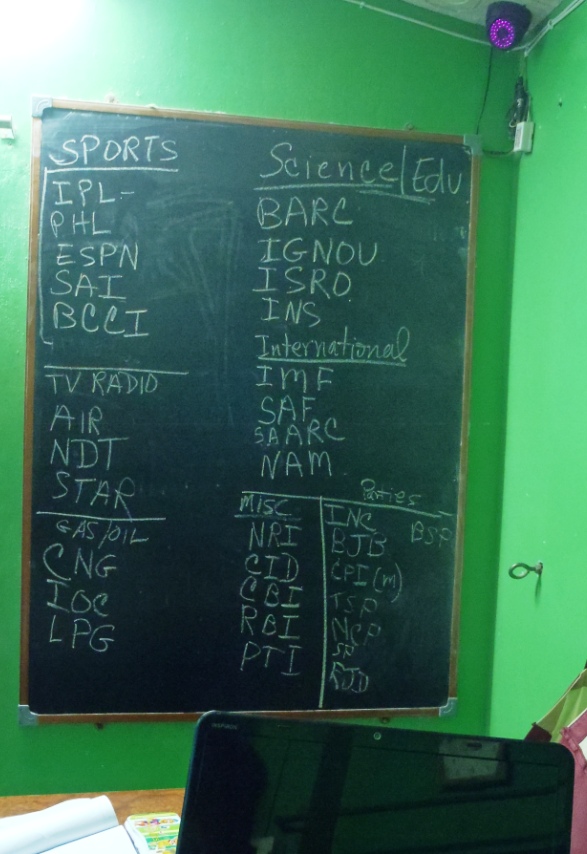
The abbreviations organized in groups

I seem to have gotten a few wrong, but the girls corrected me.  The girls had about three hours of Bangali and math homework before they could get to this.

It just hurts.  One teacher refused to call them by name, referring to each one as Shishur Sevay.  I tried to explain to the school that these attitudes are not conducive to studying or self confidence.  I’m not sure it registered.  I do believe though that the Founder, Principal, and Vice Principal with whom we met have taken us seriously and will try.

A few weeks ago we were working on a grant application and they asked us for what we thought were our three biggest accomplishments.  Well, our biggest and best is that WE ARE HERE!  We have survived five years.  We continue to thrive and we keep taking one obstacle at a time, one day at a time, one test at a time… I know I keep repeating myself but I can’t stop thinking, “You eat grass?”  This is about animals, cows, horses, sheep, goats, not children who have been abandoned and abused…. The words stay with me as I know they will stay with the girls, stacked on top of all the other demeaning and humiliating remarks that have been made to and about them.  And tomorrow when they take this GK test, they will have to push all this from their minds and try to remember that RBI stands for Reserve Bank of India, and not Runs Batted In, which is what Maggie and I thought at first.
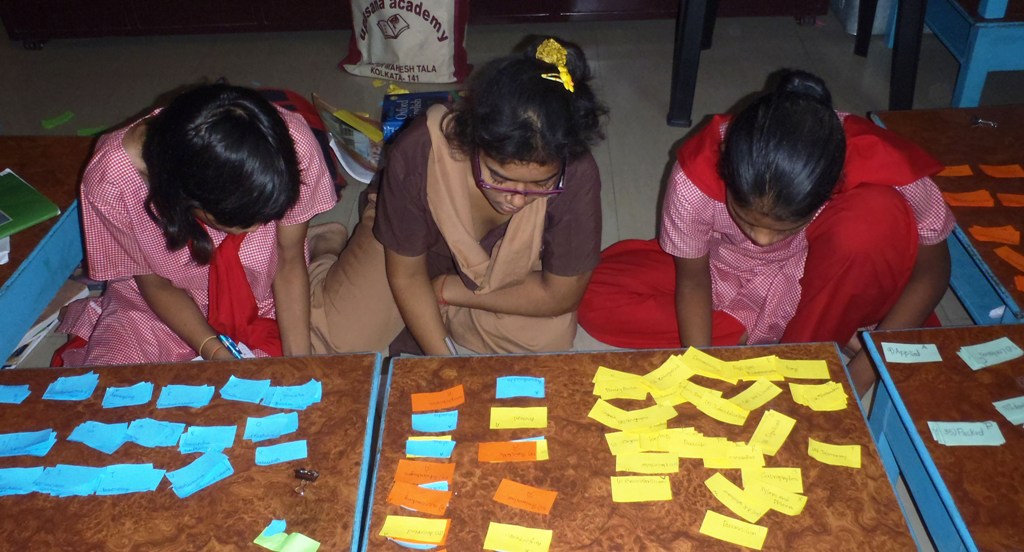
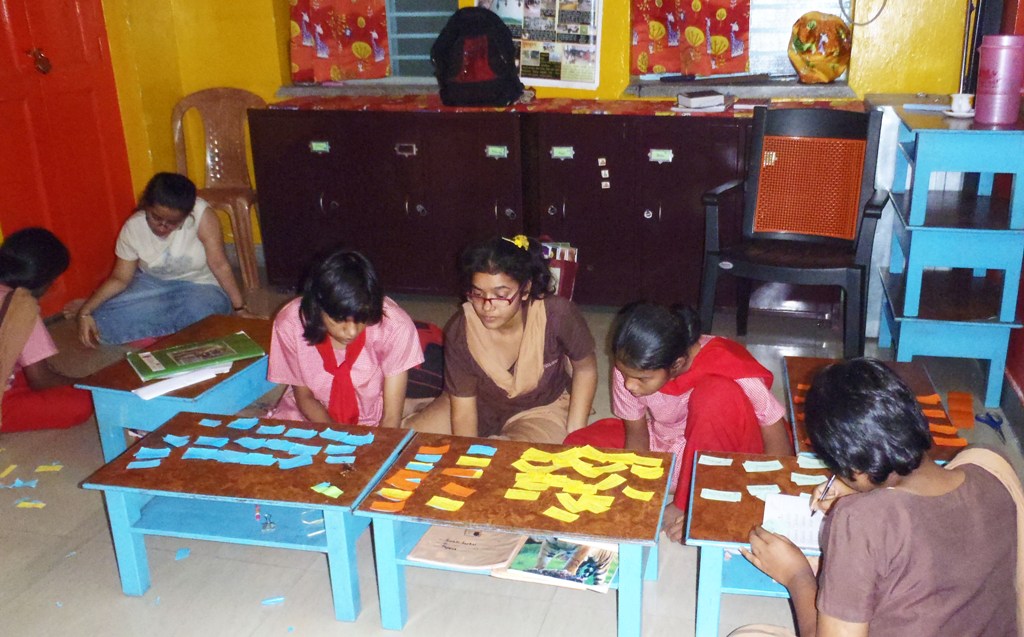
Ongoing Challenges in Learning

.

I’m so behind in blogging, and I miss it.  I’ve been teaching the girls a lot.  Rather, I’ve been teaching them how to study.   We are making new starts, with English as their language of study.    We made this change from Bengali for many reasons.  One is that I was never able in five years to find anyone to take over the responsibility of managing their course work, homework, tests, study methods, etc.  And coming from the US, I had zero credibility with the Bengali teachers I hired.  As the girls get older, some of the fundamental weaknesses show up.

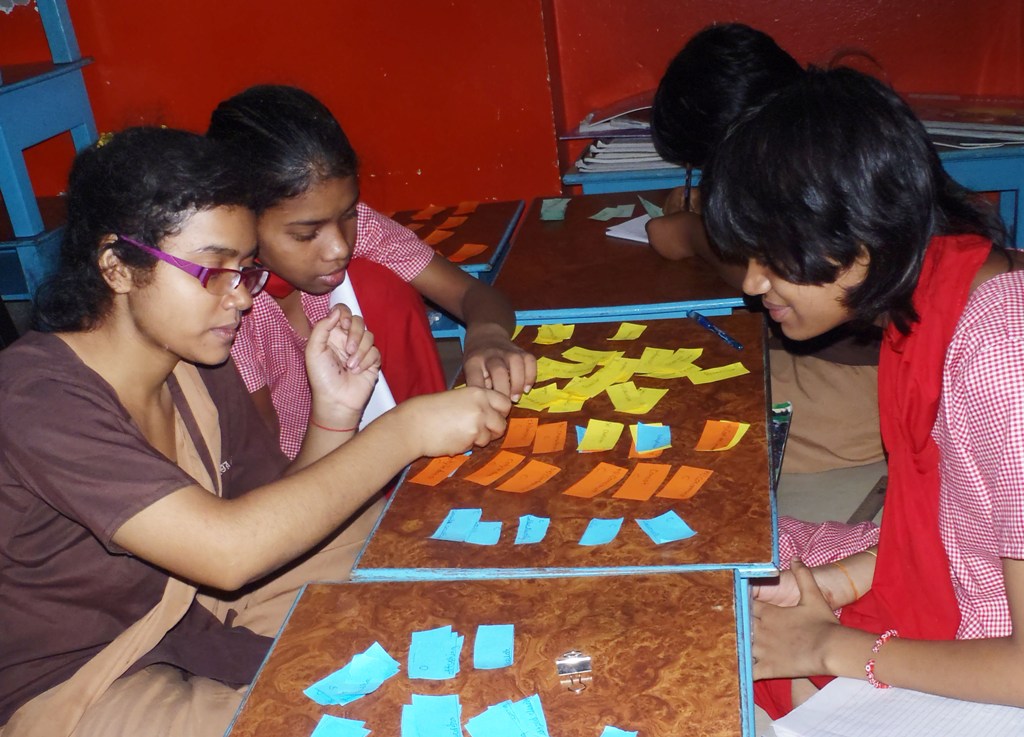
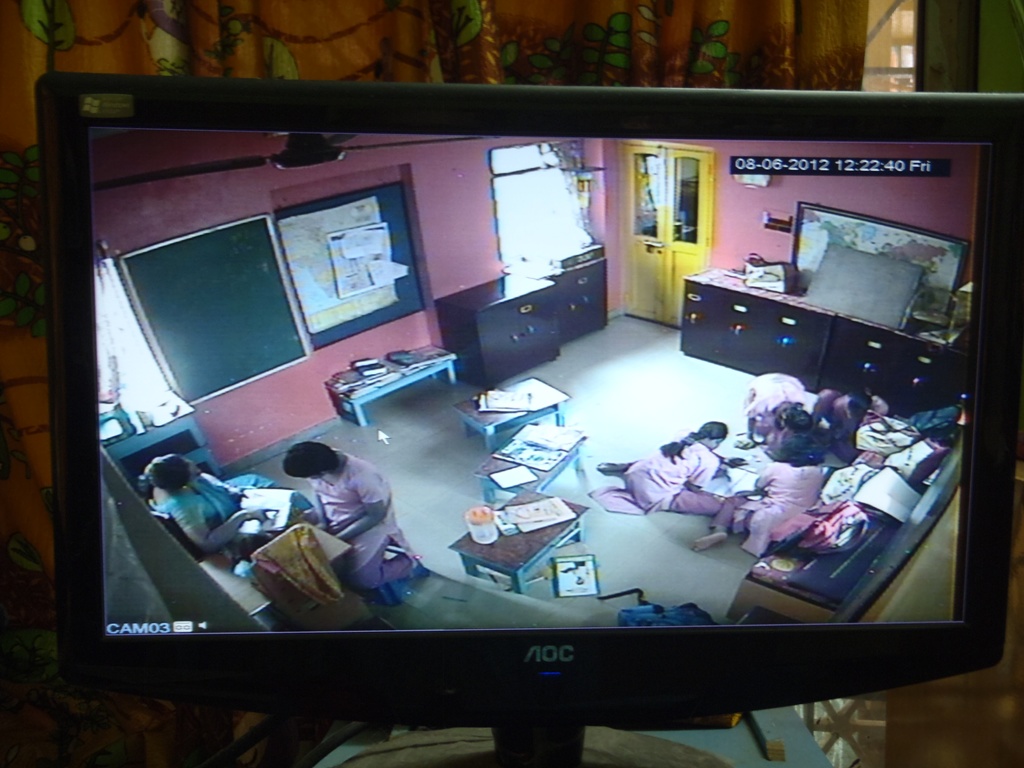
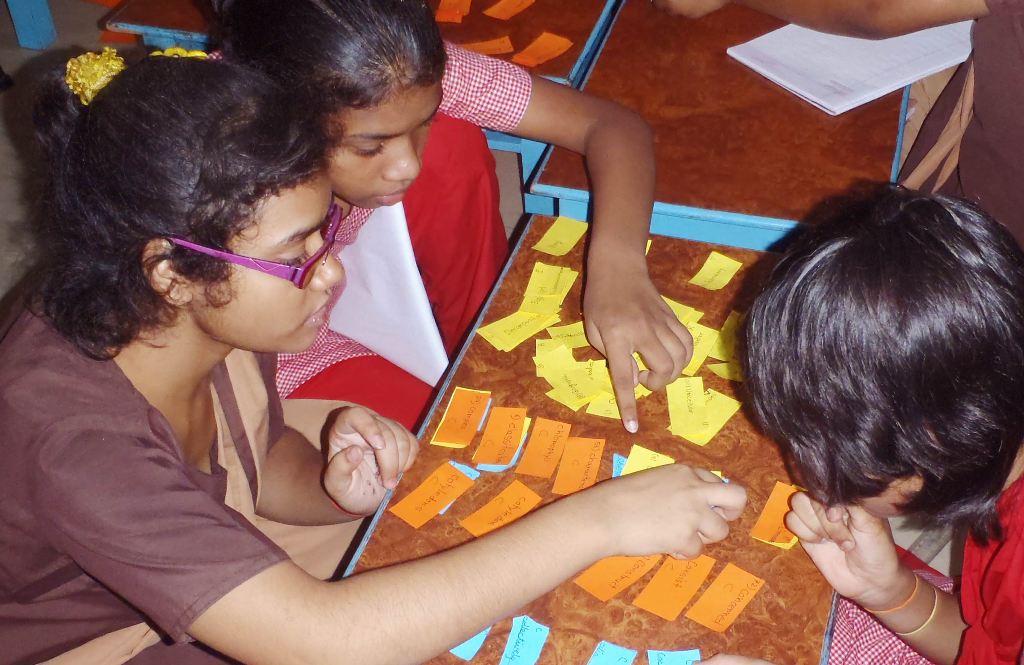
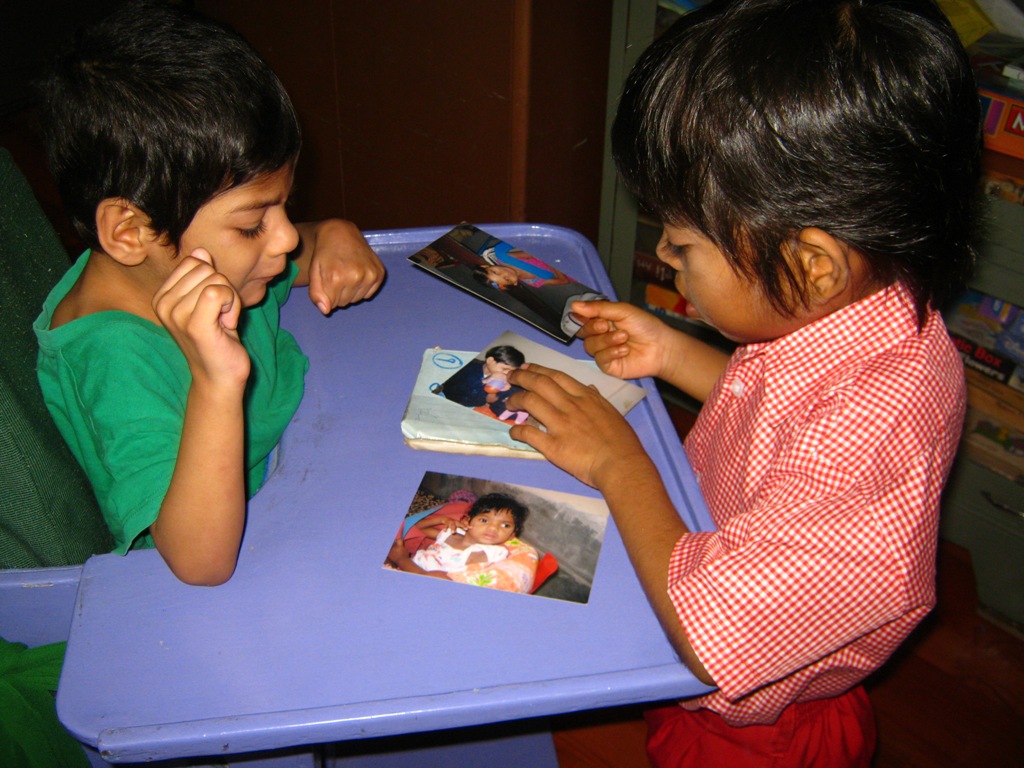
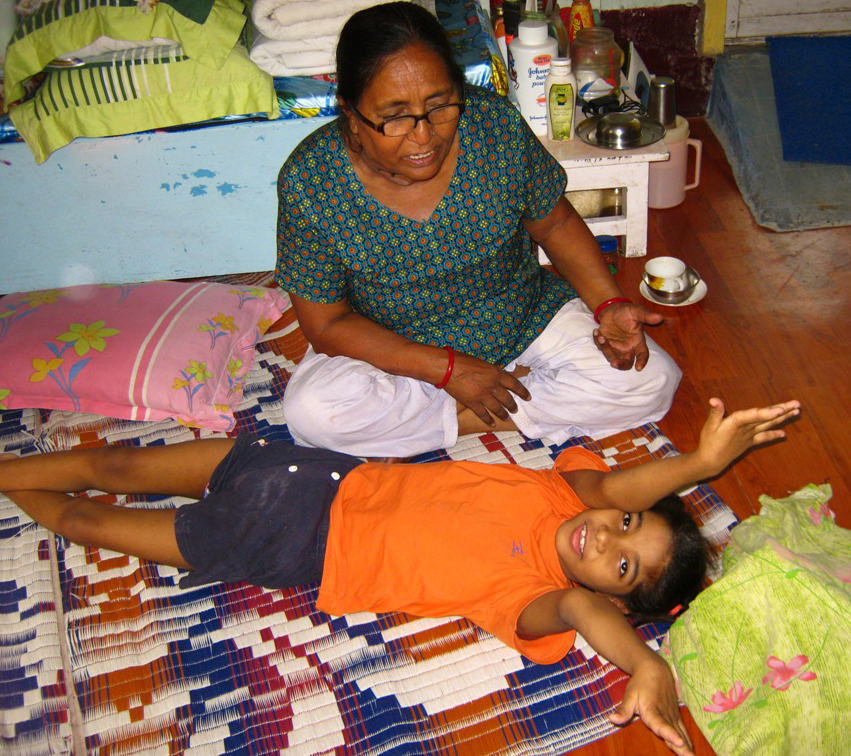
We have a strong teaching staff for the big girls now especially with Dr. Purba Rudra joining us, and with Maggie.   I hired a young man to be my assistant, Sudipendu Dutta as he has experience in admin.  But he turns out to be an incredible teacher also, so I get less help, but our teaching is stronger.  The part I bring is really more about how to study, how to learn, how to help each person learn her own way to get the information into her brain so she can use it, recall it, think about it.  In the pictures above the girls had put together lists of words they didn’t know, and then I had them put them on flash cards, different colors for each girl.  Then they alphabetized them.  It was just a way of getting them to actually examine the  words, letter by letter, and a way to think of them as groups related to a letter and a sound.

I’ve tried some of this before.  I’ve talked with them about how to find what a paragraph is about, the when where, why, how, who, etc., but they are listening more now.  They are taking me more seriously.  I believe that fundamentally they do not believe they can succeed, but they are beginning to realize their failure to convince me!  I just keep saying, “OK, so then we have to try harder, or a new way.”  The ones who really cannot learn are doing other things, including training as helpers to the special educators.  And they are helping with the little ones, giving them big sister care… and also getting special treats along the way.  Recently they have asked for some teaching and so they are getting some low stress teaching.  But my hard core smart kids who have tried and tried to convince me they cannot do the work, and now applying themselves more and asking questions more. It’s not a smooth process.

The early deprivation has taken its toll.  I’ve had to try to understand  how they are thinking, or not thinking.  They tend to compartmentalize as if each subject is a separate language.  My favorite recent problem was in physics, and Big Bang.  They didn’t connect Bang of Big Bang with bang as in, “Don’t let Rani bang her head.”    They thought it was a proper name.   In their early childhood, and also in their Bengali education, children and teachers didn’t engage in discussion.  It was only, lecture, memorize, repeat back.  The repeat back had to be exact, whether it was understood or not.

Well, this isn’t exciting stuff, but it’s the stuff of my days.

We are churning out (slowly) grant applications;  we are almost done with the website.  In fact our part is done but there are lots of little things to be fixed which aren’t getting fixed without many phone calls, Google chats, and emails.

I will write more, as it is, as it happens….

Michelle

The Case of Kairi Shepherd — Orders for Exile

Kairi Shepherd, pictured below at about five years, is scheduled for deportation.  Gibi, who founded Shishur Sevay with me and serves as our Vice President, was to have been Kairi’s older sister.  I had been trying for several years to locate the people Gibi had known in the US, and particularly the Shepherd family.  So when I saw the original article May 9th about Kairi’s deportation, I immediately recognized her name.  I read some of the posts written in the comments of that article, Googled a bit, found someone close to Kairi, and then reached Kairi, who also put me in touch with her lawyer.  At the same time a group ACT, against child trafficking, had started pressurizing the Indian government to deny travel papers, so Kairi could not be deported.  The current state is that the US and Indian Governments are looking for solutions.  There has been a groundswell of support for Kairi among the community of parents who have adopted children.  A team of lawyers is working pro bono in her support.  Kairi suffers from progressive multiple sclerosis.  If not for that, exile would be just a disaster in so many ways.  But with her ms, this could be a fatal disaster.

The single meeting allowed for Erlene and Kairi Shepherd with Gibi

http://www.indiaamericatoday.com/article/inside-story-lack-accountability-leaves-kairi-limbo#.T8bm95CvYxc.facebook

INSIDE STORY: Lack of accountability leaves Kairi in limbo

ARTICLE | MAY 31, 2012 – 9:01AM | BY DR. MICHELLE HARRISON

Gibi’s passport had the name Shepherd, because Erlene was to have adopted her/ Credit: Dr. Michelle Harrison

Kolkata – Kairi Abha Shepherd was adopted from India at three months of age and has no country to call home. She was abandoned at birth in a Kolkata nursing home and taken in by a Kolkata orphanage that has since closed. At three months of age she was sent to the United States for adoption by Erlene Shepherd, a widow with six other adopted children. Erlene died of metastatic breast cancer when Kairi was eight years old, but never filed the papers to make Kairi a US citizen.

Now under threat of deportation, Kairi, who suffers from rapidly progressing multiple sclerosis, is an orphan without a country. She is from India, but was not raised as an Indian. She was raised as an American, but is not American. Deportation is a sanitized word. The proper term is exile, the banishment of a person from his home, his country. Given Kairi’s progressive illness, it might be death in exile.

I am an American doctor settled in Kolkata since 2006, where I founded Shishur Sevay, a home for orphan girls, some with disabilities, who were rejected for adoption. I have a younger daughter adopted in 1984 from IMH (International Mission of Hope), the same orphanage as Kairi. I also have an older daughter, to whom I gave birth. Both are American citizens, one by birth, the other by naturalization. When my older daughter was born she was mine and the only papers I filled out were for her birth certificate.

For my Indian daughter the process was longer and more complicated than pregnancy. I carried a different responsibility. I had been entrusted with another mother’s child, to love and raise her as if she were of my body. She had already lost a mother and a family. I felt a special responsibility to be the forever family she had been promised. Everyone in the long chain of people, institutions, and governments had a special responsibility for this child, because at that moment in time, they were the only ones in a position to secure her future safety.

Kairi didn’t hop on a plane at three months of age and say, “Mom, I’m coming home. Meet me at the airport.” Her “line of possession” was from a nursing home in Kolkata, to International Mission of Hope, to an escort, to Erlene Shepherd, her forever mother. An agency from the US side, AIAA (Americans for International Aid and Adoption), had to do a home study and approve Erlene to adopt another child.

Those papers had to be approved by the Indian Embassy in Washington and the US Immigration Service, all before Erlene could be assigned as Kairi’s mother. Back in India, IMH had to show how they received the child, and then petition the Alipore Court to give guardianship to Erlene Shepherd.

The guardianship papers defined the responsibilities of Erlene Shepherd: “Your petitioner submits that she is a fit and proper person to be appointed guardian of the person of the said minor during her minority. Your petitioner further submits that it will be for the welfare of and manifestly advantageous to the said minor as regards her up-bringing, education and establishment in life, if the petitioner is appointed guardian of the said minor and the minor is permitted to be taken to and live with your petitioner in USA.” The guardianship by the government of India did not require adoption or citizenship.

A different government office issued an Indian passport so Kairi could travel, with Erlene’s name as her US contact. The American Consulate had to issue a visa for Kairi to enter the US. Once Kairi was in the US, she would have received permanent resident status (a green card), which she then would have had to relinquish when she received her naturalization papers.

What went wrong – falling through the cracks

International adoption occurs in the context of a government agreement between the sending and receiving countries. At the time of Kairi’s adoption, neither government required that the child become a citizen. In fact they did not even require that the child be legally adopted!

All the people and government officials involved in the process of obtaining the child, caring for her, sending her to the US, and approving the US family were paid for what they did, by salaries or fees. Once Kairi was in the US, no one had a financial interest in helping her to get her papers. There may have been concern, but it was not imperative.

The agency that approved Erlene did so even though she had not obtained citizenship for her other international adoptees. Erlene was also approved to adopt Gibi after Kairi’s adoption. They had a single meeting, with Kairi present, and then the adoption didn’t happen; but Gibi had gone to Denver with Erlene’s name on her passport, just as Kairi had. Today in Kolkata, Gibi is tearful, and says, “Kairi was supposed to be my little sister. Maybe if I had been there to take care of her, her life would have been better.”

Erlene, a single mother with seven children, was struggling financially and then became ill with cancer. The child services agency in Utah which looks after orphaned children did not notice that the children lacked citizenship.
The older siblings attempted to apply for Kairi’s papers when she was 16, but the US authorities did not let them, as they were not her parents.

By the time Kairi was an adult, her life had truly fallen apart. She was on drugs and was convicted of forgery for the purpose of getting drugs, but as a non-citizen, she was suddenly an “illegal alien headed for deportation.” She has been fighting this since 2007. The United States Child Citizenship Act of 2000 created a system of automatic citizenship for adopted children, but it was not retroactive to the time Kairi was born. She missed the deadline by months.

Hillary Clinton said, “It takes a village to raise a child.” First it takes a mother, and Kairi had lost two mothers by the time she was eight. Her mother didn’t obtain the citizenship papers, but the village also failed to notice. The same government that welcomed her at three months wants to send her back at age 30, because she committed a crime. Did any adoptive parent ever think that their children’s remaining in the US was anything other than unconditional, that if they broke the law, back they went? When we adopted, we were the ones on trial as to our worthiness of raising our children. For Kairi, who lost two mothers, the village absconded.

Kairi’s multiple sclerosis – the effects of exile

Kairi’s first symptoms of multiple sclerosis appeared when she was 18, and she was diagnosed at age 22. It has progressed rapidly. She has clear lesions of her brain, which are worse on each subsequent MRI. Without powerful and expensive medications, she will not be able to survive. With each crisis of her MS, she is hospitalized for infusions. Even worse, she cannot tolerate the heat. If Kairi is exiled, she will arrive in India without funds and without a destination. She could literally collapse as soon as she leaves the airport and end up in a hospital with no money and no way of communicating.

The US does not deport in a kindly way. A person is put on a plane with no possessions except travel documents and they are not even allowed to make a phone call. All the rights of Americans that are taken for granted are only for citizens. Kairi has no rights, not even to a phone call to say she is leaving. She was escorted to the US with fanfare, with people sending her off, with people waiting for her arrival. Yet there are no goodbyes, just a disappearance.

When I adopted from this orphanage, I sent ahead an outfit for my daughter to wear for her journey home. We all did that. Kairi went to the US in that special outfit her mother sent her. She will be returning in whatever she happens to be wearing at the time, with no one to meet her, to a country where she looks like she belongs, where people will expect her to respond as an Indian raised in India, but she will be alone, more alone than when her mother left her at the nursing home in Kolkata. Kairi left for America as a healthy infant. She will be returning as a very sick adult with an incurable disease and without any means of survival.

Where is the village now as she faces death in exile?

The US must face its responsibility to the orphaned children it accepted, which at the time was understood to be unconditionally. As an adoptive parent, I didn’t have a return policy. The Child Citizenship Act of 2000 was a good attempt to fix the problem, but it didn’t go back far enough. Kairi isn’t the only adoptee facing deportation.

Another Indian adoptee, Jennifer Hynes, was sent back to India, leaving two children and a husband in the US. She is begging to be able to return to the US to be with her children.

The law has to be fixed. The process of exiling these sons and daughters of Americans must be stopped. They may be “adoptees,” but they came to the US to be our sons and daughters, as if of our bodies. That is what we owe them.

About the Author

Dr. Michelle Harrison

Doctor, author, educator, and most importantly, mother, Dr. Michelle Harrison is a true visionary. She came to India in 2000, drawn by family connections having adopted from Kolkata in 1984. Over the next five years she returned to Kolkata often, sponsoring children in schools, putting toilets in villages and visiting many orphanages. She established Child life Preserve Shishur Sevay as a model of non-institutional care for orphan girls, some with disabilities, in response to asking herself, “What happens to the children who don’t get adopted?”

The Early Bird Gets the Mango

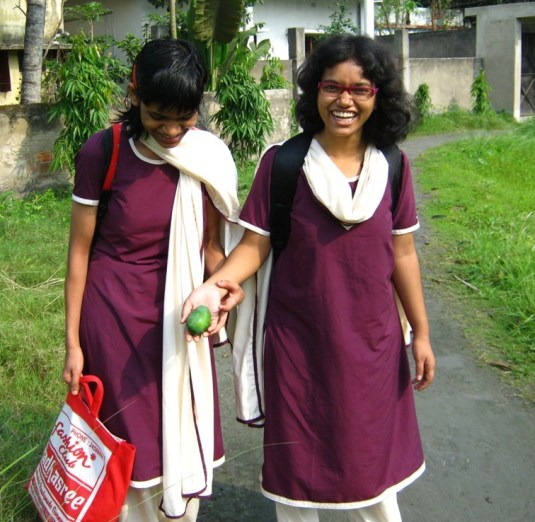
This morning we were early to school, very early.  I’m chronically getting us places early.  After getting out of the car, and going through the gate, we walk along a path that takes us to the buildings.  Sometimes we are very lucky and find raw, unripe mangoes on the ground, an “Early Bird Special”.  The kids love these mangoes, bitter, tongue curling bitter, bitter as bitter can be, and they love it!  So this morning we were lucky and they found a mango.  Some days ago I found a mango for them as I’d walked ahead… looking as if for shells on a beach and I found one.
Later the girls will share the mango with each other and their friends, each one getting a tiny little piece.  I tried it once and as I write I can feel my mouth curling…..  The morning is quiet here and I love the walk and the time with the girls.  I carry a camera always.  I love looking through the lens, a limited view where I concentrate, focus, see how I like it, whether I want to save it… to shutter or not to shutter. (^)

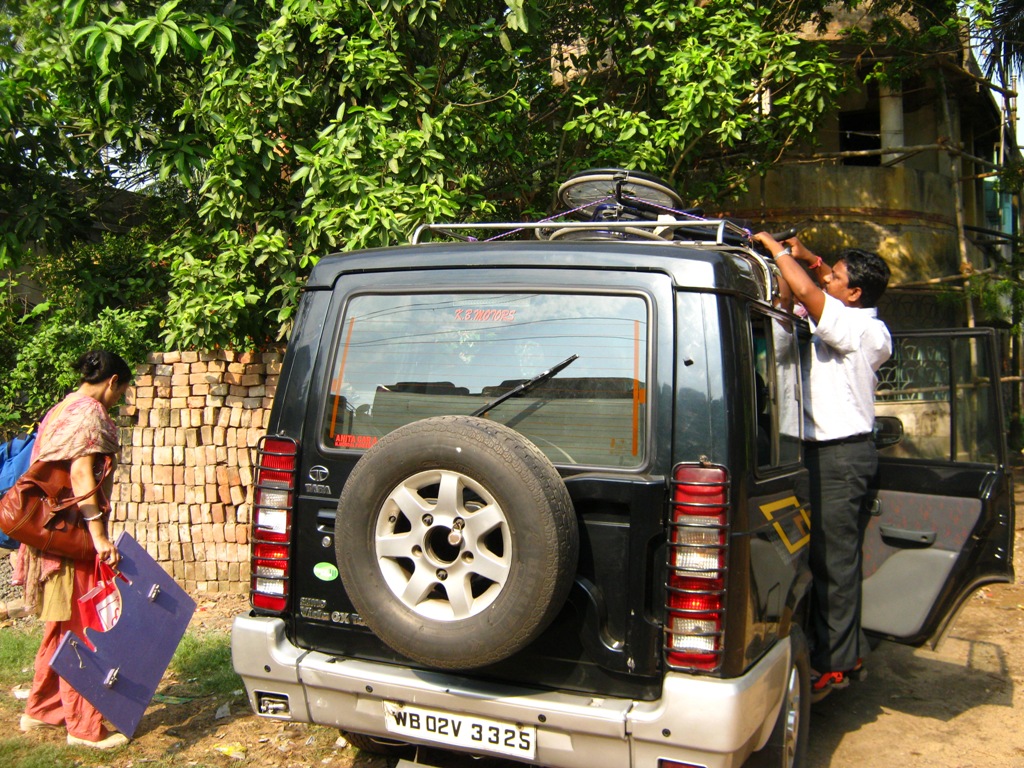
8 AM Arriving at school with 6 students, one teacher, one massi (caretaker), one Bijoy, one Me (Dr. H)

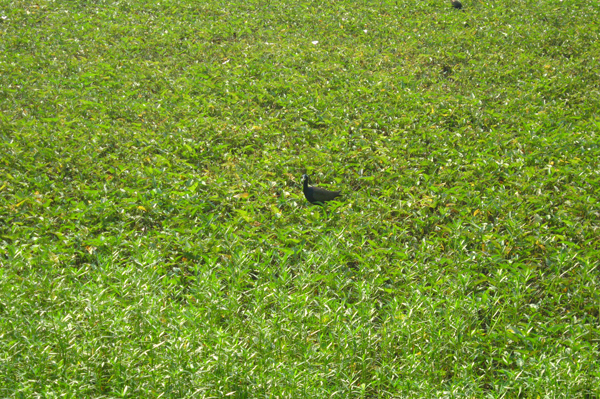
Pond filled with growth. This bird is often there, but today we saw many chicks in the grass. Tomorrow I’ll bring my good camera.

 
Girls going into the building. We are earlybut not the first ones there.


Pausing to take a picture of little flowers.

Back in Panchabatitala, we pull up next to the park for me to get out while Bijoy parks the car.   Today I take a picture of the park’s new blue and white paint as ordered by the government to replace the recently painted green white and orange of the Indian flag.

 We don’t use the park because local boys harass girls so it’s really a park for boys, little kids, parents, old people, but not girls over about 10 years.

An open drain as I walk down the lane to Shishur Sevay. The local funds that are to take care of drains were used to paint the park.

The colors of sunshine and greenery of Shishur Sevay! Bijoy’s motorcycle is parked in front. I smile when I turn the bend and see our house ahead.

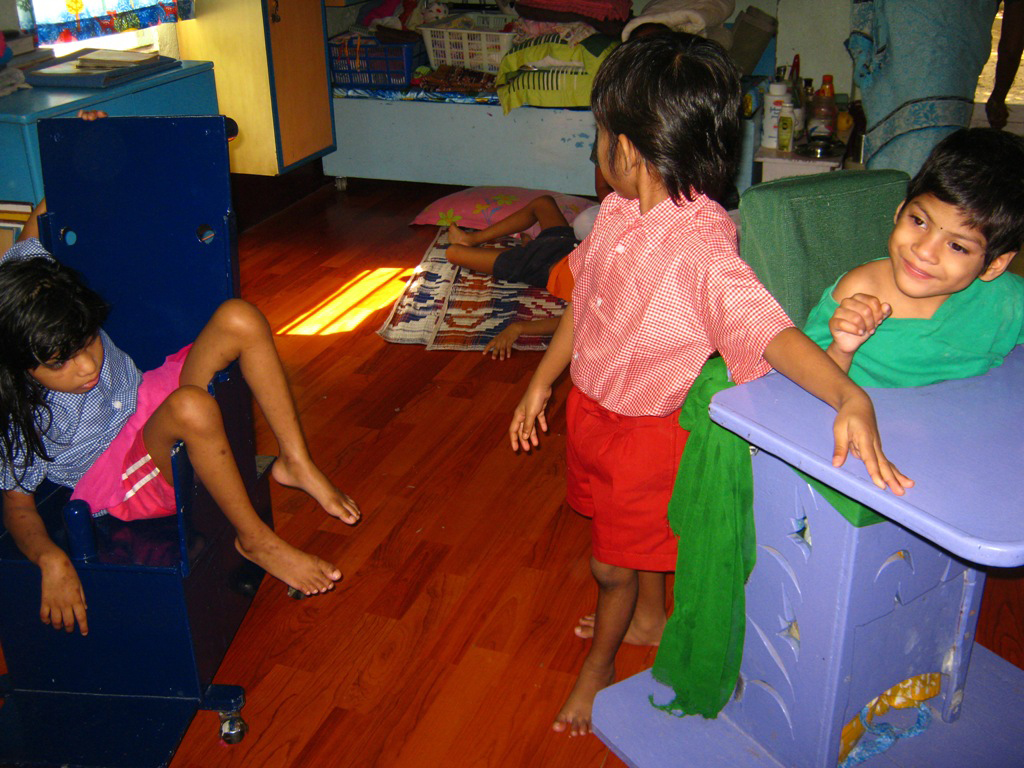
The home I walk into… Sonali is doing her acrobatics, Sanjana is in the standing box, getting taller and stronger each day. New little Kalpana has become their activity director. They listen to her!

Kalpana is showing pictures to Sanjana. Sanjana pays attention to her.

Shanti Devi, friend, Board Member, comes each morning at six to work with the little ones. They are her children and they work hard to please her.

Well, by 9:30 AM I’m at the computer, looking at these pictures, resizing, and then working on the blog.  It’s taken til 4 pm to finish — time broken up, but still time carrying on this conversation.  What’s it like?  This is what it is like, a little bit of everything, kids, writing, staff, phone calls, lunch, tea — I spend time with a girl haunted by memories.  She draws and I ask questions about her drawing.  She wants me to know.  The school girls get home and tell me about their day, homework, funny stories that happened.  The school gave Ganga more books so Purba and Maggie are covering them.  In truth, there is a very ordinary quality to our lives here, ordinary but unusual.

Previous Older Entries Next Newer Entries

August 2026
S M T W T F S
 1
2345678
9101112131415
16171819202122
23242526272829
3031