The Little Girl I Didn’t Bring Home


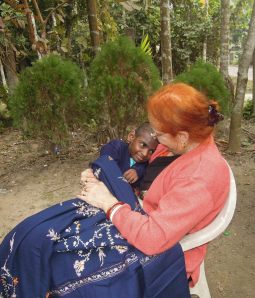
The little girl I didn’t bring home

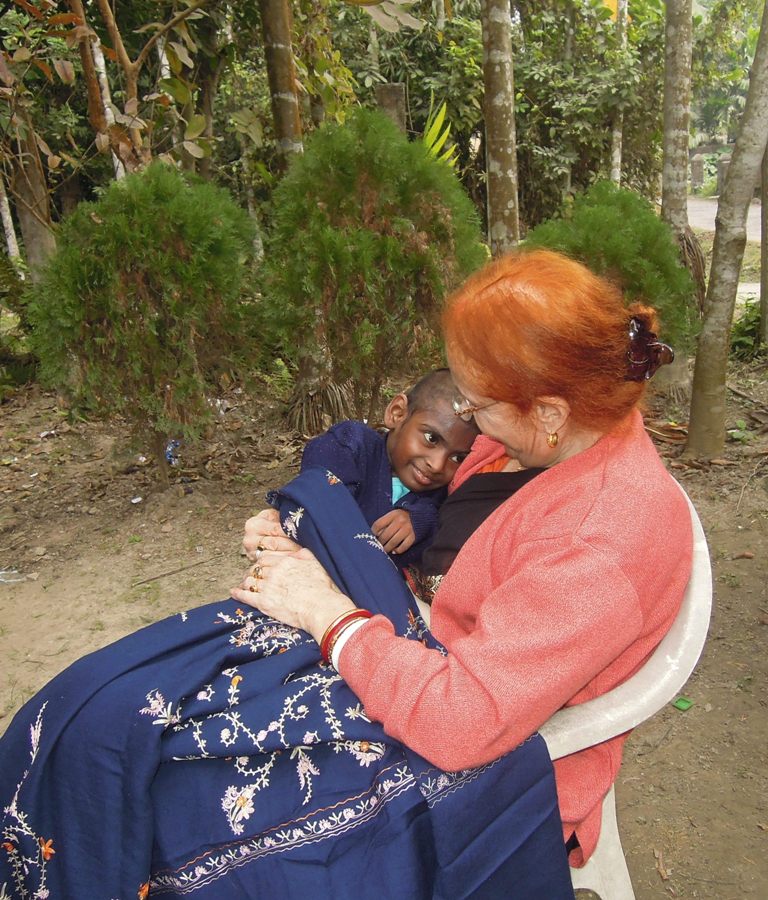
My goal is to help Aunty’s Home to be a better place, where Aunty can take care of the children who look to her for love, comfort, and food.   I sat there, holding this child a long time, talking to her (she doesn’t speak) and trying to define better my personal mission here as well as Shishur Sevay’s.

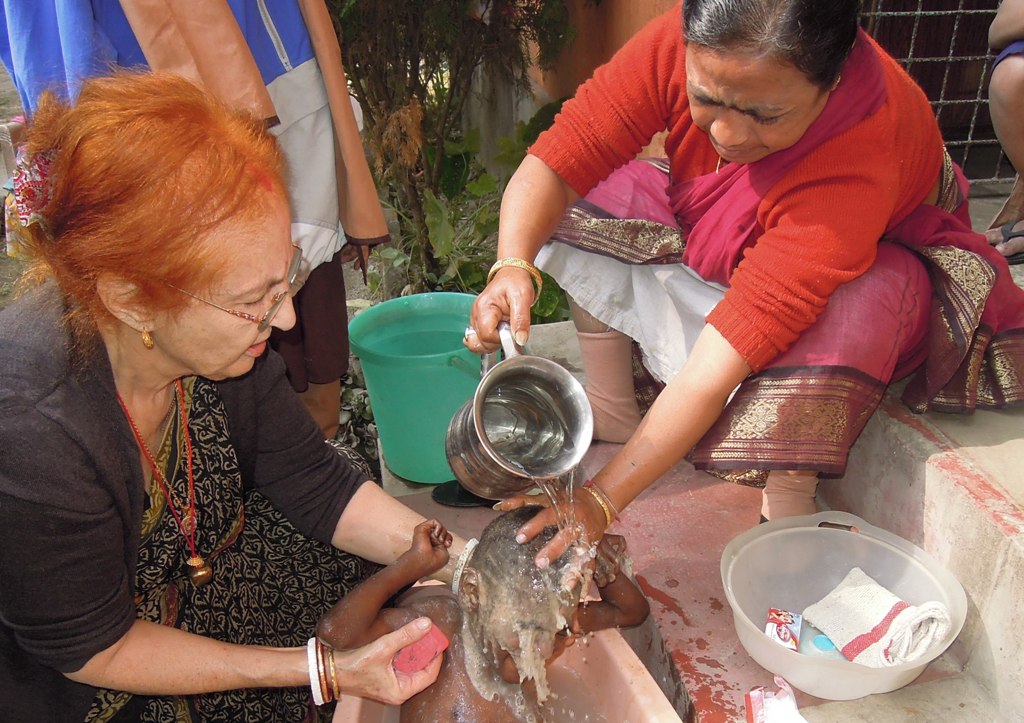
It came down to responsibilities, and cold decisions that are hard to openly admit.  Right now I do not have a second-in-command.  If I get sick, or die, Shishur Sevay will have to struggle through with some emergency plans we do have in place.  The place will continue, but the course may be rocky in terms of administration.  My goal for the last year was to identify who would do each of the things I do in the course of the day.  I’ve had two people I thought would last, potential administrators, but they did not work out.   So decisions I make today seriously affect the future of Shishur Sevay.  This child will never walk, talk, or be able to care for herself.  We have four children like that, truly our beloved choto bacchas (small children).  K, who I took on Christmas Eve, can walk, talk, feed herself, go to the toilet.  She will one day be independent. Second, Dr. Michelle Harrison, and Shishur Sevay cannot be an answer to the government’s refusal to take seriously the needs of orphans, especially those with multiple disabilities.  I am at Aunty’s orphanage helping because this IS my concern, the care of orphans.  What I can do is to give medical and health guidance to her home.  I’m not licensed in India so I walk a fine line.  (I do function as if someone is paying attention to such things, as I feel vulnerable).  Aunty has several children in the hospital, and this child as well as others will be going into the hospital for a period of evaluation.  As official medical advisor I will be following up with in-hospital visits, and discussions with doctors. Third, the girls at Shishur Sevay really do care about other orphans, about the poor, about those with disabilities.  I want them to learn how to care for these children.  It’s an opportunity for the girls who cannot, or will not study.  This work gives them meaning.  And, in my idealistic world of tomorrow, even my idealistic India, people will be needed who know the job, but even more, those who care.     The fundamental problem with Aunty’s home is that the government is almost one year in arrears.  Without pay, staff stops coming.  Without staff, the children with profound disabilities don’t eat.  Feeding them is very time-consuming.  At Shishur Sevay I have four people feeding four children.  Lunch is from 1-2:30 because it takes that long to feed them, put them on potty chairs, and bathe them.  Aunty has 1-2 people for seven children who cannot feed themselves.  Her older boys help out, but it takes training to feed these children so they don’t choke.  That’s what we have been doing the last three days, feeding and bathing.

Aunty loves these children.  Love is not enough, but neither is food enough.  The government has told her that money will be coming shortly.

Succession Planning – The Elephant in the Room

The “elephant in the room” is an expression describing when something is so obvious, but no one wants to talk about it.  So they talk about it, pretending it is not there.  The elephant, the most obvious problem and challenge for Shishur Sevay is that at some point Shishur Sevay must run without Dr. Michelle Harrison.  And that is as it should be.  One of the most serious mistakes a founder can make is to believe he or she will be there forever.  This elephant has been squarely in my vision from the beginning, and actually we here have talked about it more than once.  But others, reading about us, interacting with us, are often afraid to ask the most logical question, “What if you are not here?” 

So, what are we doing?  How do we begin?  We begin by looking at the systems, the sections, the natural divisions of functioning.  There is administrative, with finance and personnel the major components of that.  There is the internal school we run, one school, with different categories of children’s learning, some with physical, mental, social disabilities, some just late learners trying hard to catch up with their age peers.  We have the house, running it, the staff who take care of the children and the house, assignments, scheduling, mediating….   Then there is our presentation to the outside world, our Friends, Supporters, Donors.  It’s a lot.

Ultimately in a Society, the Board of Directors carries the ultimate responsibility for decisions.  They need to understand every aspect of the organization, and be able to make decisions, including decisions of leadership in my absence.  We have a very supportive Board at present. Two of our Board office holders, Gibi our Vice President and co-founder, and SeemaDi, our Joint Secretary are involved in the daily functioning of the Home, and have plans to become even more involved over time.  Even more important, each is deeply committed to the girls and their welfare.  The Board needs to be further strengthened.  Those discussions have begun.

Every task that is done by me has to be considered — who would do this if I were not here?  Someone, or rather the function of someone, has to be identified for each responsibility, whether it’s calling donors, meeting with the school, or noticing that a button is missing from a school uniform.  In the best of all situations I could step out and everything would continue, no one missing a beat.  I’ve written many times that I have no plans to leave Shishur Sevay.  I assume I am here for the duration, but I don’t want to manage Shishur Sevay “for the duration.”  I want to build a management team that can carry on the vision, mission, and values of Shishur Sevay.  I want to help develop the Board to take more of a leadership in the organization. 

Our first plan for Shishur Sevay included a “self-limiting” factor that could be a fall back if the organization did not thrive or grow.  But that vision assumed that all the girls would become independent in some form, would be married, or otherwise live on their own and support themselves.  By taking in profoundly disabled children, who cannot eat, dress, toilet themselves, nor can the speak, Shishur Sevay has become committed to providing this level of caring and education beyond the youth of the abled children.  Shishur Sevay must be a permanent home with vision far beyond our twelve children.  This is good.  This is a learning.

I’m thinking about this even more with the move.  Actually I keep hoping I can find a good reason NOT to move, as the task is a daunting one.  This morning I looked out the window, thinking about Shishur Sevay, and realized once again why we have to move, and why it is MY responsibility to get us moved.  If I think of us as a ship, then I say we are not in a safe harbor.  It is quiet at the moment, but that can change at any moment.  It is my job to get us to a safe harbor.  I can negotiate the waters here.  I have for four years.  I’m the founder; I’m a foreigner, for better or worse; I have an (at times) imposing presence.  But what happens when I’m not here?  Is any other director going to be safe walking to the end of the lane?  Will the girls be safe walking, without my presence holding off the goondas?  No, we have to be where we have easy and immediate access to a road, and where others have easy access to us.  It’s really pretty simple. 

I’m the captain.  The ship has to be seaworthy.  The crew has to be able to take over at any moment.  The Board has to be prepared to give direction to the crew.  All this needs to be in place.  It came to me pretty simply this morning.  I have to leave a seaworthy ship with a seaworthy crew, docked in a safe harbor.  I could not “rest in peace” otherwise.


Mummy&Ganga_8174W

Shishur Sevay at the End of the Lane

It has been hard explaining exactly what is the trouble, and why we have to move, but we can still stay in the general neighborhood.  So I made a picture.  When I was a kid I spent hours and hours drawing house plans.  I’d browse magazines of house plans.  I’d imagine common space and individual rooms.  I liked simple designs, “L” shaped… So I went online last night to look at house plans and ended up downloading a trial version of SmartDraw.  I took a landscape template and spent much of today making a picture that represents our situation.  In a way, working on the diagram has been an escape, a meditation on our situation.

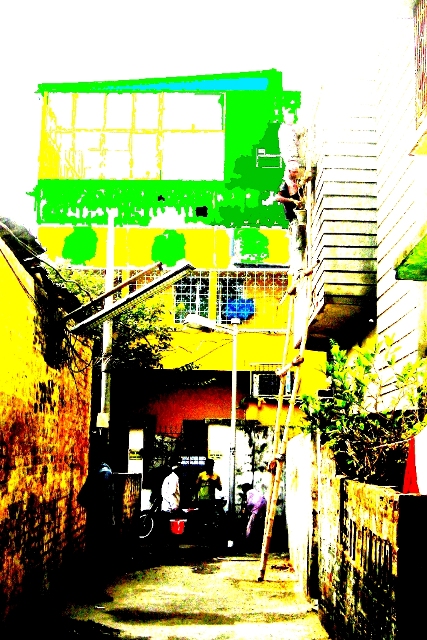
We live at the end of the lane.  The houses in RED represent threats to us.  House A monitors all visitors and staff, listens to people talk as they go by, comments on the children, and eventually repeats all he hears to whomever will listen.  He is a man with political power.  As I wrote below, none of the other men will come past his house to help us. 

  END-OF-LANE4

Then there is House B, a partner to House A, who also rents out shacks in the area, and thus he controls the tenants.  Recently he opened a tiny store right next to Shishur Sevay.  The music blasts through the neighborhood, so even people who would otherwise talk quietly outside are yelling to each other.

Once out on the road our situation is better, and probably as good as it might be anywhere.  We are known, and respected.  We shop at local stores. Our girls go to school and meet other local children at the bus stops.  I am often referred to affectionately as “Mother Teresa of our Area.”  It’s really funny.  We have a good relationship with the rickshaw wallahs, as I have helped some of their kids, and I always tip well.  If you take a rickshaw from the nearest major road and ask for “The foreign lady with the children,” they will take  you right to our house.

How did we get into such a mess?  Well, House A has a small fan factory in his ground floor.  The owner of that factory was someone we knew for years and trusted.  He is the one who showed us the house, and when I went to see it and walked past his little factory in House A, I thought how nice it was to be close to people I knew.  I wasn’t alone in this.  The rest of the Board thought it was fine too.  You don’t have to be a foreigner to be fooled.

I want us to stay in the neighborhood because Gibi and Seema are close by and they are our support, the ones we call if we need help, if I have to take a child to the hospital, if I am sick — they are part of our DAILY lives.  They too are part of the neighborhood and their presence and support add to our security — except at the end of the lane.  They can’t help us here BECAUSE they are part of our support.

The girls have had a good day, a mixture of schooling, story telling, dance, and now TV.  The radio outside is blaring but I don’t even try to do anything as we will be moving.  I’m also working on a wishlist of what we want/need.  We need space, accessible space.

I was going to save this for another blog, but here goes: 

 SAFETY AND PROXIMITY TO THE CURRENT LOCATION

    • IN SAFE LOCALITY
    • PLOT BOUNDARY WALLS
  • HOUSE — STRUCTURALLY SOUND FOUNDATION, WALLS, ROOF 
  • WATER SUPPLY
  • ELECTRICAL SYSTEM GROUNDED FOR MODERN TECHNOLGY
  • PLUMBING – SANITATION 
  • ACCESSIBILITY
    • FROM OUTSIDE
    • WITHIN HOUSE
  • HOUSE – MUCH OPEN AND COMMON SPACE, WITH MOVABLE DIVIDERS 
    • 1500 SQ FT GROUND FLOOR
    • CLASSROOMS AND REHAB FOR HANDICAPPED CHILDREN –LARGE SPACE WITH PARTIAL DIVIDERS-MOVABLE 
    • OFFICES
    •  KITCHEN AND PANTRY
    •  DINING ROOM
    • BATHROOMS
    • MEDIA ROOM AND LIBRARY
  • 1500 SQ FT FIRST FLOOR.
  •     DORMITORY SPACE
  •     DRESSING ROOM
  •     CLASSROOMS
  •     SUPERINTENDENT’S ROOM
  •     LAUNDRY ROOM
  •     SUPPLY ROOM
  • Roof
  •     laundry lines
  •     play areas

     Garden

    •  play area
    •   covered jacuzzi

              RABBIT HOUSE

Today I learned that the girls were worried about Jelly our dog and also our rabbit — would we take them?  I told them the story of how I once bought a battery operated aerating travel tank to move my angel fish from Boston to Pittsburgh.  I told them Jelly will come with us.

That reminds me about the wild dogs who live outside and howl all night.  The post office won’t deliver mail here because of the wild dogs.  Letters are left at that “friendly factory” for us.  Sometimes I carry a cane or umbrella just to keep the dogs from us.

You know, it really is bad.  I worry sometimes about just being a wimp.  Well, maybe I am but it’s time to wimp out and get my kids and me to the other end of the lane.

It’s ten and I’m heading for bed.  The girls are watching TV as it is Saturday night.  A few nights ago I went to bed and asked, “Is everyone asleep?”  I got several, “Yes, mummy,” responses.  So I asked WHO was asleep and the sleepers revealed their names,,,, and yeah, they finally got it and we all had a good laugh.  I love my life here.  It’s hard but there is nothing else I would want to be doing now in my life.  I just have to get us to the other end of the lane… HELICOPTER?

 W-Crowsnest_8535CR-psdWWeb-0101

The “Old Lady’s” hopes and expectations

Well, I’m the “old lady” and it stings.  There is a Bengali term for old lady, used affectionately or insultingly… One of the girls was angry and called me “Boori” or something like that (Not bodie, which i know).    Children will say anything, and probably they have said worse to me and about me — while I enjoy the ignorance of not knowing Bengali.  But this expression set off a chain because she took the phrase from what others (staff) had been calling me, and that led to other unpleasant terms, and my realization that my sense of isolation was not imagination, my sense and open complaints of disrespect were not unfounded.  I was the crazy old lady who thought I could do something with these children, and some people wanted me to fail, and to leave.  It is complicated and simple at the same time. 

At first i took the insult literally and said she would be lucky to be such an old lady at my age…. and that there was nothing wrong with being an old lady.  But that wasn’t the point… and that was only one of the difficulties that came to the surface in talking with the girls.  Other staff had told the girls I was too strict, that I was ruining their lives, that i expected too much of them, that I was trying to make them forget Bengali (ignoring that I chose Bengali medium for our education)… and many other accusations which sink easily into the minds of children, especially when they are facing discipline, and a foreigner (a white lady) for the first time in their lives.

Some of my readers may believe i’m too strict.  There is no formula for what i’m doing.  Oddly i’m accused of challenging or violating the “culture” in how i’m driving the children academically.  But which culture, which Indian culture?  Is the the Indian culture of the educated who enroll their children in the best schools and then add hours of teaching after that?  Is it the Indian culture of the US, with which I’m most familiar, where Indian children study harder and longer than their American counterparts and do better.  The culture I am really challenging is one with low expectations and a sense of hopelessness in what can be done for these children, the culture for whom these are the throw away children.   And I am the old lady who thinks she can help them.  And I still refuse to beat them or allow others to beat them; I don’t allow withholding of food, or pencils…

So, for the record, what are my hopes and expectations… What do I want for these children, who I now call mine?

1. I want them to be educated enough and well-behaved enough to have choices in how they live.  If you are mad at your boss, whether she is a principal or a cleaning supervisor, you cannot call her an “old lady” and expect to keep your job.  You also cannot throw books at your boss, or simply tell them they can’t make you do something.  They can’t make you do something, but they can fire you.  I dont fire the kids, so I just tell them l/we will have to slug it out until I win.  They will be well-behaved eventually.

2. I want them to value personal connections and whatever sense of family they have.  If they marry, I want them to be good wives and daughters-in-law, but if they are ill-treated they can come home. 

3. I want them to manage issues of sexuality, to which they have been much too exposed.  One of our girls loves to dance in pure Bollywood style.  My goal is for her to have a good life, in whatever way she can, but NOT to end up dancing in a cage in Mumbai.  She is gullible.  She could go off with a stranger.  I tell her about the cages.  I have to.  My girls are prey.

4. I want them to experience a stable life now, with enough food, with education, with good health.  If they choose or feel forced into the life they came from, I believe they will want better for their children.  These girls are full of doubt about their own worth.  They know they were discarded.  They have been used in all sorts of ways. There is no way to feel good about that.  Sometimes they are, and will be, self-destructive.  They all wish their lost siblings could have this life.  So some of their rebellion and pain comes from guilt — that they have what their siblings don’t… the guilt of the survivor.  They have too much on their minds.  They have begun to write stories and poems.

5. Coming to specifics, we have one or two potential nurses, technicians, maybe a doctor or lawyer,,, maybe a teacher or two…. one mathematician, a couple totally unskilled, but hopefully experienced in working with handicapped children… specialized “unskilled”.   We have potential artists, dancers, musicians, actresses.   I expect a few weddings.  Remember, it’s only been 14 months.   We don’t know, and can’t know.

I started by saying the insults sting, just cuz that’s how life is.  I used to complain that no one was telling me what was happening.  It was true.  it was more about me than i’d realized.  But with all that, I have to come back to the present moment.  I am where I want to be;  I am doing what I want to be doing.  It has been very hard.  It will always be very hard.  There is no formula, only purpose and effort.

I have come through many battles.  It has been hard on my kids, my two daughters and son-in-law in the US.  They are upset when I tell them, and worried when I don’t.   We are at a new plateau, a level of openness, as I prepare for their visit in July.

When I was undergoing chemotherapy I lost all my hair, and my husband at the time told me I looked like an old man.  So I’m reminded of his words, and of my trusting people who feel so free to try and hurt me.  I wrote a poem:Hair2-Finalw
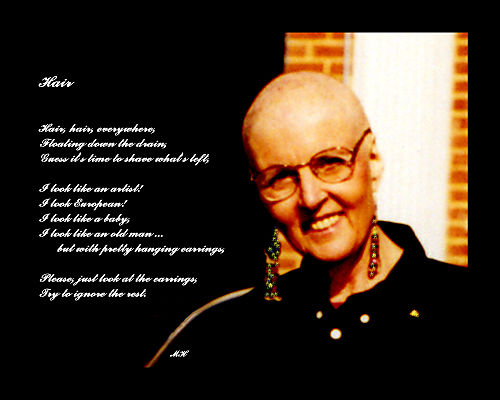


Hair, Hair, Everywhere

Hair hair, everywhere

Floating down the drain,

Guess its time to shave what’s left.

I look like an artist!

I look European!

I look like a baby,

I look like an old man – but with pretty hanging earrings

Please, just look at the earrings,

Try to ignore the rest.

MH

November 18, 2000

I keep thinking of what we tell each generation of children about insults:  “Sticks and stones may break my bones, but words will never hurt me.”  What a lie.  Words can break our hearts and our spirits, and sever the ties that bind us  They can take up residence in our minds, and serve as constant reminders that we are not safe, loved, or protected.  My children have so many words in their heads.  I don’t expect them to disappear.  I do hope the girls can find balance, other words, good words that balance, that also remind them of who they are and what are their possibilities.  We need to create the “Old Lady’s List” of words and ideas that give them strength, words that build and soothe and shore them up against the insults they already hear inside.



Next Newer Entries

August 2026
S M T W T F S
 1
2345678
9101112131415
16171819202122
23242526272829
3031