Seven Years Together at Shishur Sevay

A few nights ago I dreamed I was trying to put our records together and that required that I establish records on the moon first, which I did, and then replicated here at Shishur Sevay. I kept asking, “How can I explain to people that I had to get this done on the moon first?” I’m working on a blog post about the past seven years here. Maybe that’s the answer as to why the dream.  I’m feeling a lot of pressure, trying to write about what it’s been like, and probably holding back a lot on what it’s really been like. I’ve been to the moon and back…. that’s what was required.  It was cold and lonely and void of vegetation.

Shishur Sevay today is thriving.  It’s glowing.  It’s what I’d dreamed it would be. So here is the blog I was working on before I went to sleep, before I understood I’d been to the moon and back.  The process of building Shishur Sevay has been brutal, but the product is beautiful.

Seven Years Together
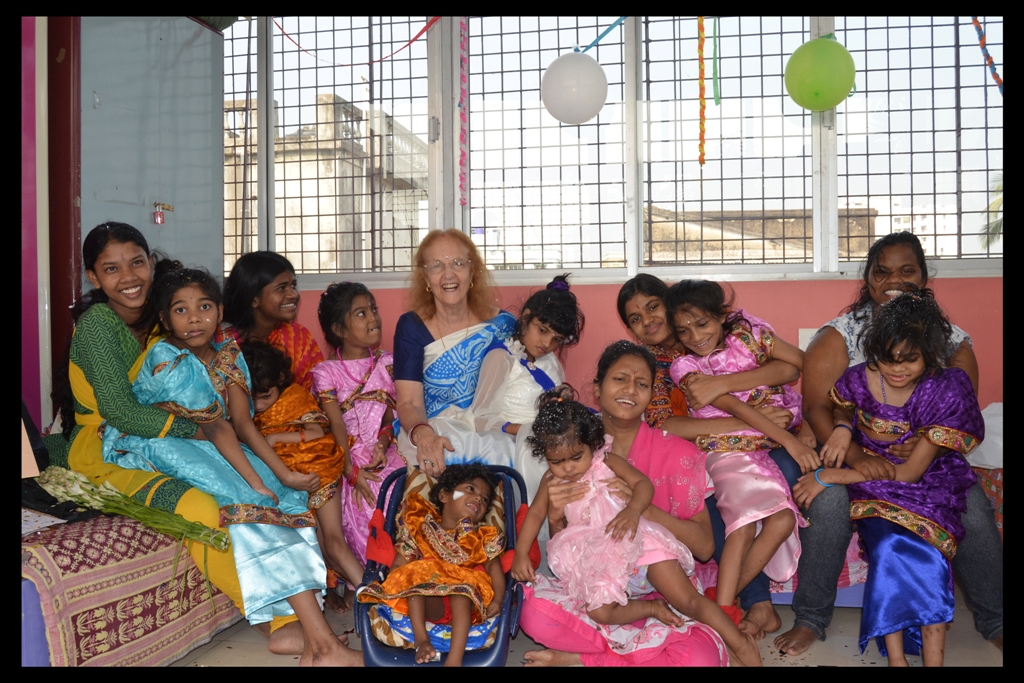
A picture of all the girls of Shishur Sevay and Dr. Harrison on her birthday

My Girls of Shishur Sevay and Me

The first twelve girls came to Shishur Sevay in February 2007, so for me this time of year is always one of reflection.  They came with an array of abilities, disabilities, and medical conditions.  All came with scars, emotional and physical.   They all were socially and educationally deprived, and had led lives filled with violence and deprivation.  Then at some point, each had lost everyone and everything: parents, siblings, extended family, and community, and eventually were placed in a government institution.  These are the children I’d sought, the ones considered not adoptable in India or abroad. They had been rejected by adoption representatives before they were sent to me for “rehabilitation” by Order of the Child Welfare Committee.   With adolescence, three of the girls became too unmanageable, with behaviors that put us all at risk. My decision to return them to government care was very difficult, and taken after many attempts over the years at various treatments and therapies, but necessary if Shishur Sevay was to be the safe place it is.  I had not expected ever to have to do that.

This year we started an inclusive school, Ichche Dana Learning Center because educating the girls in outside schools “did not work.”  The girls are beginning to put their efforts back into learning.  There were several factors interfering.  One was their early deprivation that left them far behind their classmates, while they were also older than their classmates.   Science is now giving us information on the effects of this early deprivation.

http://ecceportal.in/index.php/news2/136-more-talking-longer-sentences-help-babies-brains

At school the girls were seen as “different” because of their origins, and they felt different. Teachers lowered expectations; some gave them false high grades because they “felt sorry” for them.  Others ignored them, or queried them about their origins and caste. The Indian system of rote memory left them too frightened to learn anything but the paragraphs they had to memorize and give back, an impossible task when you don’t have the foundations of language, any language.   Ideas of self-discipline, hard mental work, and delayed gratification were as foreign to them as I was..  If work was hard it scared them.   They lived in fear.  It was time to bring them back and start anew, which is what we are doing and so far it is working very well.
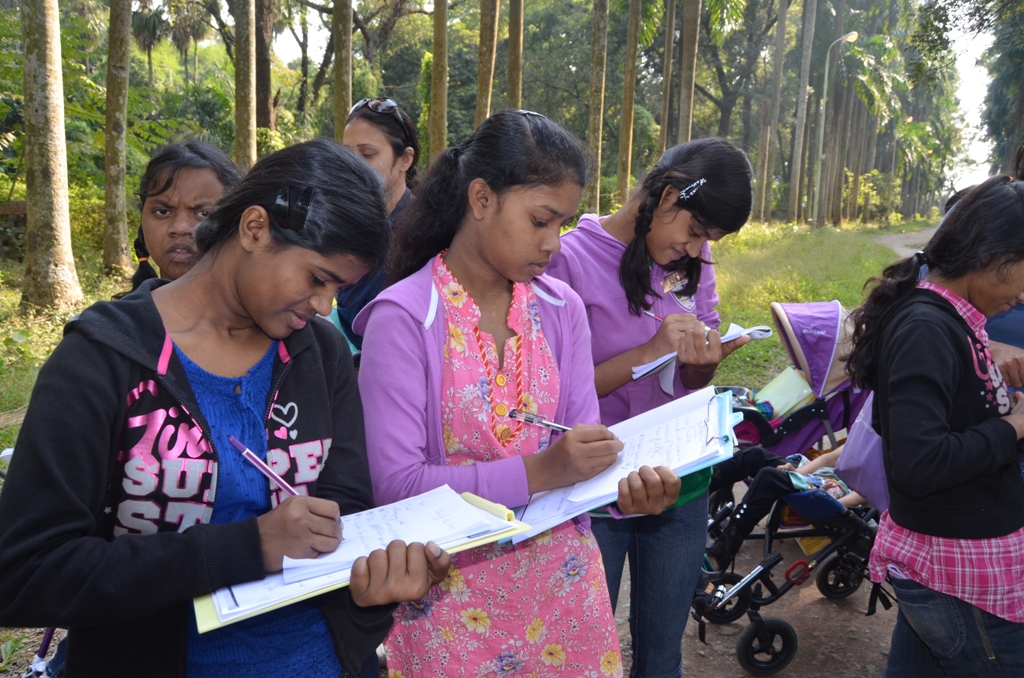
Girls taking notes at the botanical gardens.

Taking notes at the Botanical Gardens
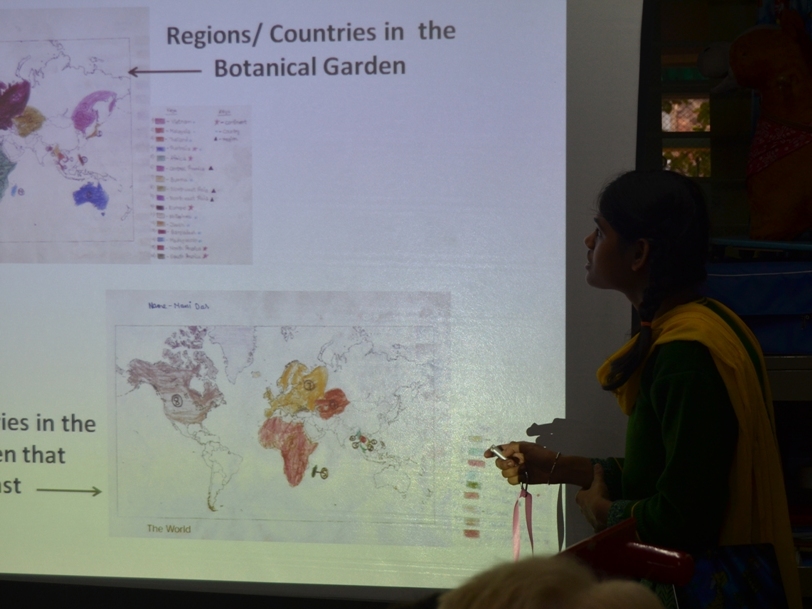
doing a presentation of trees of botanical gardens

Presentation about the trees of Botanical Gardens

The girls did a presentation of their work to volunteers from Equal Health,a team of Australian educators who were with us  in January.
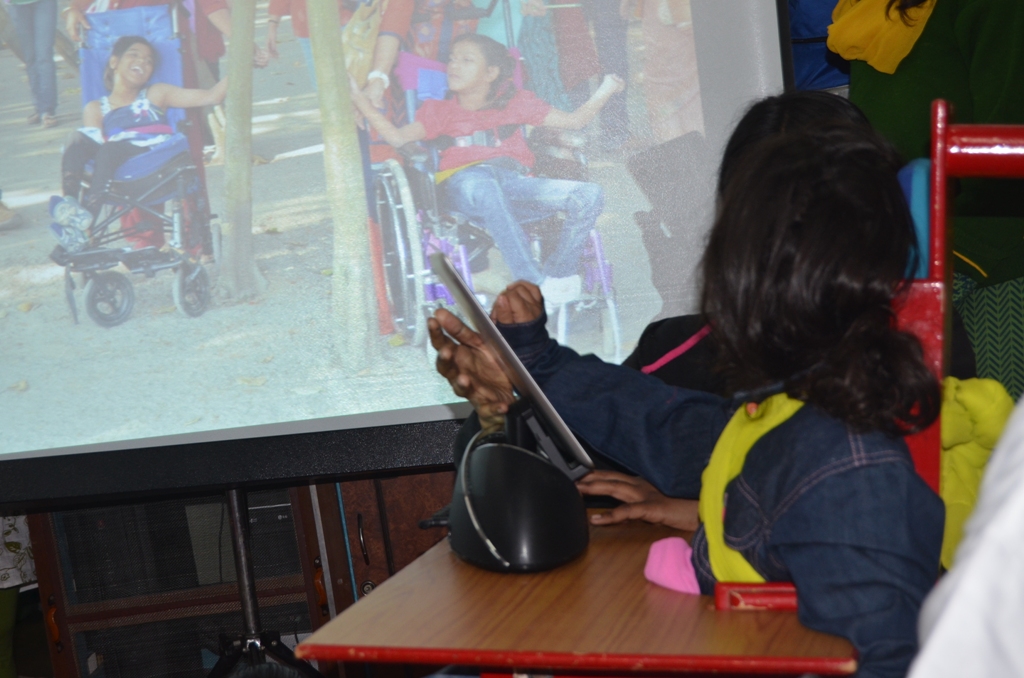
Ganga Presenting

Ganga Presenting

Ganga and Bornali both presented by use of the iPad and the recorded script.

This is inclusion.  Everyone is able to learn something and to contribute.  Some of the coursework has to separated by level of understanding and skills in reading and comprehension, but the ideas and subjects and methods of presentation can be done by all.  And our children with the most severe disabilities, even if they can’t join in, they still make wonderful and appreciative listeners.  Everyone has a role.

Our eventual plan is for the girls who are able, to enroll in the National Institute of  Open Schooling which will allow them to sit for Class 10 and 12 examinations. We will send to college those who are able.  We will look at job training for others.  Some of our older girls may need to stay with us.  I’ve promised marriage to those who want.  We talk about dowry because it’s integral to the world they live in.

This year though, I find myself thinking a lot about our girls with the most profound disabilities and looking at the therapies and methods that have and have not “worked.”  The children thrive on attention, especially one on one!  If I were in the US, I’d be thinking about finding teenagers to just play with them, floor play, songs, things I’m familiar with.  I haven’t found that here.  My experience (and I add the caveat that I can only speak for my involvement with families since 2000) is that teenagers do not “babysit” or work outside their families.   Play happens sometimes as “therapy” by professional therapists, but that means it’s a very limited and expensive resource. As for cognitive tasks, my little ones would rather be dancing.
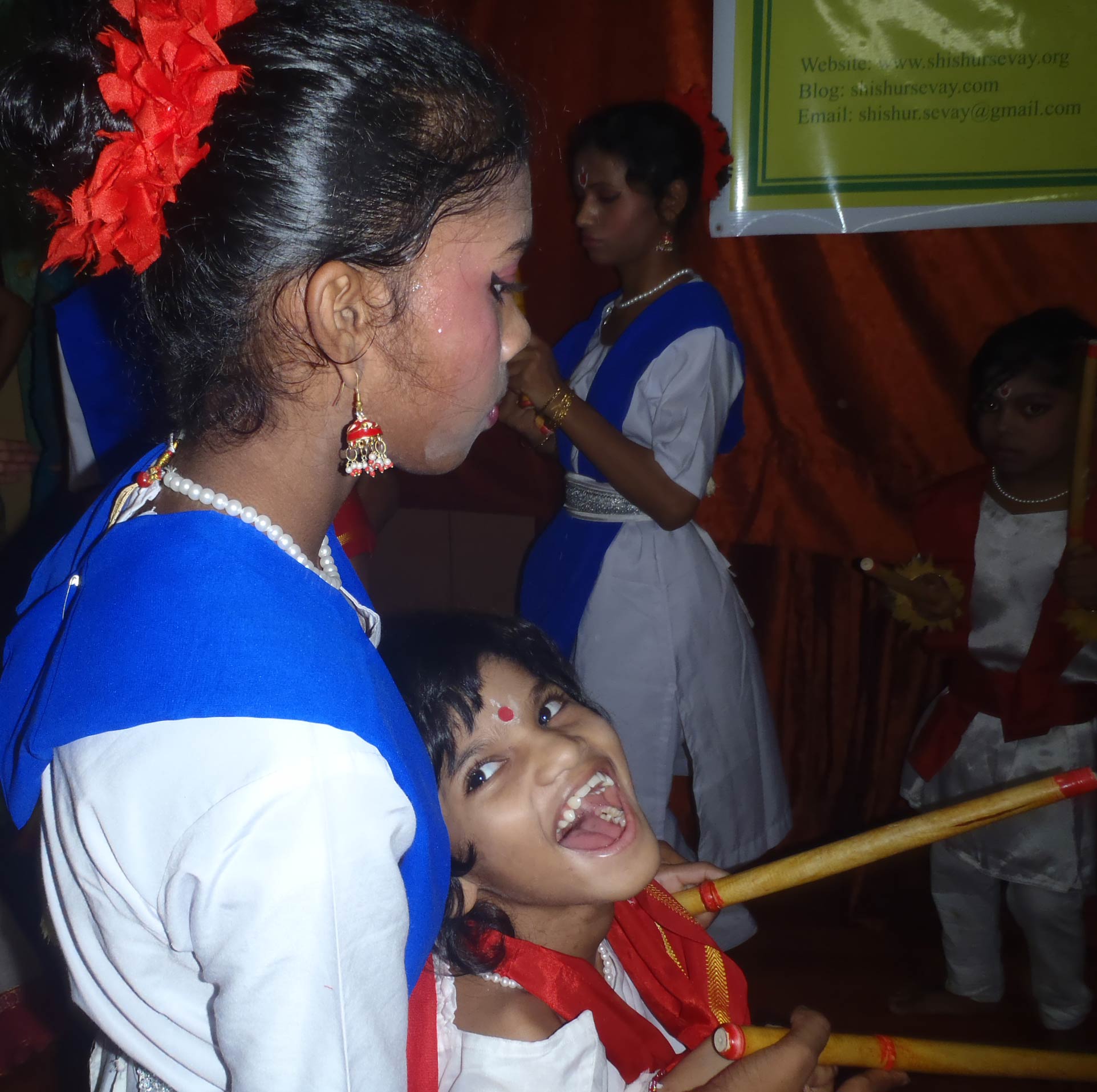
She'd Rather be Dancing

She’d Rather be Dancing

One day I will tell the story of what it took to get here, but Shishur Sevay is a wonderful place now and that’s how the journey must be seen.
Today I Bathed in the Ganges

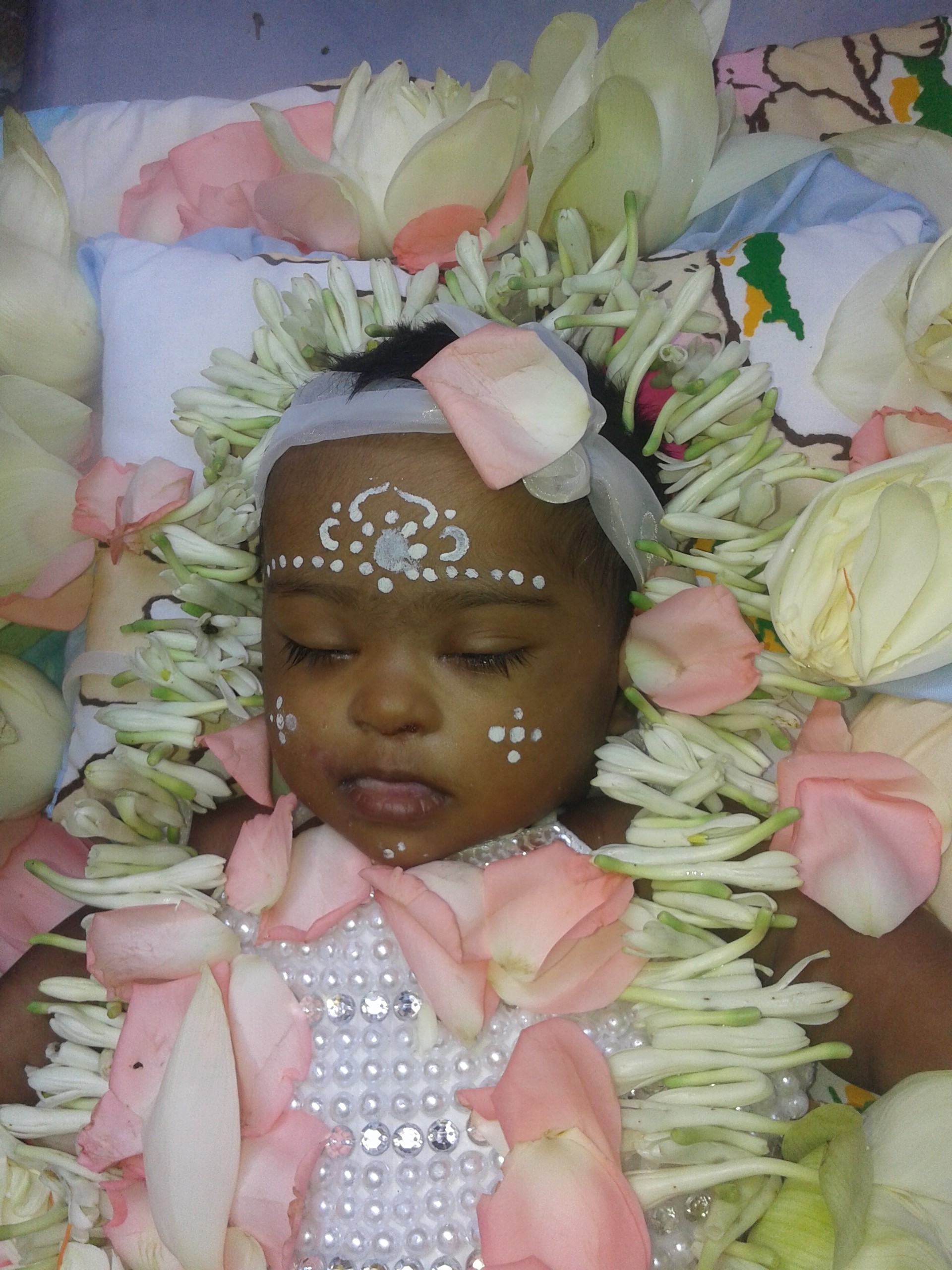
Tuni at Rest.

Tuni at Rest.

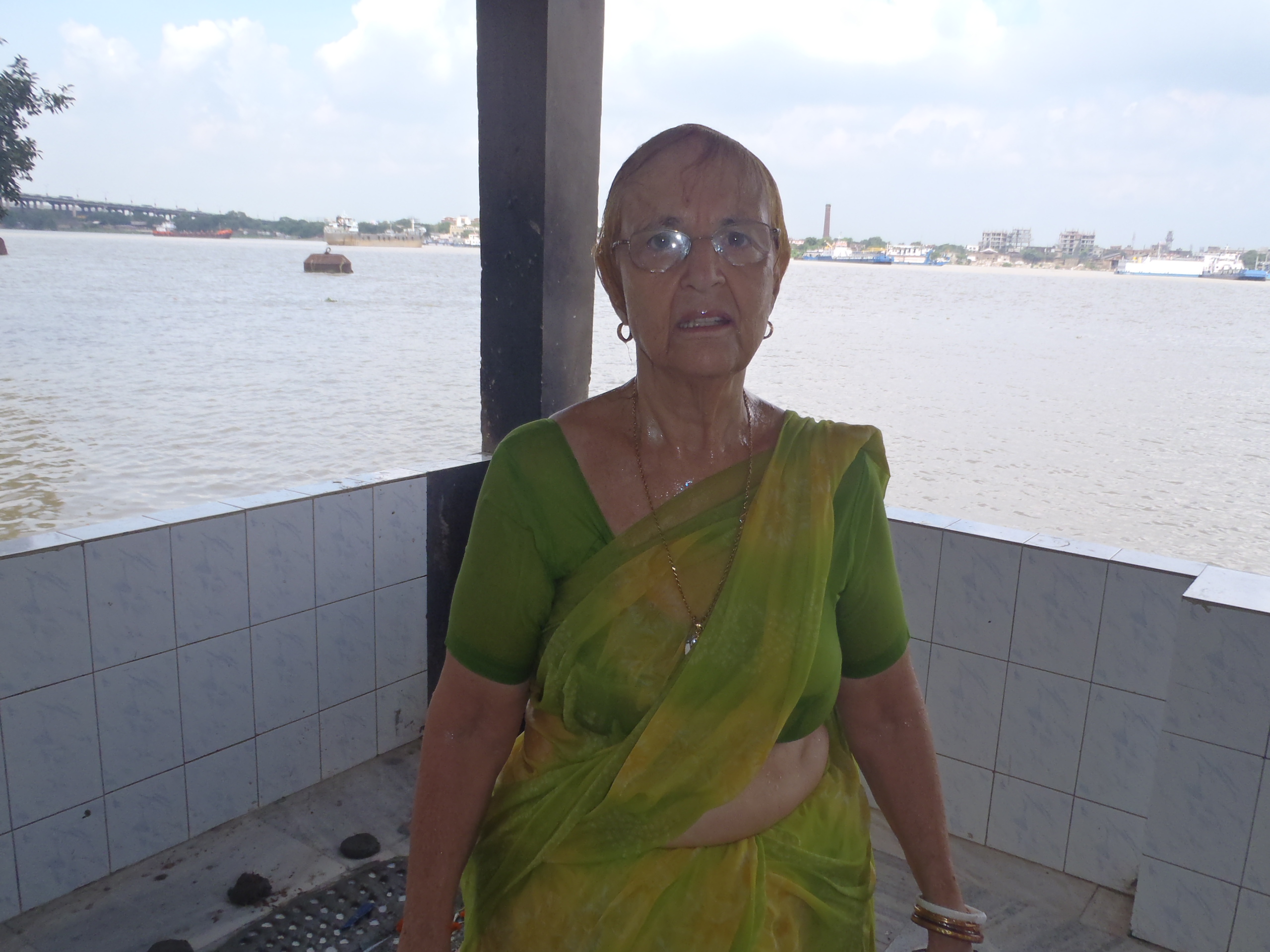
Today I bathed in the Ganges.  Tuni Harrison died on the 14th of August 2013.  She had heart surgery the day before, but her heart gave out.  Today, three days after her death, Bijoy and I went to the river, with a Priest, and gave rites to send her on her journey.  We offered clothes, food, milk, flowers, incense, and so many prayers.  And then we immersed ourselves in the river three times, and pushed water out into the river three times, and I cried because I want her journey to be wonderful while I also want her back in my arms.  I accept, but I am bereft.  Even as I send her off to be with the Gods, I also call for her to come back soon.  I’ll be looking for her.  I will always be looking for her.  When she came into my life I felt as if I’d always been looking for her.  When she died I felt that I’d lost someone I’d always known.

Souls sang to my heart,

The winds taking them afar,

My nestlings flourished.

Yes this is true.  My children, my nestlings, flourished.  And when they were grown, I went looking for where the winds had taken the others.  Tuni came home to me, and now she is gone… Like a little God, she came and filled our hearts, and the hearts of so many around the world, and then she left….. with the slightest smile on her sleeping face.

I am raw.  My life is raw.  I am immersed, as if in the Ganges.  Tuni came for a purpose, a light and a gift, but I think we are only at the beginning of her impact in our lives.

In the days ahead I will write and post pictures of the last seven days.  It was just a week ago that I took her for an evaluation and the doctors decided we could not wait for surgery as her blue spells were increasing, and medication was not helping.  Here at Shishur Sevay we arranged for an oxygen concentrator and bought a pulse oxymeter.  It was frightening when she would turn blue, and cry and then go limp…..

Today I bathed in the Ganges.

Coming out from the Ganges

A Beautiful Visit From The CWC

A comment posted to my last post, https://shishursevay.com/2013/07/14/cwc-child-welfare-committee-finally-coming-for-inspection/, wrote:

I am a little confused. One minute the CWC folks are confrontational; they want to take you to task for some kind of an infraction, teach you a lesson. The next minute, they want you to help them do their work for which they are paid by the tax-payers. I’ll eagerly wait for the next segment of the story, as will others, I’m sure.

Yes, that’s right.  No, it makes no sense.  That’s just how it is.

From the beginning, I have wanted to work with the government, particularly regarding the institutionalized children. I don’t know why the CWC’s attitude changed.  I do know that currently they are desperate and overwhelmed, and they have always been angry that I wouldn’t take more.

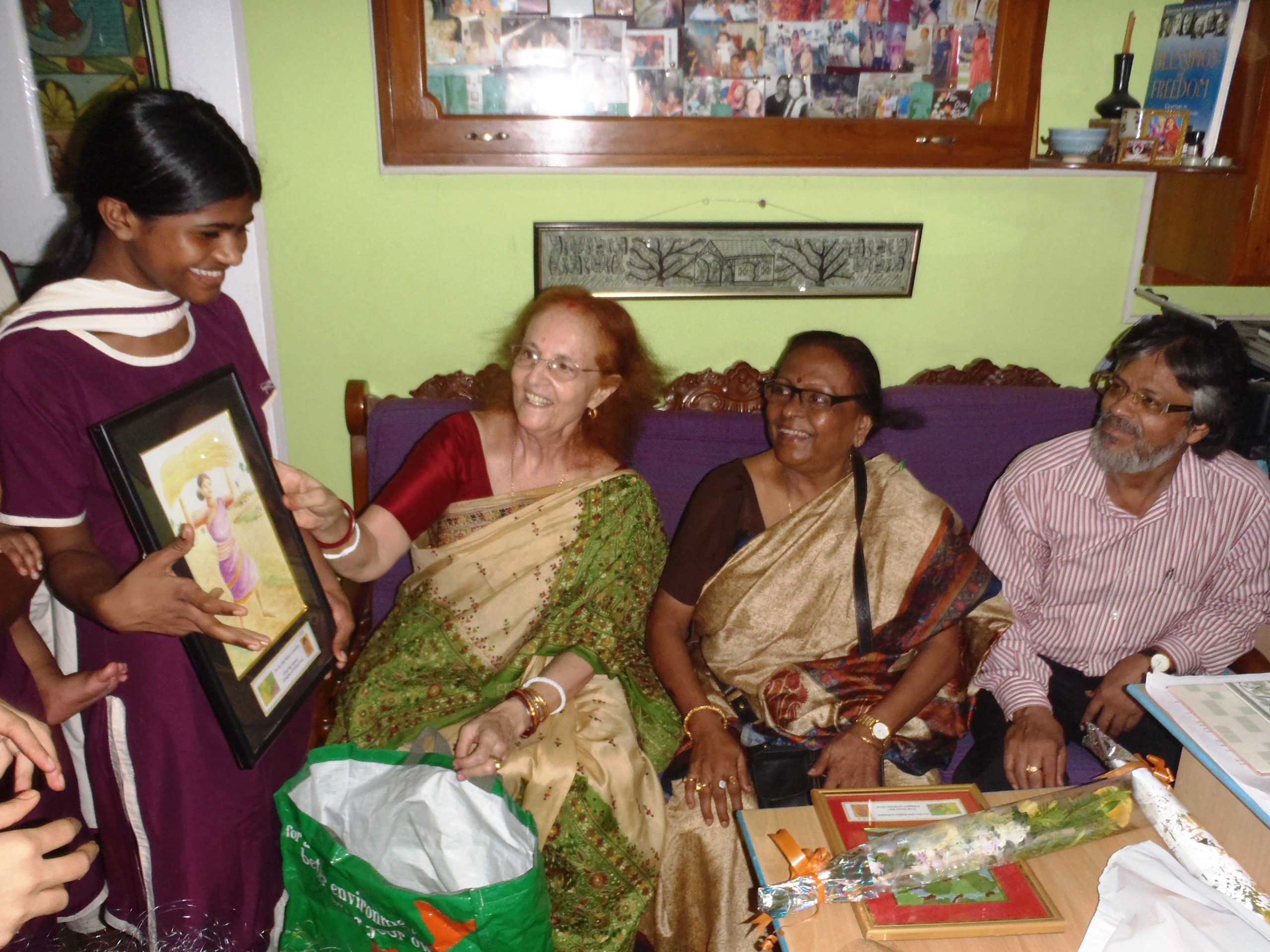
The visit was beautiful.  We did the formal things that are expected.  The girls presented flowers to each guest.  Each did Pranam, the touching of an elder’s feet.   One of the girls presented her embroidery work, framed, and another presented her artwork, also framed and inscribed to the CWC.

Our girl presents her artwork to the Chairwoman

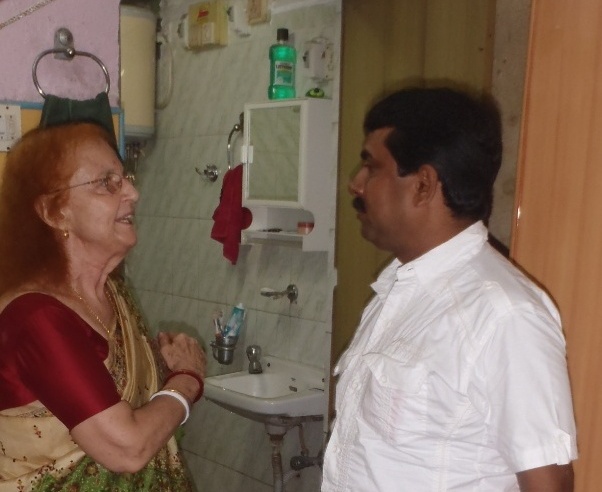
They toured the house and I insisted they see inside of the bathroom.

Bathroom on the Tour

They noticed the fire extinguishers and said they’d not seen them before in a home.  Seema Gupta took them upstairs while the Chairwoman stayed down in my office to talk.  I had put my three published books out on the table and showed them to her.  I told her that clearly I had a lot of help here, but that I carried the full burden, that I have to think about what I can manage.

They had come with an agenda. The Chairwoman said they can offer all sorts of assistance to expand the building, or to build a new home.  But they also have an immediate problem, namely four very young children with disabilities who are in various hospitals in one of the districts that has no functioning  CWC.   The others came downstairs to rejoin us and talked more about the problems they are facing.   They talked of their pain in visiting the children in the institution.  There is a paralysis here… something I noticed years ago.  Some people really do care, but they don’t know what to do.

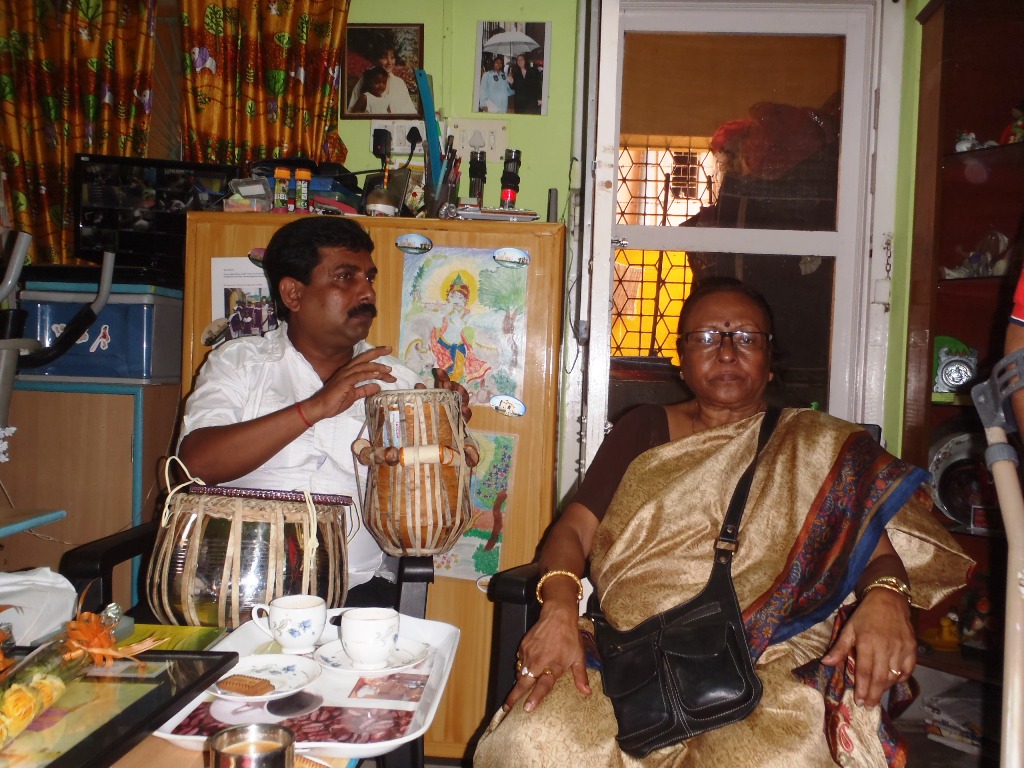
Table and Talking in the CWC meeting.

Tabla  and Talking in the CWC meeting.  One of the members plays and was thrilled that our girls are learning tabla.

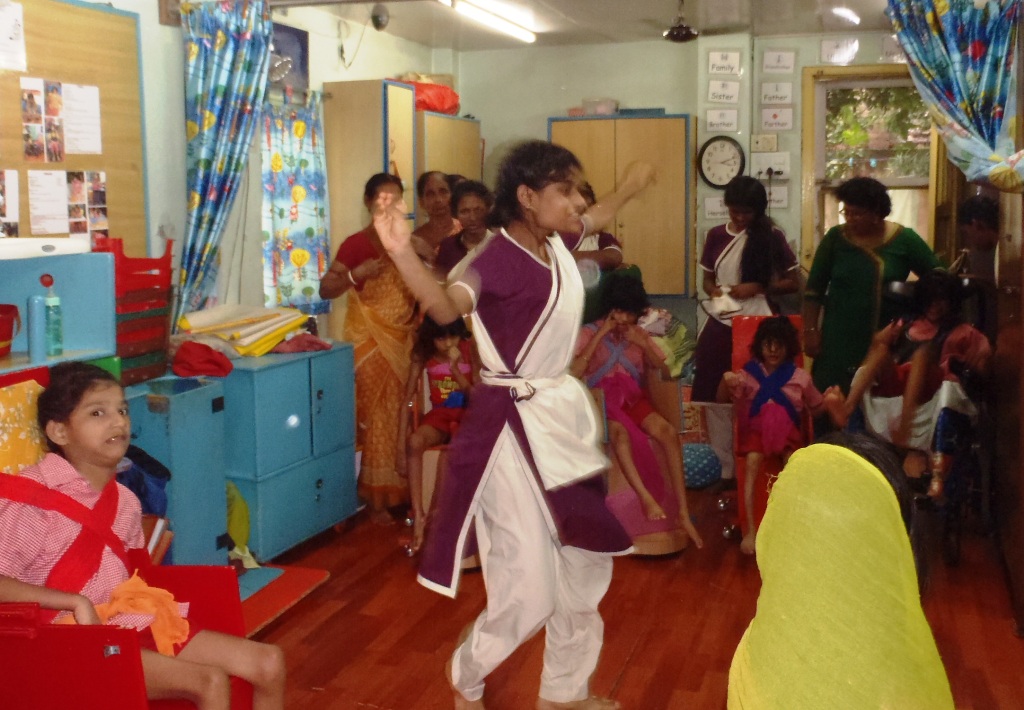
I said I would help.  I said I would take the four children, but that I also then wanted two more without known disabilities.  We have to stay inclusive.  As we were talking, the girls on their own started to dance, and we went to watch them.

The girls on their own started to dance and so we all went to watch.

The Girls Decided to Dance

The CWC hoped Seema and I would come back to the office with them, and review the information on the four children.  I found that two of them are too sick to be cared for in a non-medical facility.  We agreed to take the other two, one an infant with Downs, and another with CP, about 2-3 years old.  Then I reminded them that we will take two little girls with no known disabilities, that we had to remain inclusive.  Right now there are many children in the institution.  Their care is horrible.  I can’t do as much as I want but it was just too painful to say no.  And I do believe we will be expanding.  We have to.

Sometime within the next week, the children will be brought to CWC for us to pick up.

Well, everyone here is excited.  We have many blessings.

She Wasn’t an Orphan

I faced a hard decision.  The child we brought home from CWC on 24 September is not an orphan.  She has a mother, sisters, aunts, uncles,  and cousins.  As I had guessed, she was part of a community of beggars, thieves, and goondas.  The woman who brought her in was some sort of boss.  All of this has unfolded over the last several weeks.  The woman who had brought her to CWC called us almost daily, showed up unannounced, and the child mostly did not want to see her.  Over the next few weeks we learned that the child’s mother lived right next door to that woman, with her younger sister, and that “L”, our girl would take care of her mother in the day (maybe).  The mother was said to be mad, but L told us this was just so people would give her money.  L missed all of them, and missed the freedom of her life.  At the same time she also loved being here, enjoyed the other girls, and started to learn the alphabet.

So, what’s the problem?  First of all, I’ve been at this work for 12 years and I have a good idea of who I can help and who I cannot help.  I cannot help this child.   I can feed her, but I cannot change the direction of her life.  Ultimately she would not stay and ultimately the family/community would not leave her here.  As long as she wants to go home, she will not tolerate any of the discipline, self discipline, and work of being part of our life, family, home.  She will always be different.  I’ve seen it too often.  She has a place to go, not a great place, but she has family, people of her life, who she wants to be with.  She will never feel, “Amar barrie Shishur Sevay.” or “My home is Shishur Sevay.”

Second, I left the US, sold my home and took my savings to come here and do this work.  I want to care for orphans, the one’s who do not have what this child has.  The girls at Shishur Sevay are without choice.  The one girl who has a family still wants to join them.  She probably will when she is 18 in seven months.  India has a horrible problem of beggar children.  There even are laws against it, but they are ignored.  It’s a problem I cannot begin to address because it’s fueled by organized crime, police, politicians, the people who get paid off to do nothing.  It’s simply not what I sold my house for.

Third, my commitment to the girls here is really lifetime.  That’s what my money is for.  I stay here, miss my family in the US, including my grandchild, because I care for children who would not be OK without me.   I’m not willing to make that sacrifice for a child with alternatives.   My daughter and son-in-law in the US feel a commitment to our girls, but this one is not an orphan and does not belong here.

Fourth, it is not OK to have a home of orphans, children who unfortunately carry the “shame” of  that label, to have a child who is automatically “above” that label.  Whatever WE may think of L’s community, she is accepted there.  Our Shishur Sevay girls have NO PLACE they are accepted.  Our girl who will return to her family when she is 18 wants to be where she IS ACCEPTED.    Before taking L back, the girls and I talked, because for them also it was hard to have her leave.  But our girl who is almost 18 was clearest, ‘Mummy, she will be like me.  She will want to stay with her family.”

So we went, Gibi, Purba, Maggie, “L”, and me.  I had prepared a letter for CWC stating much of what I’ve written above.  I also had the original CWC Order giving her to us, which described her as an orphan.   I brought the government form for signing a child out of care.  We arrived to be met by an angry group of her relatives, fighting with each other and accusing us of keeping her in a bad place.  Gibi threatened to call the police for fraud.  I missed a lot of it as I took the child inside and Purba made sure we got ourselves on the appointment list.  Among the group were the woman who signed her in, the woman who said she was the child’s mother, the younger sister, a woman who said she was the community representative of some sort, and a couple of others.  They were there to reclaim their child.  They were angry with the woman who had “relinquished” her, and now said she was actually the grandmother and the woman said to be mad was her daughter.

I had prepared myself for this CWC meeting differently.  Bringing this child back was difficult.  I had to do this for the security of Shishur Sevay, and the protection of the other girls.  I took out my business card, kept it in front of me as a reminder, and tried to stay in the mode of being the lawyer for Shishur Sevay.  Shishur Sevay became my client.   The CWC woman whom I’ve known now for years, was very astute with these people and ended up saying she had no idea who was telling the truth, but since no one could prove they were even a relative, she couldn’t return the child to them.  She turned to me and said I’d have to keep her for now.  I said very calmly, “No, I don’t have to keep her.  This “Order” you wrote says she is an orphan and she is not.  This is your failure to find out.”  She agreed I was right.  Sitting at the long table was also someone from  CINI (Children In Need Institute), which is the largest organization working with these children.  The official said that CINI would take her.  This is actually very good because they will investigate and they will keep her in a shelter if they decide not to return her to those people.  They have staff, social workers, project and program directors, informants, investigators, and connections to high places.   A social worker came into the CWC meeting room and took “L”  back to the waiting area where she joined about 20 other children sitting on mats, also waiting to go to CINI.  “L” was tearful and another girl moved closer to comfort her.

Hundreds, thousands of children pass through this way.   That’s really where the label “SHAME” belongs.

Today I did what I had to for, Shishur Sevay.

Previous Older Entries Next Newer Entries

August 2026
S M T W T F S
 1
2345678
9101112131415
16171819202122
23242526272829
3031