A Trip to the Science Fair at BITM

Shishur Sevay enjoys a wonderful relationship with the Birla Industrial and Technological Museum (BITM).  We happened to go there one day, loved it, and have been back several times since.  I don't know how to reference past posts but I posted about it on 7th November 2009. (If someone knows how to link, please let me know)

Our girls wanted to be able to share their experience with their school friends and so we also facilitated a school trip to the museum in November 2010.  
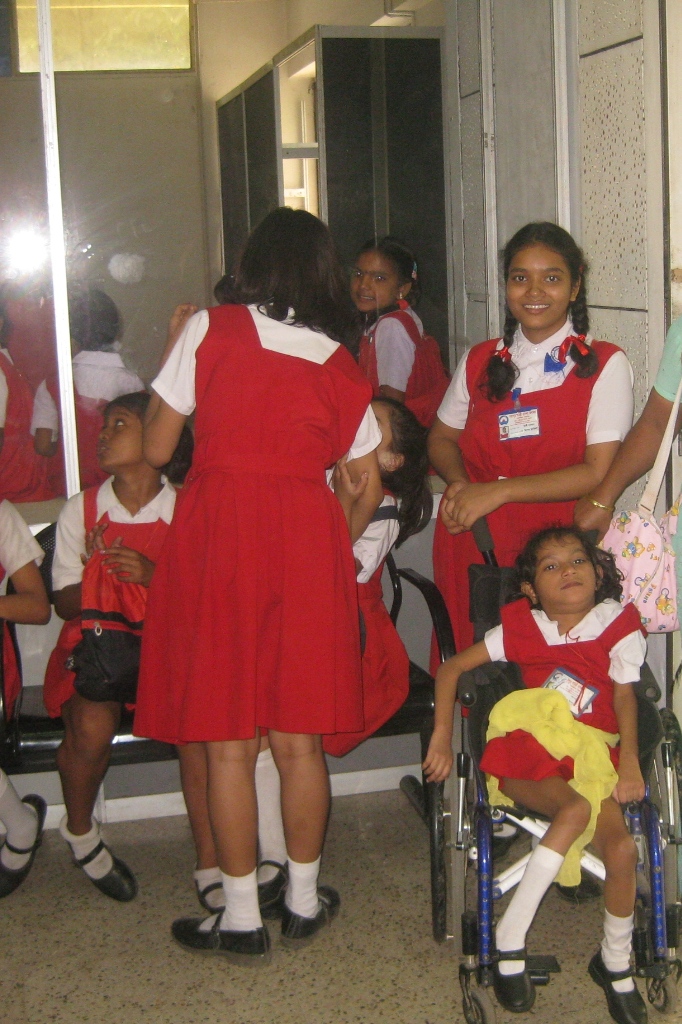
BITM_7296W 

I'm on BITM's mailing list and I often get a phone call if there is an event going on.  It is a low key place, and unfortunately doesn't seem to make the "what to do with kids (or without kids) in Kolkata."  We have also been to a "sit and draw" competition there.

Last week I received an email about the Science and Engineering Fair.  Then I got a postcard; then I got a personal call.  Much of the science is at a higher level than that of our girls but the Science Fair seemed like it could be good.  The girls were enthusiastic. 
SciFair_8073CrW 

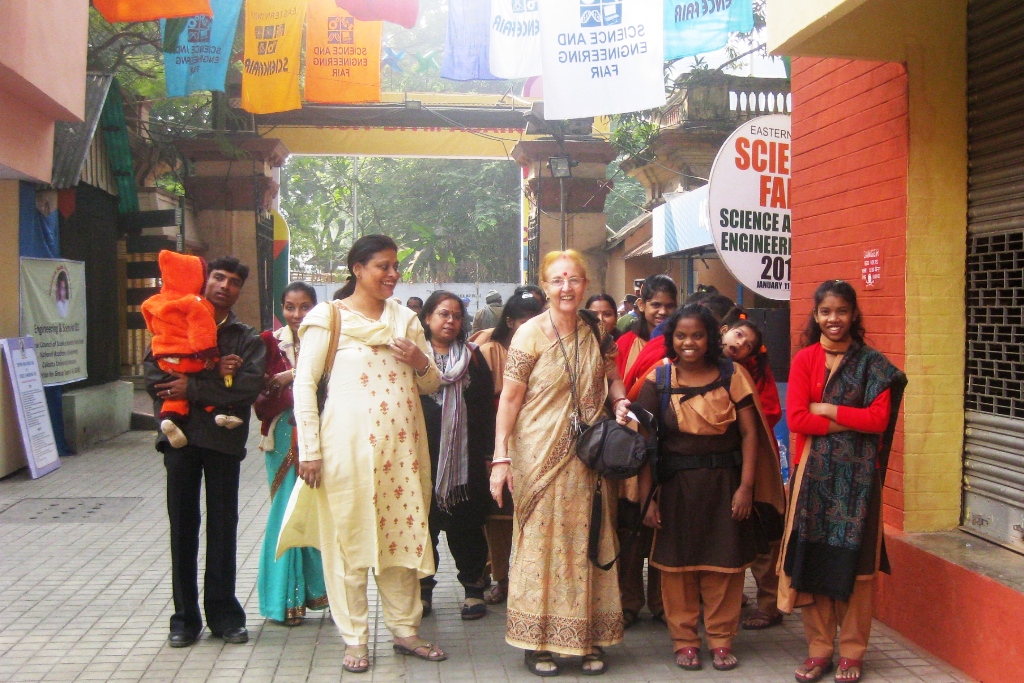
We arrived early which was fortunate as later there were long lines of people waiting to get onto the grounds.  This Fair represented the Eastern States of India.  My goals in taking the girls were to have them just SEE what a science fair is, what a PROJECT looks like, what is the job of the PRESENTER, and what were the IDEAS communicated.  I was less interested in the actual science, and whether it would be at their level.  I wanted them to know what this world of science projects and fairs looked like, so they could think about doing such things themselves… It's all about opportunities and dreams, but first you need some concrete information and experience in order to know what is possible.

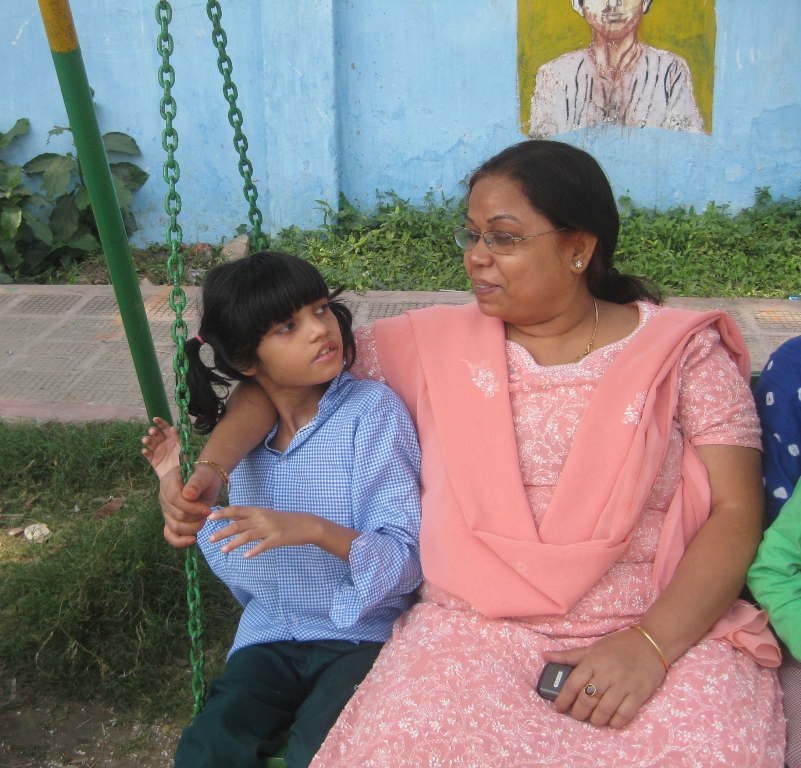
Ganga is increasingly part of the social and educational life of the older girls.  But the wheelchair, her small one, keeps her too low to see many things, so this time we took her in the backpack.  One of the girls carried her for part, and then I did for the rest.  This way she was always at eye level.
SciFair_5842Cr 

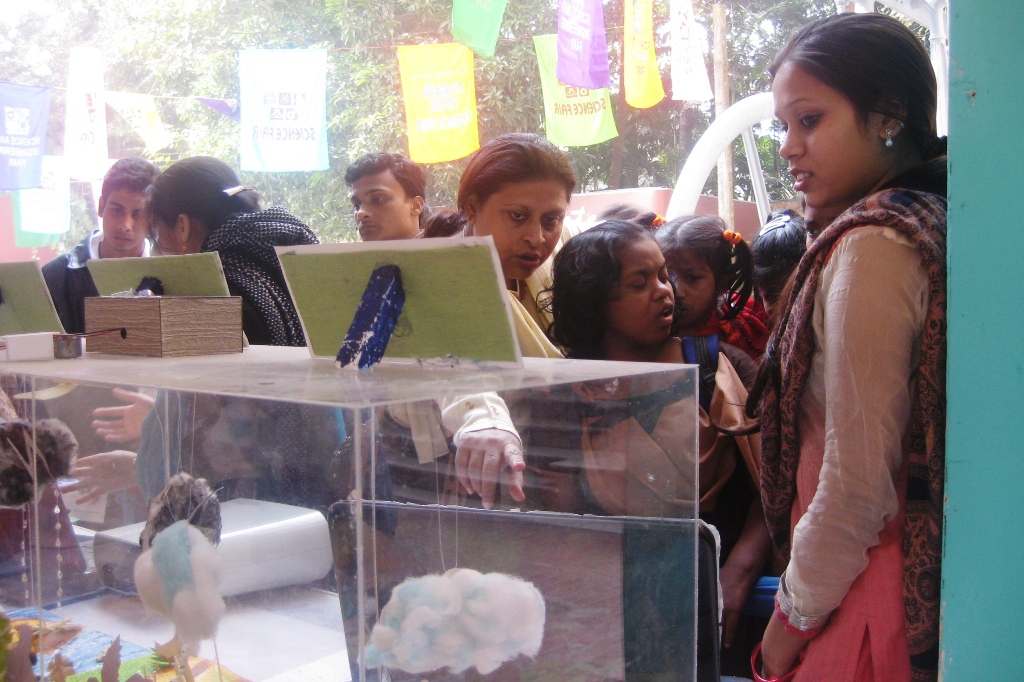
The first exhibit we saw was in the Engineering Fair section and was about climate. 
SciFair_8075CrW 

The exhibit demonstrated the forces that caused Cyclone Alia.  The girls remember Alia because they donated most of their clothes to the victims, carried them out in big bags to a collection truck.  So now they saw Science linked to their experience.  When connections are made, the world becomes smaller and more accessible.
SciFair_5847CrW

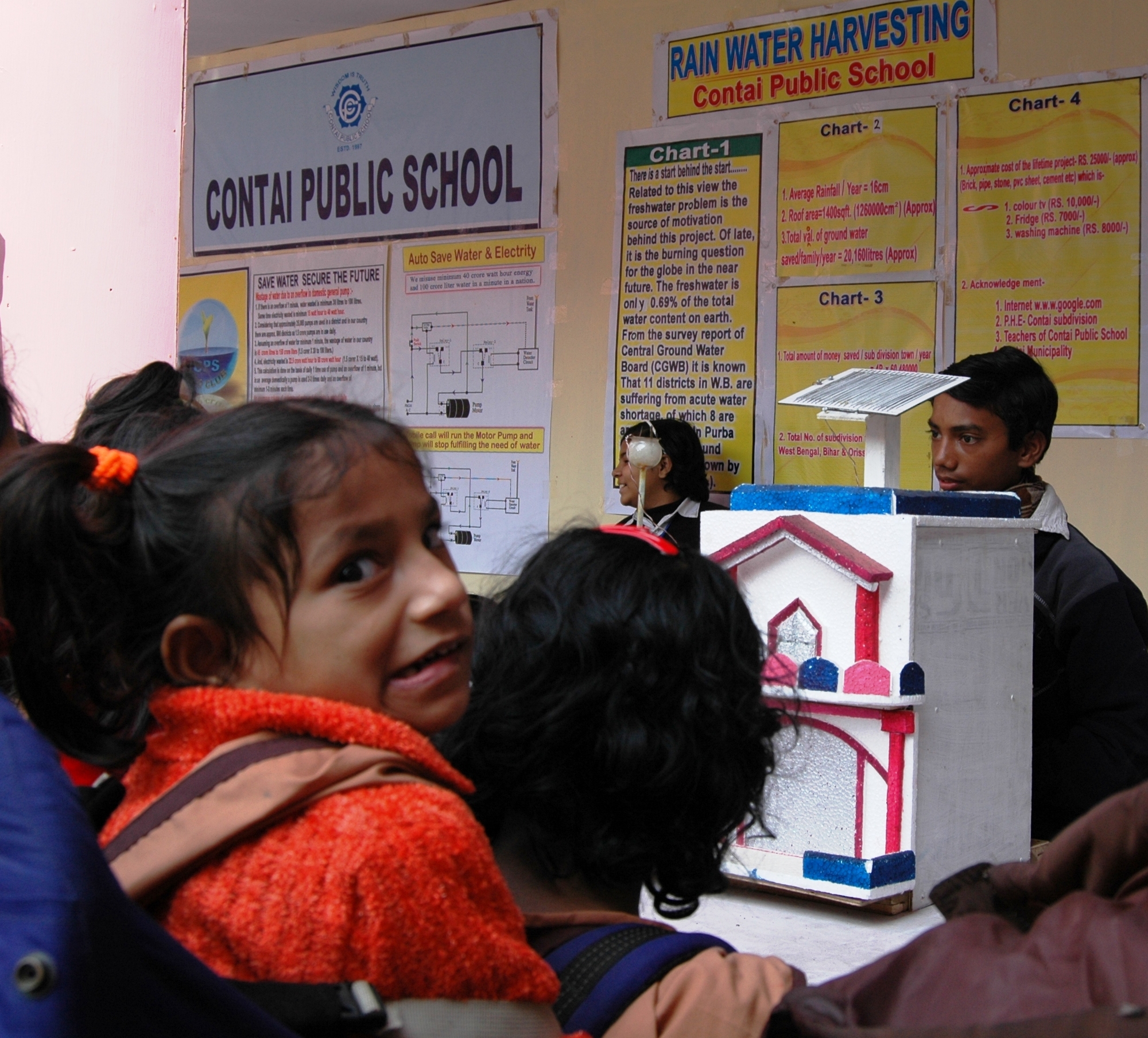
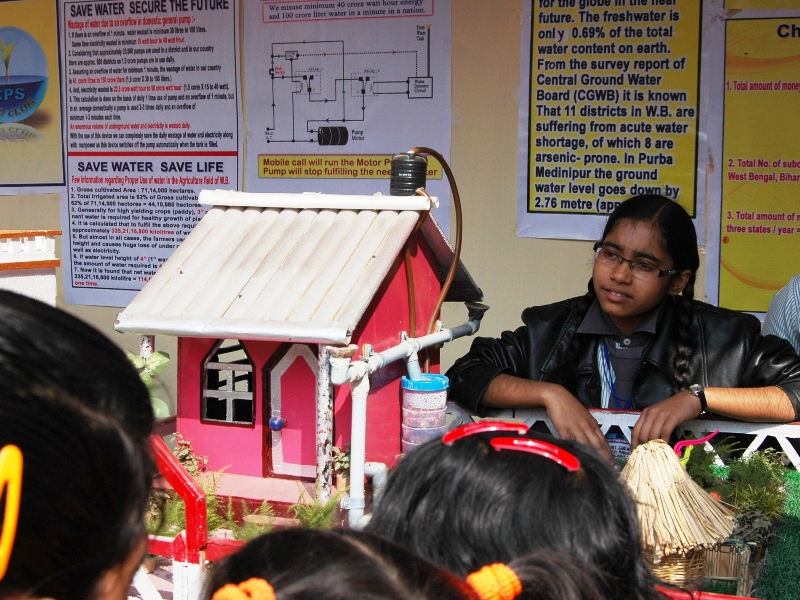
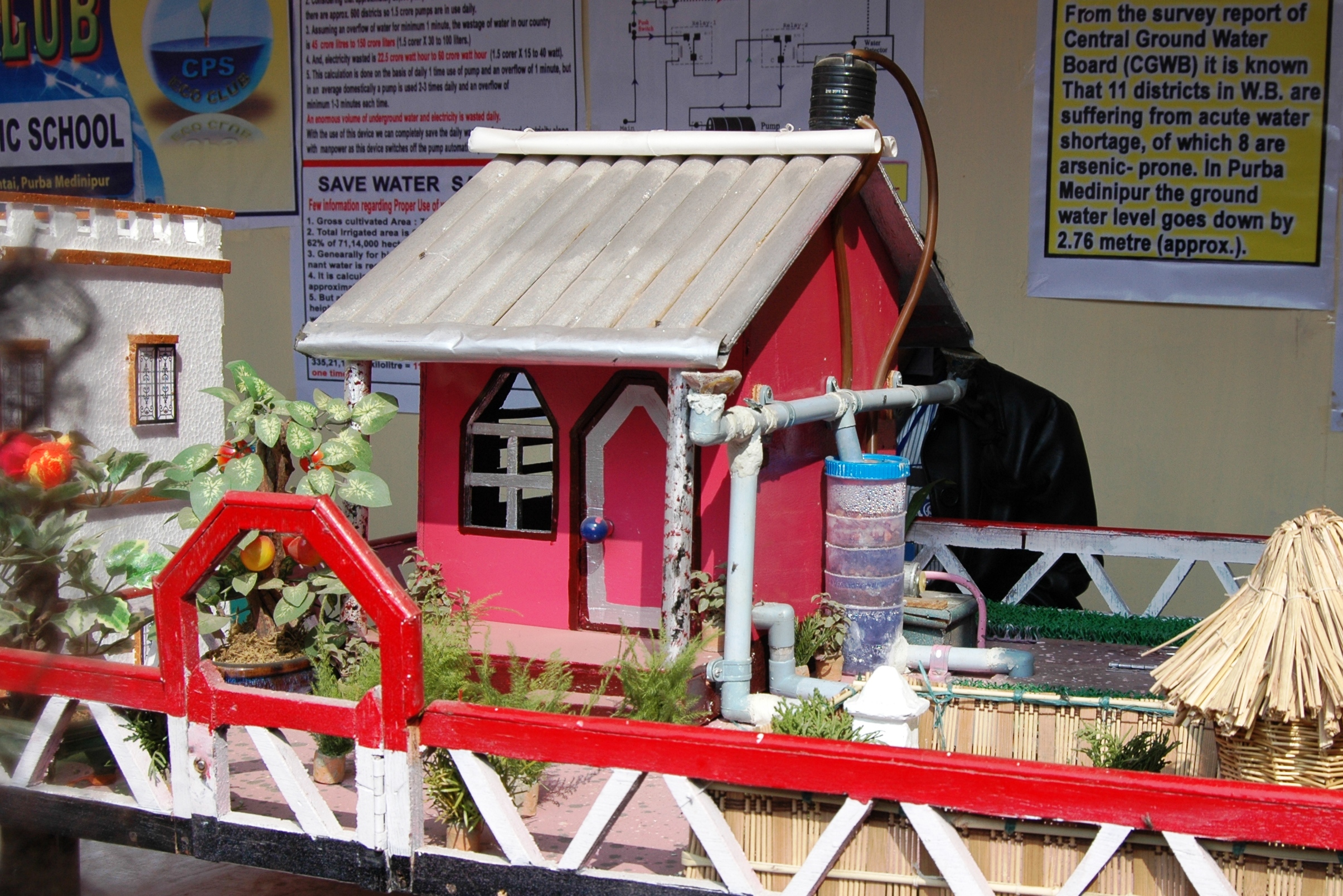
The next exhibit was about rain-water harvesting.  The girls were immediately interested.  We are putting a new room up on the roof, with a tin roof and gutters.  The girls immediately thought of doing water harvesting (a possibility that had been raised by the first architect).  We took pictures of how the pipes were placed. 
 

 SciFair_5851W

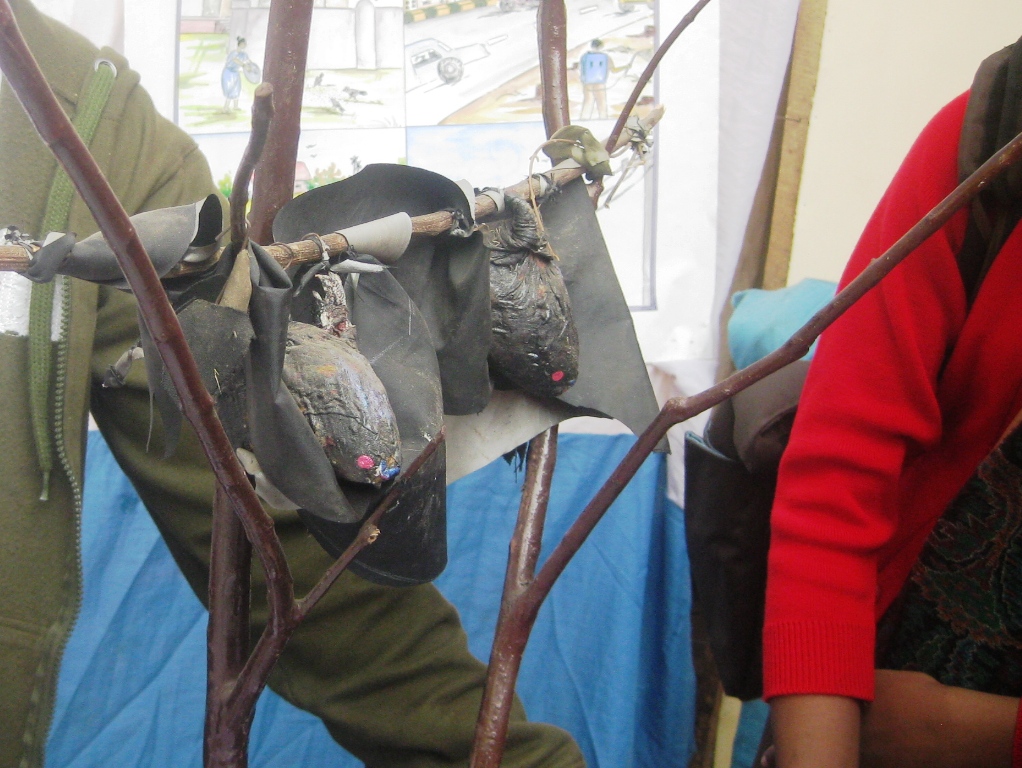
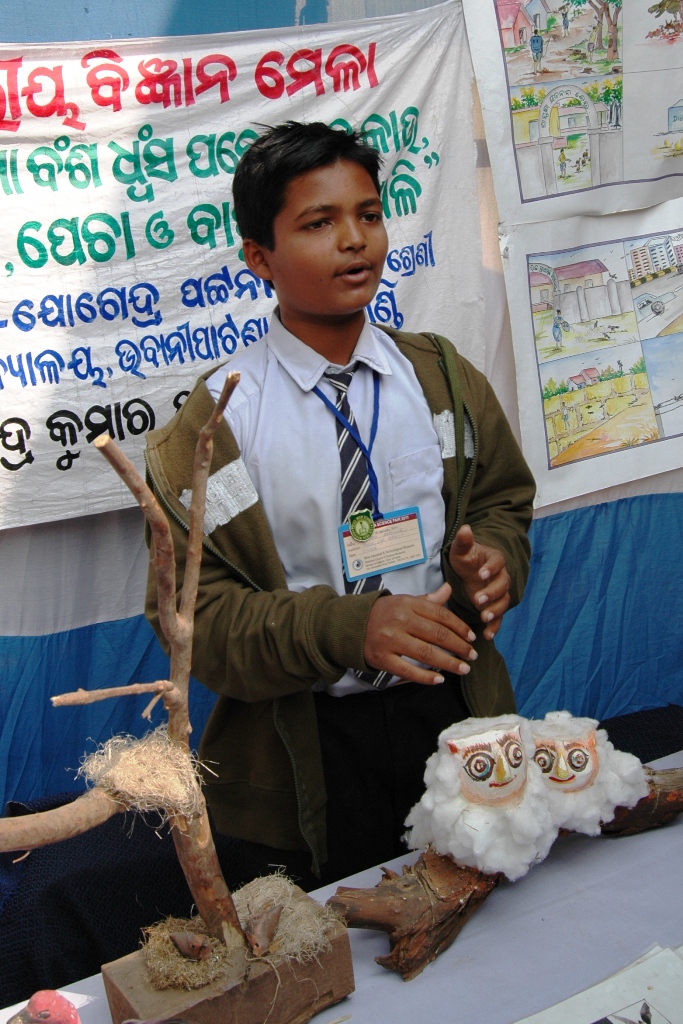
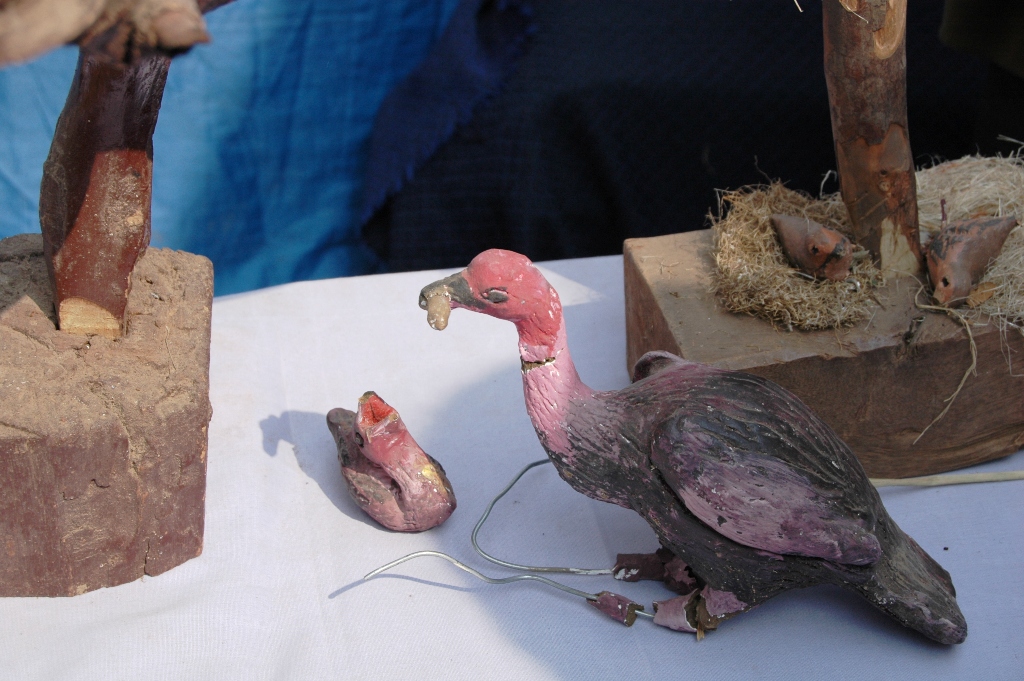
This young student told us about what happens when trees are cut down, the effects on wildlife.  Like all the presenters, girls and boys, he was very sincere and serious about his work.  This is also what I wanted to girls to see… smart kids talking about what they have studied and what they have done.
SciFair_5863w 

I didn't catch the whole thing, as I was busy trying to take pictures.  I was also fascinated by his very interesting owls.  But he had models of bats who lost their homes, and birls whose nests were destroyed.
 

SciFair_5858W 

SciFair_8082CrW 

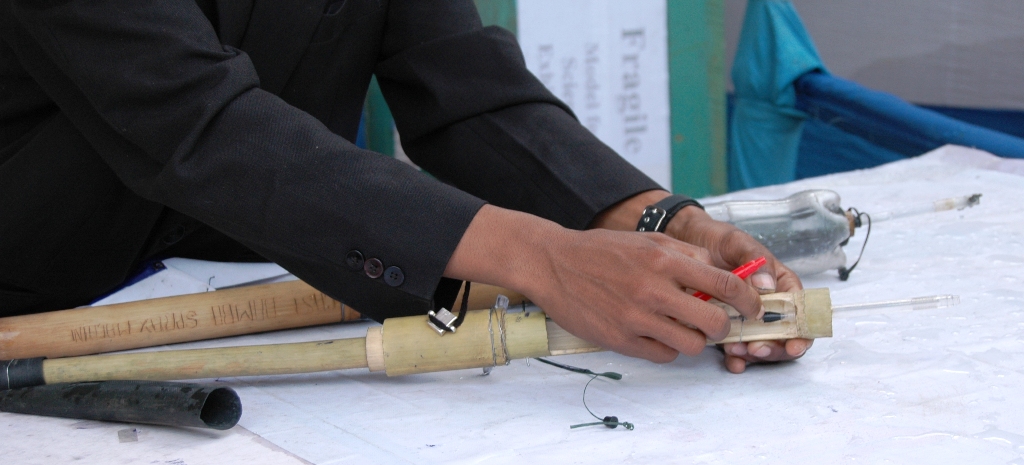
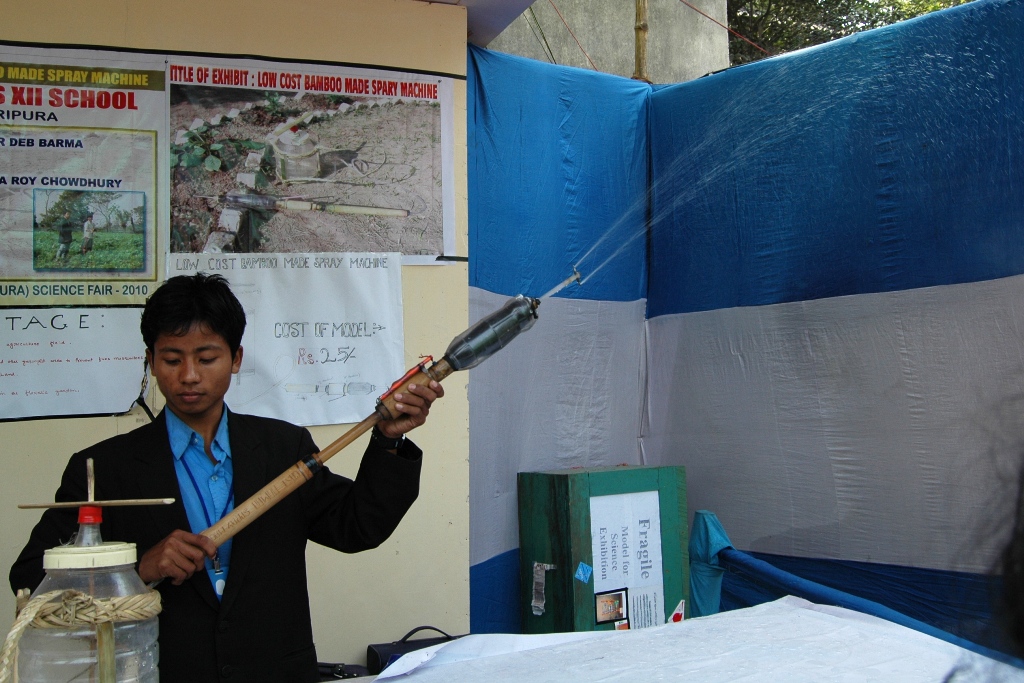
The next exhibit was also quite understandable, a hand-made sprayer that cost Rs. 25 ($0.50).  He made it with bamboo, a plastic jug, and parts of pens. 
SciFair_5871CrW 

SciFair_5874CrW 

SciFair_8078WW 

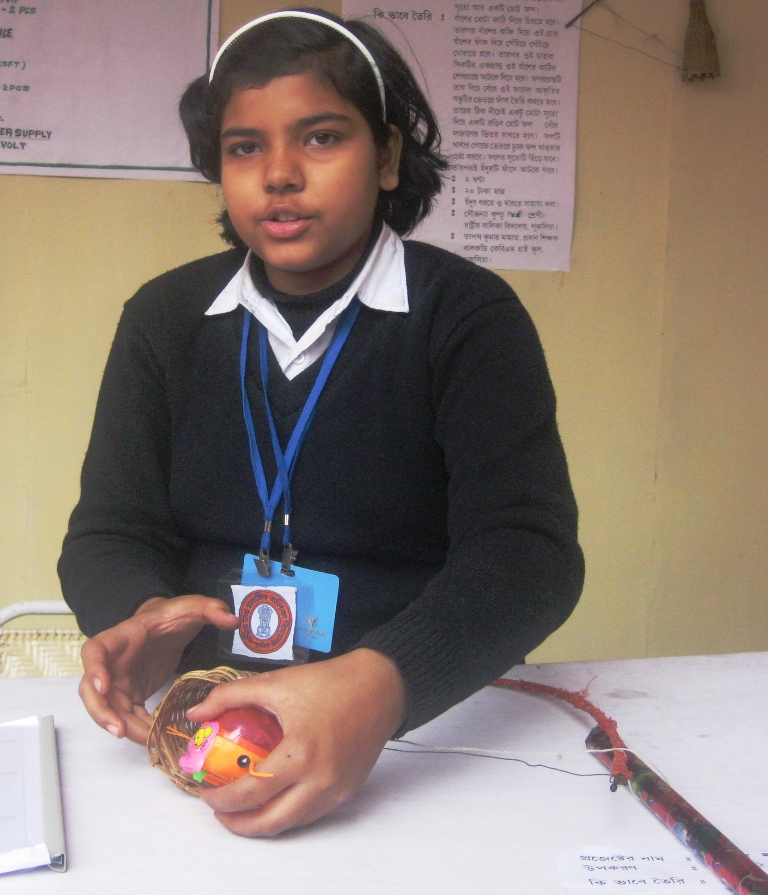
Here was a very innovative mouse trap!  Here was a confident sounding girl talking about the mouse trap she created.

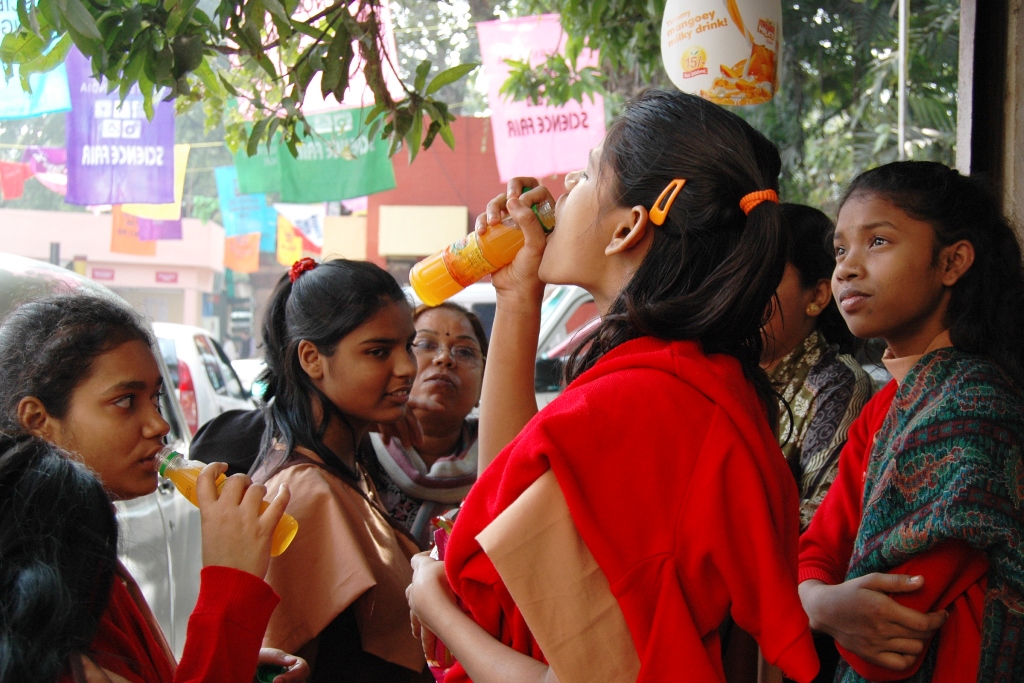
We saw many other exhibits and then were tired, hot, and ready to go home, but not before a stop at the Canteen.
SciFair_5879CrW 

SciFair_8091CrW 
We left for home, in time for lunch.  The day before I had given the girls the option of a free afternoon when we got home, but they had asked that the regular teachers for Saturday come to work with them on a play rehearsal.  They are working on a play for Republic Day, just for us here, and they are including the four children with disabilities.  

Today Sunday, has been a more relaxed day.  Drawing Sir came in the morning.  Then for the rest of the day they played outside in the garden, watched TV, played Ludo and Carrom.   In the evening we had visitors.  There is an Indian tradition of celebrating birthdays, anniversaries, by giving to those less fortunate.    A family that was celebrating the birthday of one of their children asked to come.  The girls prepared a card for the birthday boy.  We love having visitors.  The girls introduce themselves and then I ask visitors to also talk about themselves, the kids talking about school. 

Then after prayers, Dance Sir came.  He has been with us since the beginning. Recently I came across a picture from one of his early classes here.  Initially I had started dance just as a way of teaching the girls about self discipline, and following directions.  They are now in their third year of Bharat Natyam Dance and Rabindra Dance.  They all placed in First Division in Dance and got distinction in Theory and Practical.

This was how they were almost four years ago:
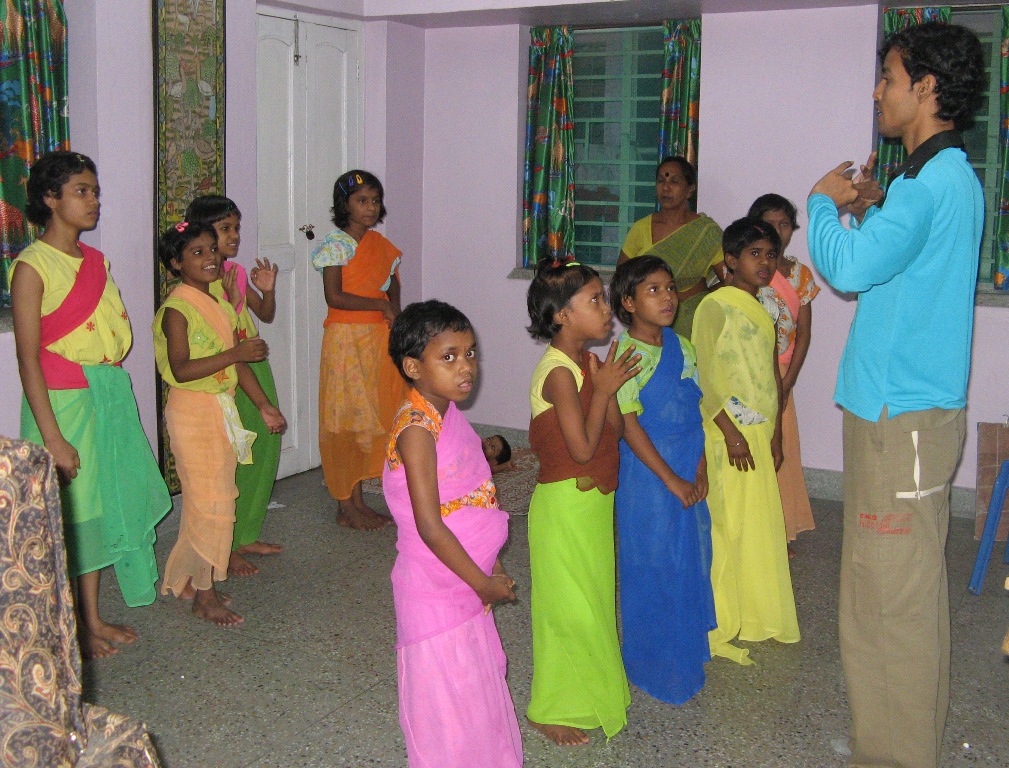
CPSS-2499CrW 

Mother's Lament:  Where did the time go?  They grew too quickly!

Next thing I know, they will be entering projects in a Science Fair!



“If you don’t like your mother, you can always go to the Mall for another one.”

It has to have been more than ten years ago.  The words are still with me, "If you don't like your mother you can always go to the Mall for another one."  My daughter and I still "joke" about it.  I had taken her to a new doctor… don't remember why… and I'd chosen an Indian woman doctor, a "role model" as I tried to maintain diversity in all areas of our lives.  The visit seemed to have gone fine, and then, as we were leaving, almost at the door, she called out to Cici, "If you don't like your mother you can always go to the Mall for another one."

I tried to raise my kids with as few doctors as possible in their lives, breaking all the rules of taking care of your own kids when you are a doctor.  So some of this is just doctor insensitivity.  I have a story also with Heather, that I took her to a doctor friend for a check up, as she was entering puberty.  My friend the doctor said to her, in front of me, "you'd better lose weight or you won't have any friends in school."  As this was my friend I knew her lifelong struggle over weight.  (I wrote to Heather for permission to post this and she reminded me that we had gone out to Dunkin Donuts afterwards.)

Another time I took Cici, about age 7, as she woke up with a neck spasm that wouldn't go away and was causing severe pain.  After a while I carried her out to the pediatrician.  He scolded me for bringing her in for such a mild problem.  Gutsy girl, she asked him why he wasn't trying to help her.  By night she had a fever… and then recovered, no thanks to the doctor.  Of course doctors are always telling other doctors NOT to take care of their own family members.  I really hate scoldings.  I did then and I do now.

This isn't how I'd planned to write this post, seems off topic, but it isn't really, because it's about the influence of medical professionals, and others on our lives, and the lives of our kids.

Raising an adopted child is different because whatever our commitment, love, attachment, others will rarely see it as "equal" to our birth children.  I remember when traveling, and I'm a worry person as I've written before, I wondered, if anything happened abroad, would my adopted daughter be treated as an American abroad?  If she were kidnapped, would the American embassy kick in?  Would her Indian-ness lead to a response of, "not our problem?"  I remember an airplane hostage situation years ago — and I happened to know that an Indian adoptee was one of the hostages, and I wrote to Senator Hatch about her, reminding him she was American.

I am raising children in India for whom adoption was not possible (the un-chosen).  I am raising them in a model of adoption, in terms of my commitment to them.  This is a personal commitment separate from their legal status, and independent of where they are.  This is challenging, to say the least.  I am also clear at all times that I am not their mother, though they call me Mummy, as they all have/had mothers.  I am mother to them now.  Although the girls all come by government order, we do not get funds from the government.  Therefore we are free of many of the government regulations, like having to send them away after age 18.  I assume some will get jobs, some will marry… who knows?  For now, they are being educated so as to improve their options.   I had a social worker who I thought would be helpful with the girls, but when they complained about the studying she told them they could all leave at 18.  Well, legally that's true, but Gibi, Seema, and I quickly met with them and dispensed with that, as they were also terrified suddenly, where would they go.  We told them they weren't leaving until we gave them permission.  Yes, they are free, but so are any of our children. 

At the same time I am aware of adoption "disruptions" in the US, situations where children are adopted and then re-adopted, or put into state care.  "How would my children here have fared in adoption in the US?"  This is a question I ask myself often.  As they enter adolescence the question is even more important.  I used to see this in terms of adoptive parents "giving up," while at the same time understanding the toll that a disturbed child can take on others.

A new question comes to me now.  If other people see adoption as temporary, (You can find a new mother at the Mall) how does this affect the child?  What messages are they getting from others that counter what we try to tell our children?  Wishing for another mother, a kinder more gentler one, is not restricted to adoptees.  But the ability to get others engaged in this process, to "rescue" the child from what others see as a temporary relationship may add damage and confusion to a vulnerable child.

Does an adopted child ever feel totally secure?  I think it is possible to feel loved, totally loved, but still not feel secure, still experience one's self having a life separate from the "family."  Is this talked about?  There is so much pain. 

I wonder how many "disruptions" are because the children want a new family?  Has fantasy taken over? Or, are they also influenced by the possibility presented by others, or assumed by past experiences?  We (adoptive parents) say it's permanent, but our children have no reason to believe us.  If their own mothers didn't keep them, why should they ever trust anyone else to keep them?  It's one of the reasons I see group living as a good alternative for older orphans.  It's less intense.  The girls have each other, they can be more or less attached at different times. 

What is it like for me, mother hen to them all?  In my lifetime I've been a foster mother, a "giving birth and keeping my child mother", an adoptive mother, and now just "Mummy" to the girls here.  My love and commitment to the girls drive me to create the best lives and futures for them that I can.  But it also leaves me vulnerable, sometimes frightened, always aware that I parent under close, and often critical scrutiny.  There was a time in 2007-2008 when the government ordered four non-orphan girls to Shishur Sevay, without notifying us.  One day a mother just turned up with her child, for admission.  I said there was a mistake and she showed me the order.  The next day I went to the government offices.  I was told that if I did not take these four non-orphan girls, that the government would not renew our license and would remove all the children.  The official threatened charges against me for "discrimination against children with mothers."  It was a terrible time because I totally lacked the emotional and financial resources, or staff, to bring on four more children, with totally different needs, with mothers advocating for what they needed.  You see, in West Bengal, if you have political power you can get your child declared in need of government care.  These were to have been "political" admissions, common in many of the "orphanages" here.  These children had working mothers who wanted to place them in a better educational setting.  That's not what I came to India to do.  I couldn't stand seeing my uneducated orphan girls suddenly go to the bottom of the social order, the "orphans" among more educated children, with mothers advocating for them.

I managed to keep a brave front in the government offices that day, but I came home and sobbed.  I really do know my limits.  I simply couldn't do it. So for the next six months I slept near the door afraid the government would come for the children.  I sent a message to the government official that was basically, "over my dead body."  I tried never to be away for more than an hour or so.  It was the winter that Bubbi's calf was doing poorly.  I had people taking care of him, and vets, but I didn't go myself, as the trip was too far, it would have meant being gone all day.  I remember thinking that I had to put the children first.   He died that winter.  I did go then, for a very brief visit, at the urging of the children.  They wanted me to visit Bubbi because they knew she would be so sad.  We share everything in this family of sorts.

How is all of this related?  It is in the complexity of these relationships, of our relationships with children in our care, whether adopted or not.  I'm finding it hard to write what I really want to say, which is that one of my girls needed some help, and the doctor told her to go to the Mall to get another mother instead, one presumably would be able to provide more sports and games and would not force her to study. 

I'm a psychiatrist… one of the hats I've worn in my career, but I try to avoid most mental health services as much as I can.  I was in training in psychiatry when I became foster mother to a teen aged girl whose mother was in jail for a robbery committed by this girl.  So I dealt with all kinds of behavior, good and bad.  But mostly I felt humbled by the experience and the discrepancy between what I was being taught about parenting in my training, and the realities of mothering an adolescent. 

Orphans particularly are subject to being used by others for their emotional needs.  We had that a lot in the initial years here.  Various caretakers would embrace a child, offer to take her to her home, want her to call her "mummy" instead of me.  Then for one reason or another, they would leave, and the child would be devastated!  It happened with teachers, with the social worker… once they left they never came to visit the children they'd professed to love.  Eventually the girls understood enough of what I was saying to protect themselves.  And since I was imposing discipline, it had been easy to take a position of protecting the children from me.  Since these children were orphans, few people thought they would really learn, so they also saw my efforts as a waste of time.  It's easier to "protect" a child from being forced to study than to teach her to read.

One of my girls went looking for another mother who would not make her study so hard.  But I followed her.  I am her mother… just how it is.  My children carry so much pain in their hearts.

Mall_7906CrW 

Christmas in the Park

 
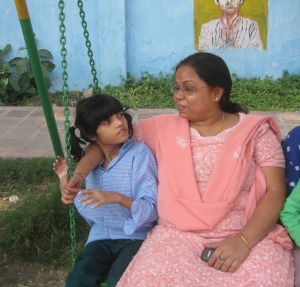
Our Christmas here is a secular one, and it is a lot of fun because the girls have no expectations.   It's just a chance to celebrate, and to take part in another part of Indian culture.  (As I write this afternoon, our dog Jelly has slipped into my office, head bowed because she is an outside dog.  I alerted the girls in the next room and they have invited her to snuggle under blankets with them.  I can see her tail wagging from here.)  She senses it is a special day and her presence IN the house won't be noticed for a while.

Park_7788W

Park_7764W 

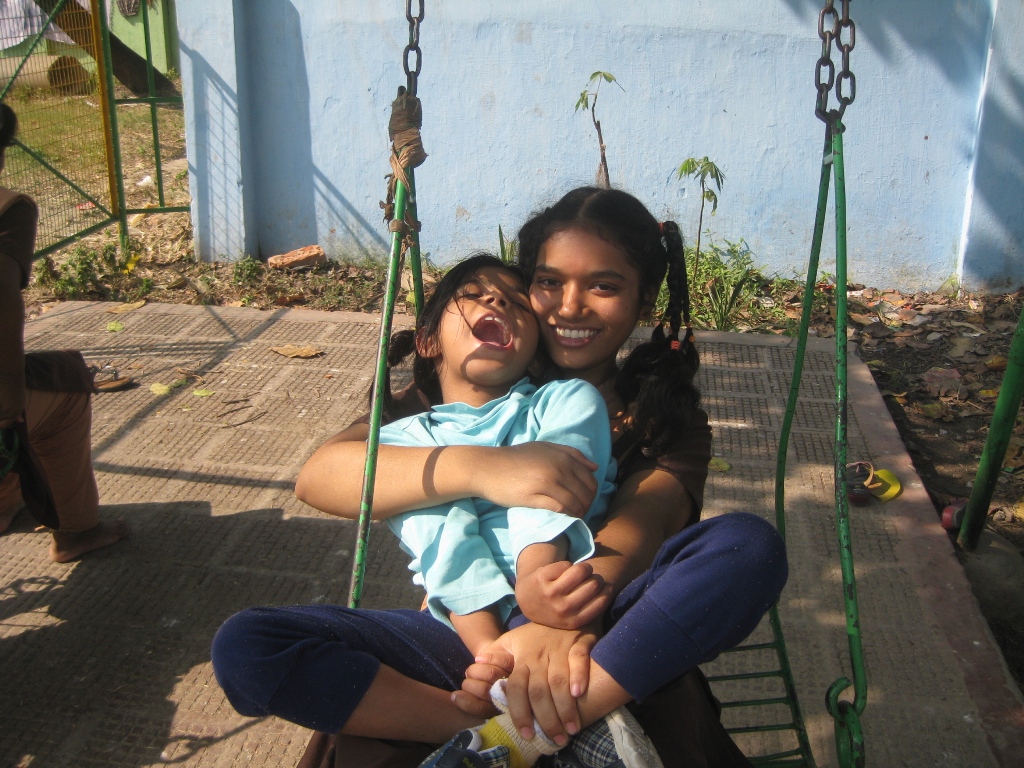
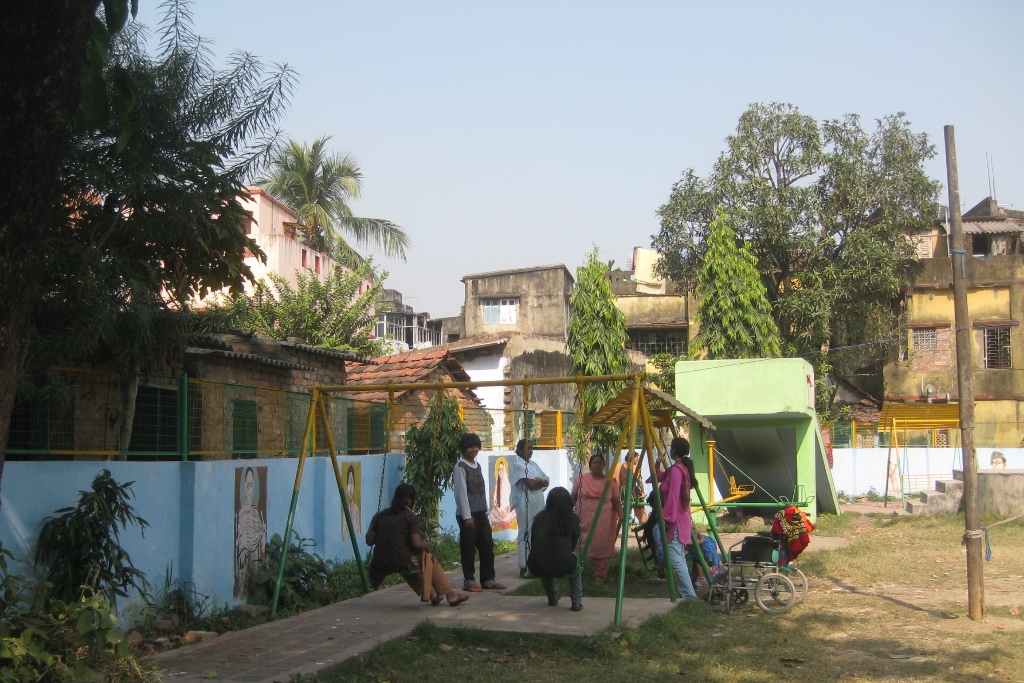
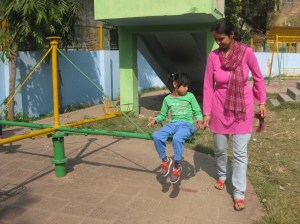
This morning we went to the park.  Shanti Devi had been feeding Ganga at six am and told her if she ate all her breakfast, then Shanti would take her to the park.  But Ganga doesn't forget.  She somehow got the girls to take her outside and then refused to come back in for her massage until promised that they would go to the park.  It was on my mind for today anyway, as I have a lot of help today.  Going to the park is not a simple matter.  In fact right now, there don't seem to be any "simple matters."

 Park_7792w


Park_7793w 
The park close to us used to be a good place for us to go when the girls were younger.  I've written before about the boys leering at the girls, saying things, making it "not pleasant" to go there.  Then, moving around with the disabled children gets harder as they get older.  Prior to this recent time, I didn't really have teachers who wanted to go to the park with them.  As a result, going to the park meant that they  just sat under a tree and watched the others.  The weather also makes it difficult.  In the summer it is only cool enough until about 8 am, but the children are in school from 6:30 am.  By the time they get home at 11 it is too hot.  In the evening the park is full of boys.  The few girls who are seen there are often wearing jewelry and make-up and tight minimalist clothing.  Yes, I admit to working hard to change the girls' self perception, manners, way of talking, all of it.  To honor your roots does not require that you stay mired in the style or habits of poverty.  Where you come from does not have to define what you look like or how you act.  My views, of course. 


Park_7836W 

I am under attack once again, this time for not having sufficient recreation and sports for the girls.  It's quite amazing the given the achievements of the girls, and our commitment to giving them a good life, that people don't understand that if I could do better, I would!  The parks are not safe here.  There is a lot of "interest" in them as orphan girls.  I've noted in several situations an attitude that because they are orphans, "everyone" had equal rights to them  — equal standing in deciding how they are to be raised.  In those situations it's even more disturbing to others that I am a white foreign lady making decisions about Indian orphan girls. Local men continue to complain that I don't let the girls "mingle."   Of course I don't!!!!

Park_7804w 

Park_7760W 

There are no sports programs for girls in our area, or anywhere I know of.  We no longer all fit in our car so car trips require at least one extra vehicle.  If we take the children with disabilities, it's yet another vehicle as we have to bring wheelchairs and attendants. That's another issue, taking the children with disabilities.  I think this must happen in every home with abled and dis-abled children.  How do you decide when everyone goes?  It takes more time; it means in the end we go less often; it's also hard to leave them behind when you know it's only because of the disabilities and they would love the experience.  And of course there is always the matter of study, of losing an afternoon, losing momentum, losing the effect of repitition.

There are days when we just relax, hang out, go for ice cream at South City Mall.  Actually that's one of my favorite places to take the girls.  It's safe, and it's fun.  To the girls, the escalator is easily equivalent to an amusement park ride.  The same is true of the elevator.  Free rides!  Bono really loves the elevator.  She squeals and kicks her feet.  They all love it, another free ride.  The food court is fairly enclosed, so I don't worry about anyone wandering off.  The girls love looking in windows.  We have shopped for books at Crossword's, similar but smaller than Borders or Barnes & Noble in the US.  These are familiar places to me.  The staff loves going there too.  It's relaxing, hanging out in the food court, eating ice cream.  I think we will go there tomorrow.  I've just talked myself into it.

Last night one of the local "leaders" was drunk and talking loudly and nastily about me to our guard.  It was along the lines of my keeping the girls inside and not letting them out to play. I've been hearing this a lot.  It was also about my not hiring locals (translate political appointments).  He was saying he wasn't afraid of police if I called them.  In the past this man has made big trouble, enough so I did have to call police.  The night staff were frightened by what he was saying, but they couldn't explain it to me.  I needed the girls to translate what the staff were trying to tell me.  Then I said, "Girls, watch this!  I'm going out to see him."  I cut a piece of the cake that Chris Futia had given us, and took it to him, my hands cupped, holding it as an "offering."  He melted.  He smiled, "Thank you Mummy."  Then the lady standing next to him asked about her piece.  She is the local person who wanted a job and when I didn't hire her she started throwing garbage over our wall.  She half likes us because we took Jelly, rescued her after she was hit by a car.  She feeds all the local dogs.  Well, she wanted cake too, so I yelled for the girls to cut another piece.  Then the man wanted some for his family, and the woman for hers.  I passed cake through the gate and made them very happy.  The man touched my feet.  I just kept thinking, "diffuse, diffuse, diffuse…"  The girls loved the experience and wanted to tell each person who came today.

I do actually hire local people but only if they have strong credentials.  I don't hire anyone I can't fire, so that rules out political appointments, and people who try to use threats to get a job.  I am very difficult to work for.  I have very high standards, especially for care of the children.  I pay well, but I don't work by local custom.  For instance I penalize staff for lateness.  I found teachers and massis coming later and later.  The kids weren't ready because the massis didn't get them ready on time.  Then the teachers came later and it got worse and worse.  So finally I made a penalty for lateness and it worked.

 IMG_7833

Park_7763W 

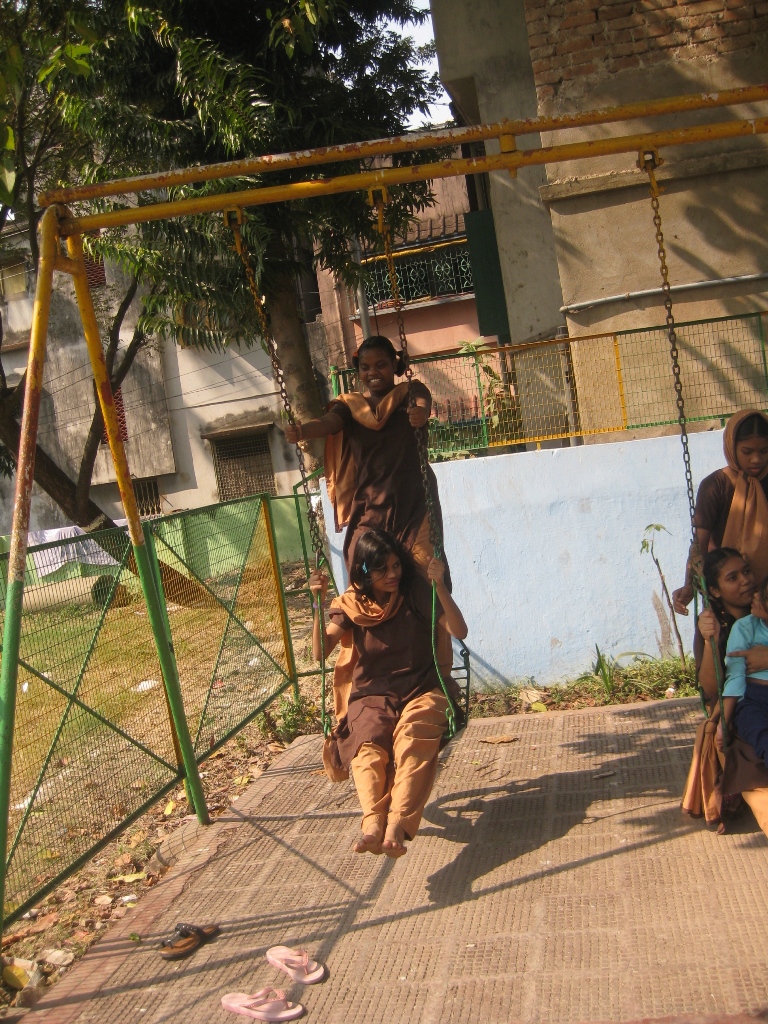
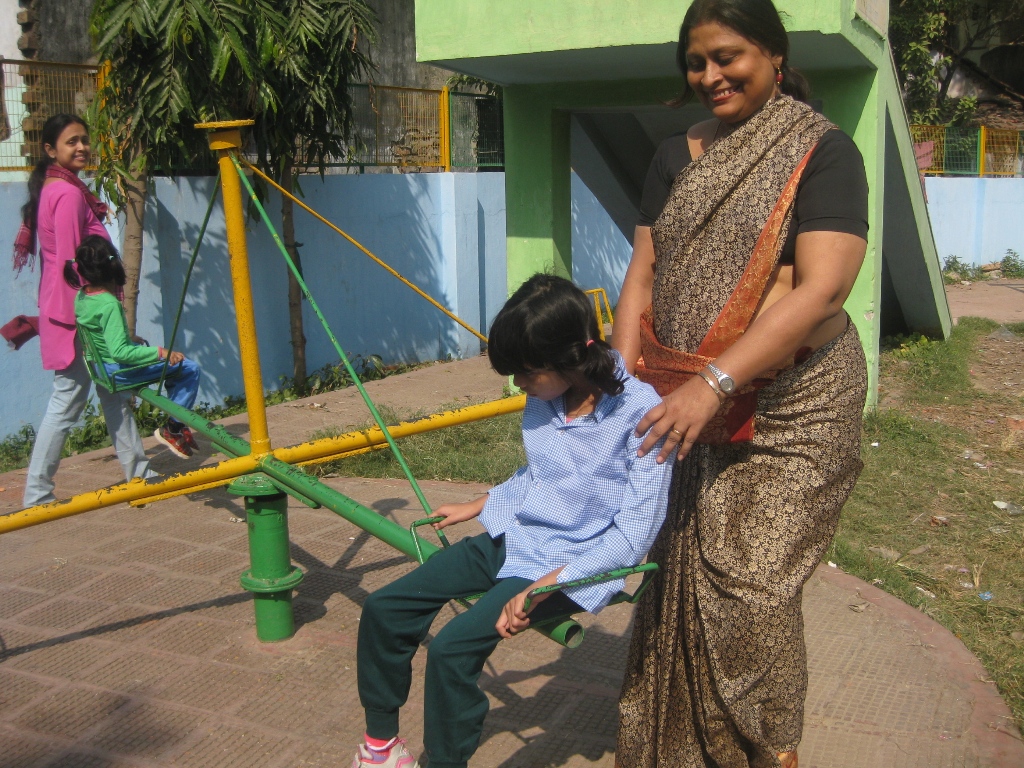
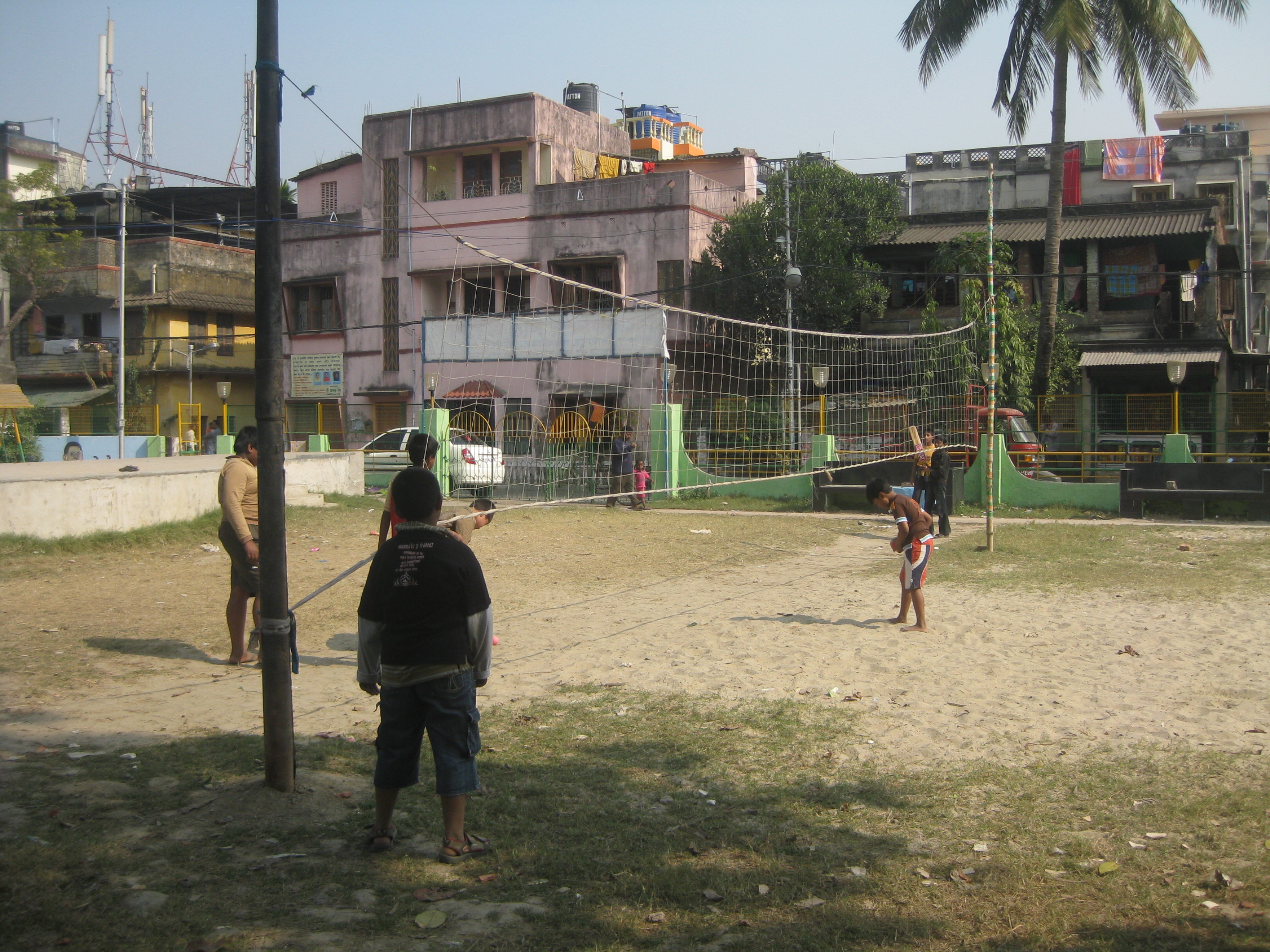
This morning I watched The boys play cricket in the park.  The park has two sections.  In the larger one, the big boys and young men were having a serious game.  In our section the younger ones were playing, learning, PREPARING for their lives across the fence.  We were on the side, on swings, having a good time, but this was not "sports."    I wish my mind wasn't going so much.  I wish I could have just enjoyed a sunny Christmas Day in the park.  I've written before that I do understand I will always face opposition to what I am doing.  I'm breaking the rules, educating the girls.  And that reminds me that I haven't blogged in a while.  Sometimes with confronted with what Shishur Sevay doesn't provide I want to ask the inquisitor, "And what have you done for orphans lately?"  I don't say that though.  I'm good, very good.  I save those words for afterwards when I go over and over what happened… like when I'm standing in the park…

Park_7831w 
 

In the realm of Academics, the girls did incredibly well in this exam cycle.  They now have choices in what school to attend.  They have tasted the excitement of achievement and it feels good.  In many ways the battle is over.  They are all on the side of doing well, trying their best.  The girls have choices, and that's what education is about, having choices in your life, whether to do this or that…..

Park_7794w

Why SHOULD Orphans be Poor?

"Well, none of our donors are going to pay this much to feed orphans! They won't pay for orphans to eat what a wealthy child would eat!" 

Sitting and talking with us was a man connected with several funding groups, in India and abroad.  I was not surprised by his words.  I have heard this many times in various forms.  The message always seems to be the same, 'It's ok to "uplift," but not TOO far."  This man understood that I did not agree with him, but I didn't get to give my reasons, as the discussion moved on, or rather he moved the discussion.

To date we have been fortunate to cover most of our expenses without donor restriction or influence.  This may always be the case, but the issue of what and how we spend must be explained.    When we apply for grants, we submit our general overall budget, as well as what we are requesting.  The donor usually considers the latter in the context of the former.

I faced the problem initially with staff, who believed that Indian children would become sick if they ate what I was trying to give them.  At some point I reminded them I was a doctor, AND that I had raised an Indian child, and that I had friends who had raised Indian children.  I told them that the reason they all wished their children could go to the US is to they could eat this food.  What are we talking about? 

Milk — usually three glasses a day, or equivalent  –  usually one serving is home-made yogurt.

Vegetables — two cups per day

Protein — two servings a day, maybe egg for breakfast and fish at lunch.  The fish we buy is a solid fish something like flounder, called Catla, and another called Ruee.

Fruit — one to two fruits a day.  Fruit is very expensive.  The children with disabilities get 6 oz day of fresh squeezed orange juice.  They also get about half a banana with mid-morning snack.  The big girls usually get a banana, and then some other fruit depending on what is in season.  At lunch and dinner they love to eat small green lemons, which look like limes, but are called lemon here.  They love green chilli peppers.  These are all healthy.  The girls care less about sweets, chocolates… preferring fruits. 

Rice and dal are staples here.  We have rice at lunch, and then chapatis (flat bread) at night, with dal and other foods.  Our weekly schedule is for fish three times a week, chicken once a week; curried egg twice a week (at lunch), and nutrela (a soy product no one likes except me) for one lunch a week.  It's the "MOTHER" think, "You will eat this because it is good for you!"  At least I only do that once a week. 

Breakfasts are varied, but eggs are given about 3 days a week.  The girls love their own version of French Toast.  It's bread soaked in eggs and milk.  Once on the pan being fried in mustard oil, onions and hot chilli peppers are added.  That's not how it was when I introduced them to French Toast three years ago, but now they cook it themselves so they adapt it to their tastes.

Raisins and nuts?  Yes, sometimes I get them for the kids.  I get peanut butter also sometimes but it is hard to find.  I'm told we can make it easily.

The fish man comes three mornings a week; the fruit man comes daily.  Sometimes the coconut man comes Sunday mornings and we get 12 coconuts for the juice and the soft fruit we scoop out. 

Oh, I just remembered — the girls get cucumber, tomato, onion, and sometimes carrot at lunch also… just a small salad.

Could we do on less?  Of course we could, myself included.  But we dont have the financial necessity to do with less.  From the first day the girls came, the government people told me not to let them get used to shampoo.  Of course they are used to these things.  What will happen if they grow up and can't afford these things?  They will cope, just as lots of Americans are learning to live on less.

The children with disabilities came extrememly undernourished.  Ganga and Bornali, each at about 4 years of age, weighed 8kg and 10kg respectively.  Yes, when a school principal came to visit three years ago she reported to others that I was feeding the children too much.  I was scolded, and told, "Indian children don't eat that much."  You see, I know it's not about the money but the emotional reality of these children getting "more than others."  It strikes a bad cord for some, like I am doing something terrible to the children.  I do understand I am upsetting the natural order of how people would choose to care for orphans.  I keep wondering, "Why do they care so much?"  I don't ask anyone else to pay for the food.

But, the shampoo is another important issue — cleanliness.  Shishur Sevay is VERY clean in comparison to other institutions.  I live here with the children. It's our home.  I want it clean.  I don't want to live in dirt and I don't want to raise my children in dirt.  But keeping a place clean costs money, especially here where anything left uncovered will have a film of dust within 12 hours.  It is a constant battle.  But cleaning costs money.

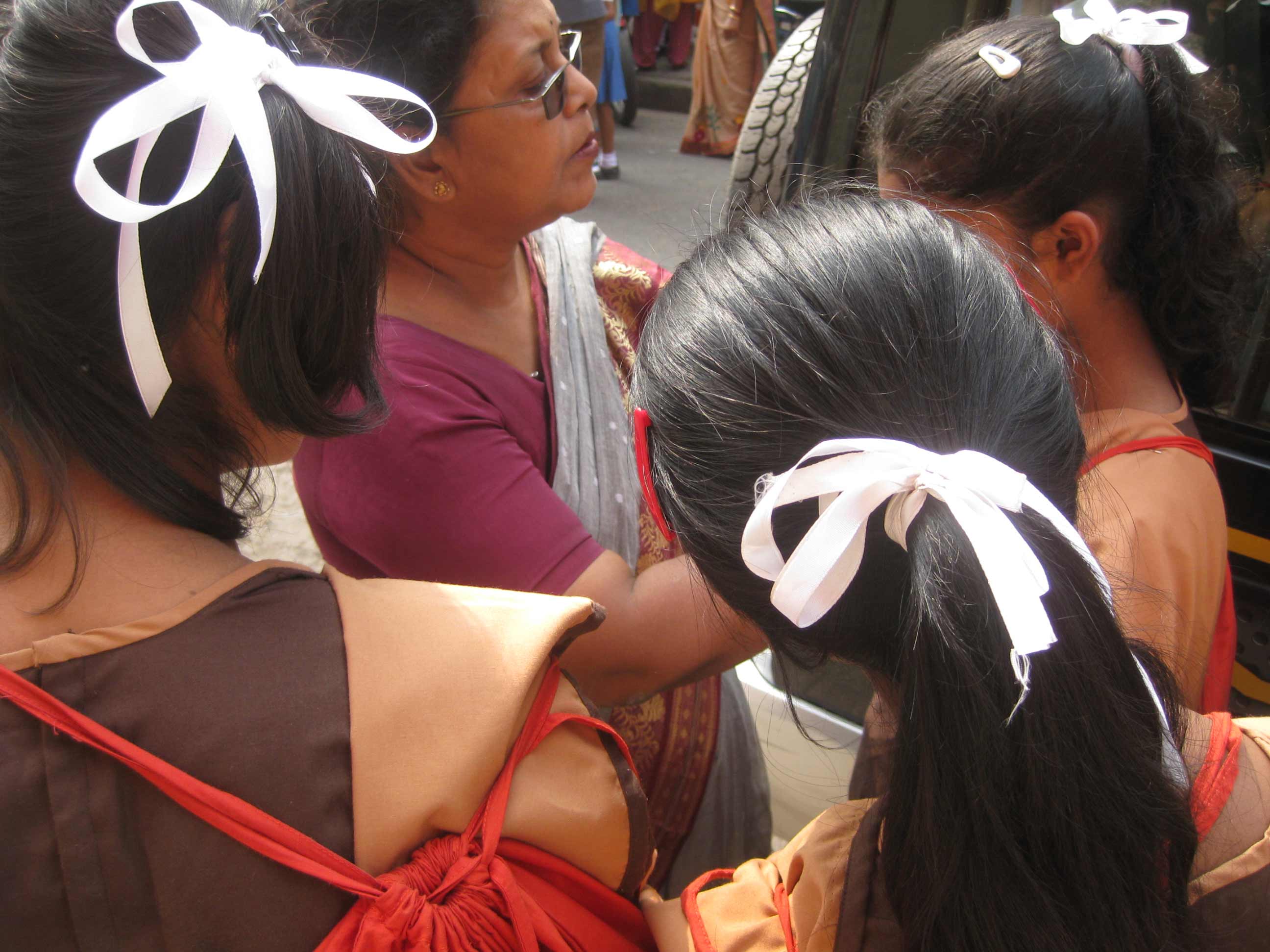
Starting with the children — keeping them clean.  This takes soap, toothpaste, shampoo, scrubbers, nail brushes, towels, and more towels.  Keeping their clothing requires laundry soap.  The girls wash their uniforms nightly, but it takes soap.  Keeping socks and blouses white takes a lot of work.  Most of the girls now have long hair.  This is unusual in institutions, mostly because of lice.  The cheapest thing is to just shave heads.  Then the girls LOOK like institutional kids.  In order to combat lice, we treat everyone, myself included once a week, usually Saturday night.  Then Sunday morning we change all linens.  With shaved heads we would need one bottle of medicine.  Now we use four bottles each week.

 Web-long-hair_7521w

This picture was taken as we were waiting for them to take an admissions exam.  They walked into that school looking like children who were cared for, children who had aunties and a mother who cared for them.  It all costs money.  These girls showed the courage to walk into that school, older than the others.  Would it serve them to "look" like orphans?  Why?  Just because a family falls apart, falls victim to violence, dumps their kids or loses their kids…. why should this child be further deprived?  I totally understand why others won't support them to look like any other child, but they also pass judgement on our high level of care of the girls.

The clean house — this takes labor and supplies.  Either I clean (which I've been known to do in anger sometimes when it's not getting done) or I hire people.  Either we wash walls and floors with just water, spending labor moving the dirt from place to place, or we add soap and disinfectant to kill germs as much as we can.  We spend A LOT of money on soap and cleaning supplies!  Illness among our children is rare.  Diarrhea, so common here in Kolkata, is also rare among our children.  One girl went three years without a fever; we probably average one sick child every two months or so.  We provide uniforms to the staff and launder them daily.  This simply cannot be done within the usual assumed costs of running a home.  This is part of what I have learned… real costs and their relation to what level of care and sanitation we maintain. These are often considered "hidden costs" but they should not be hidden because they are essential for health, and for pride about one's self, and one's home, or one's workplace.  

We are fortunate that we have been able to provide this level of health, sanitation, and nutrition.  We will continue to do so.  But as we increasingly look to outside funds for long term sustainability, these expenditures will come under close scrutiny, and judgement.  This blog post is really my thinking out loud about these issues as we will have to defend our costs to potential donors.  I really welcome your comments and feedback. 

In afterthought:

 1 Jan_3234CrW

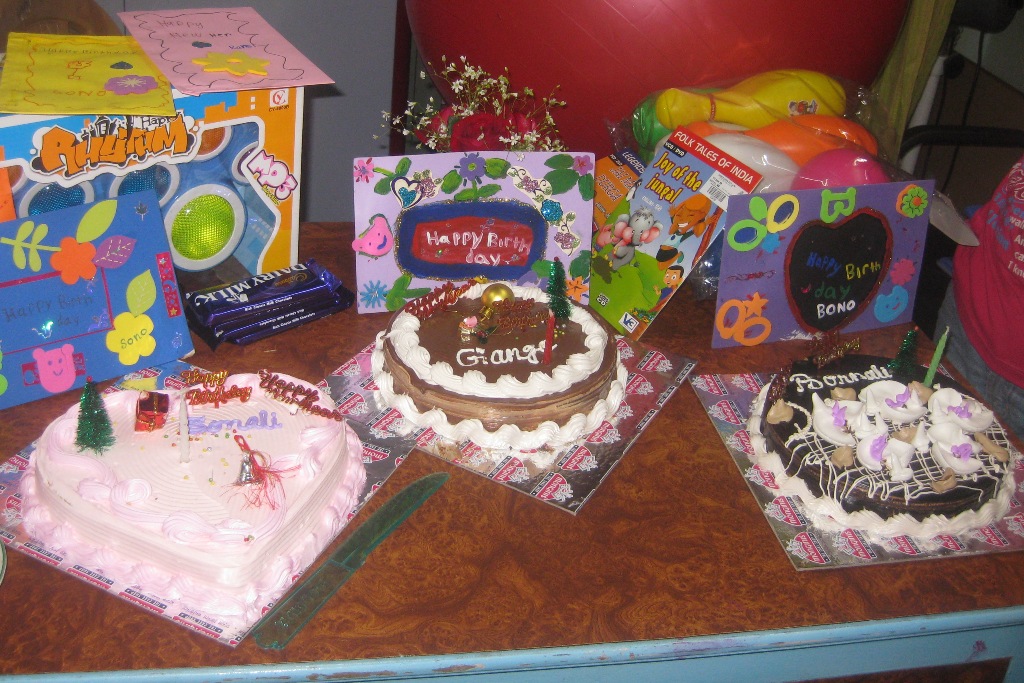
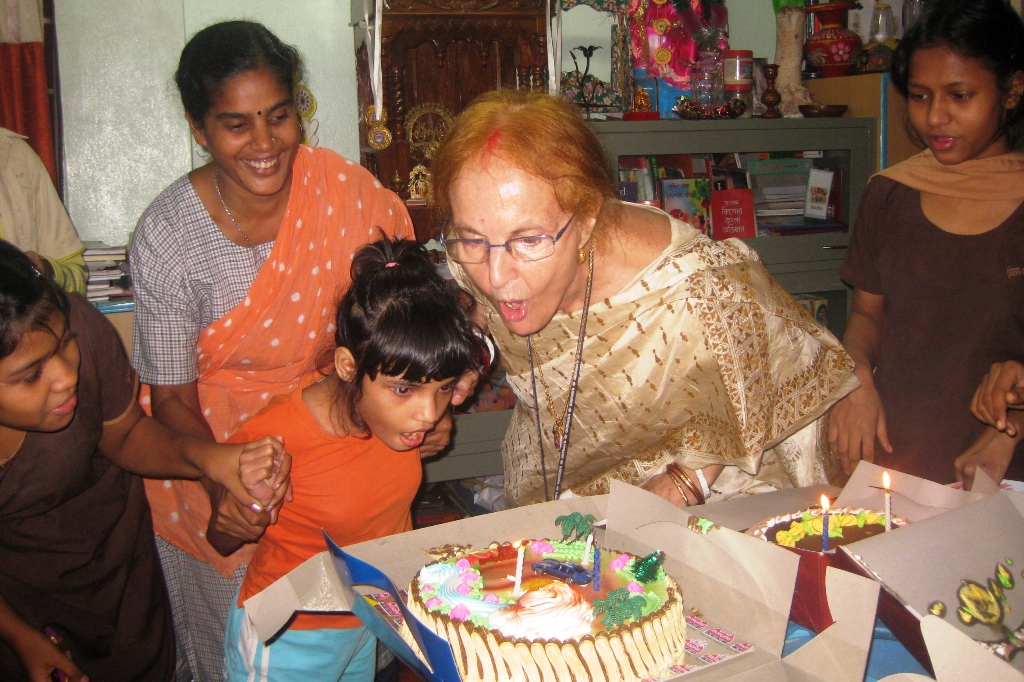
Well, then of course there ARE the birthday cakes… Twelve in a year.

And MY birthday…. which I celebrate with Rani as we know her real birthday and it is only five days from mine.

BD2010_7546CrW 

But the cake comes from my kids in the US, every birthday.

Let us eat cake…..

Previous Older Entries Next Newer Entries

August 2026
S M T W T F S
 1
2345678
9101112131415
16171819202122
23242526272829
3031