Exam time at Shishur Sevay

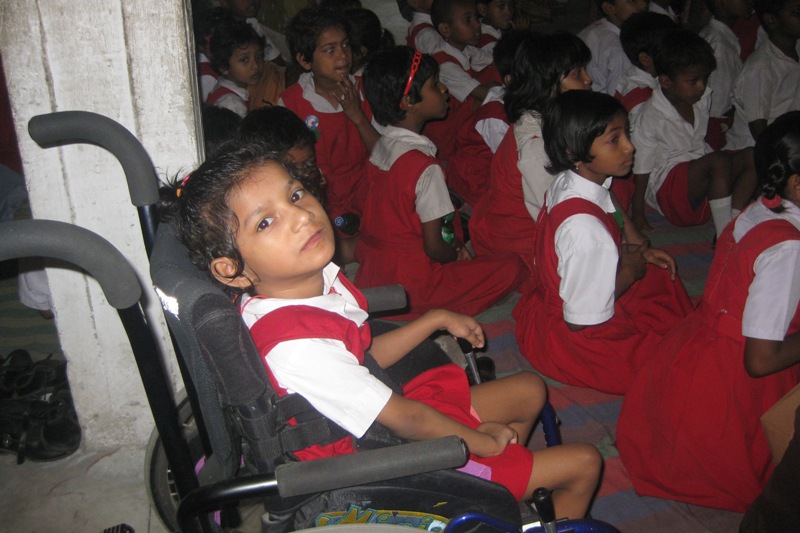
Growing up in the United States, I do not recall tension over exams in primary or middle school.  But here in Kolkata, the examination is the single marker of success or failure.  In the US, we had papers, class participation, extra-credit, homework evaluation, projects, all of which became factors in final marks.  But here we live from exam to exam.  I'm not sure if I wrote of the year we had Chicken Pox during exam time.  We were told to bring the three affected girls wrapped in sheets, covering their full bodies.  They sat in the office with other sick children and took the exams.  There are no "make up" exams.  If you are sick one day you could be held back for the year. 

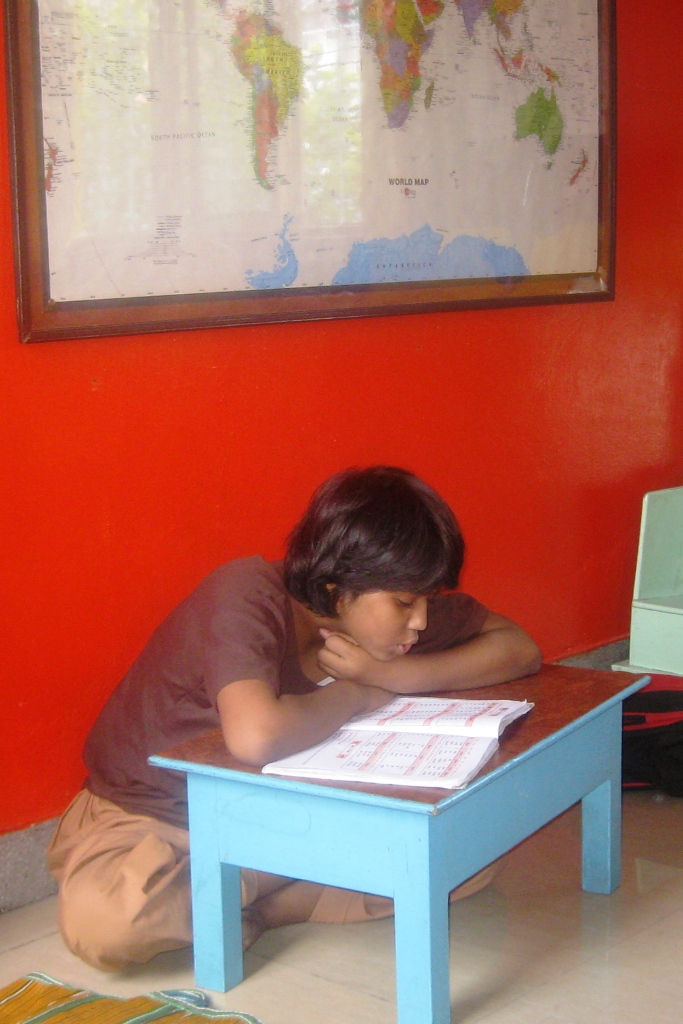
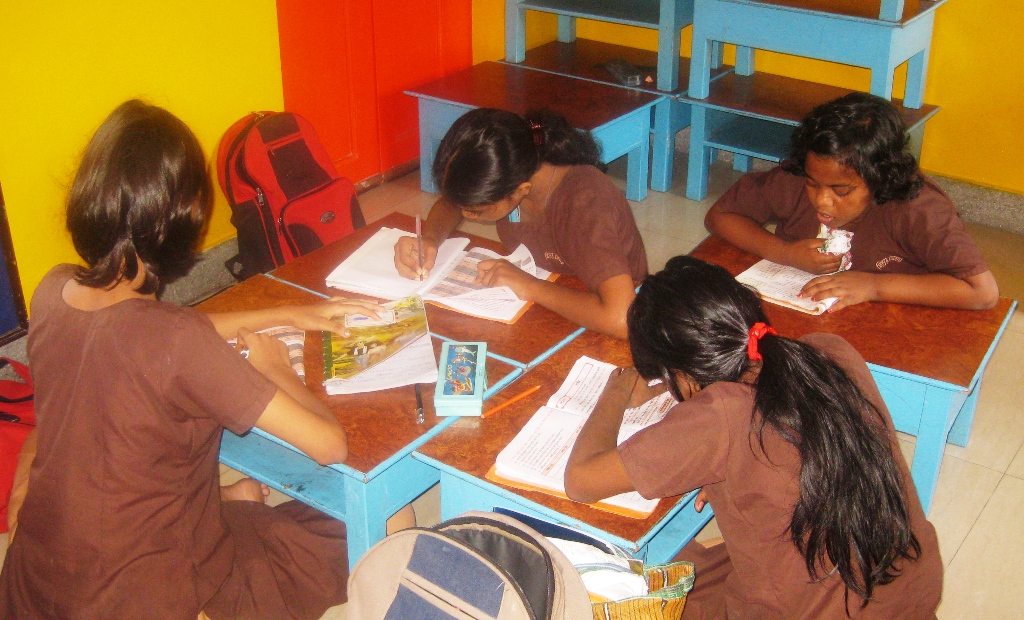
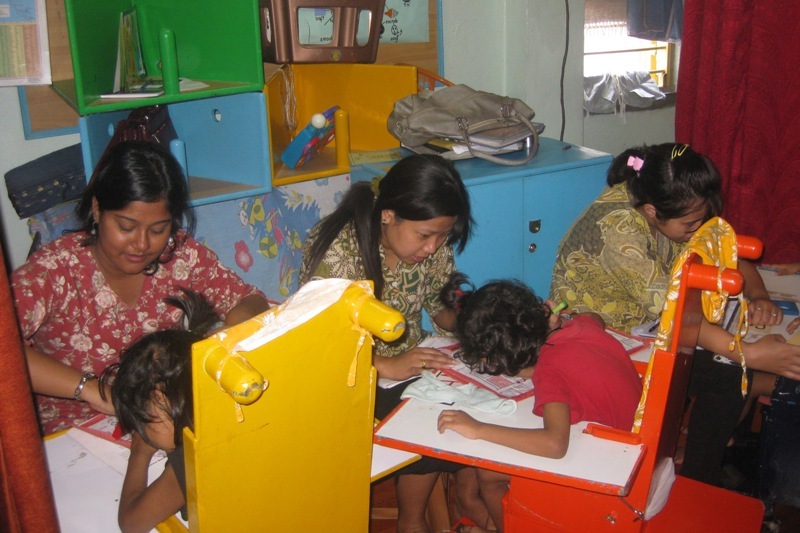
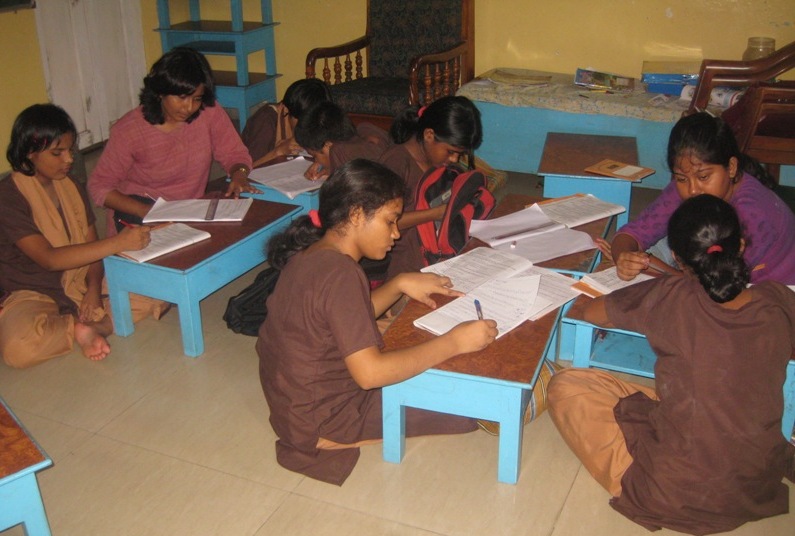
Our system here, in the Bengali Medium schools, is broken into primary (K-IV), secondary (V-X) and higher secondary (XI-XII).  Six of our girls will complete Class IV this year.  We are preparing them for entrance exams to some higher-ranked Bengali Medium Schools.  It is an incredible achievement of theirs to even be able to meet the basic qualifications and sit for these exams.  They are psyched.  Their first exams are end of November, which is also when their final school exams begin.  When teachers aren't here, they study in groups and on their own.

 IMG_6954CrW

 IMG_6942W

 
IMG_6948Crw


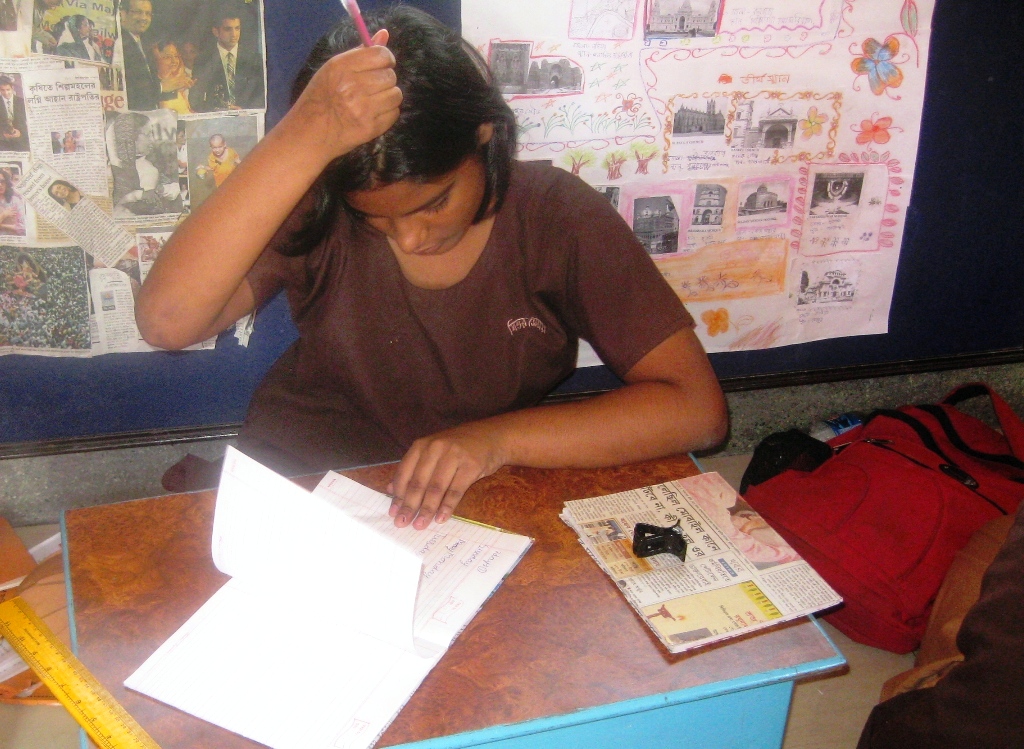
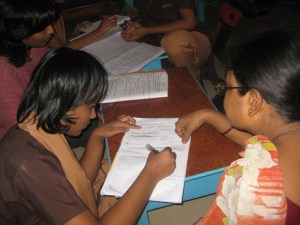
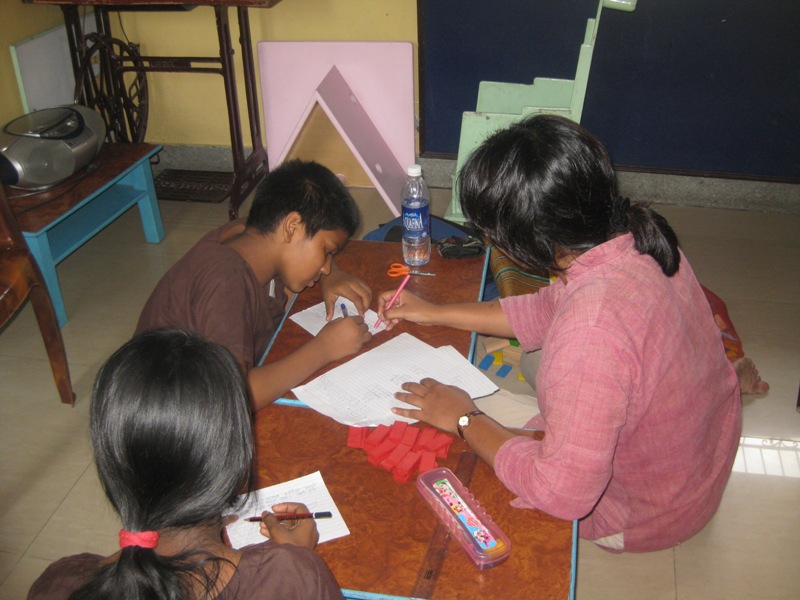
The ubiquitous scratching of the head, looking for answers.

For the first entrance exam, points will be distributed as 100 for Bengali, 100 for Math, 50 for English.  What they are to expect:

English: word meaning, spelling, make sentences, jumbled words and sentences, fill in the blanks, translation, parts of speech, articles, prepositions, paragraphs, and reading comprehension.

Bengali: spelling, fill in the blanks, opposite words, similar words with different meanings, convert sentence into one word, reading comprehension, gender, numbers, synonym, breaking words into syllables, paragraphs, parts of speech, make sentences.

Math (Bengali): written words and numbers, ascending and descending order, prime factor, common multiples, lowest common factor, highest common factor, addition, subtraction, multiplication and division, decimals, fractions, averages, weights, money, time, simplification, geometry.

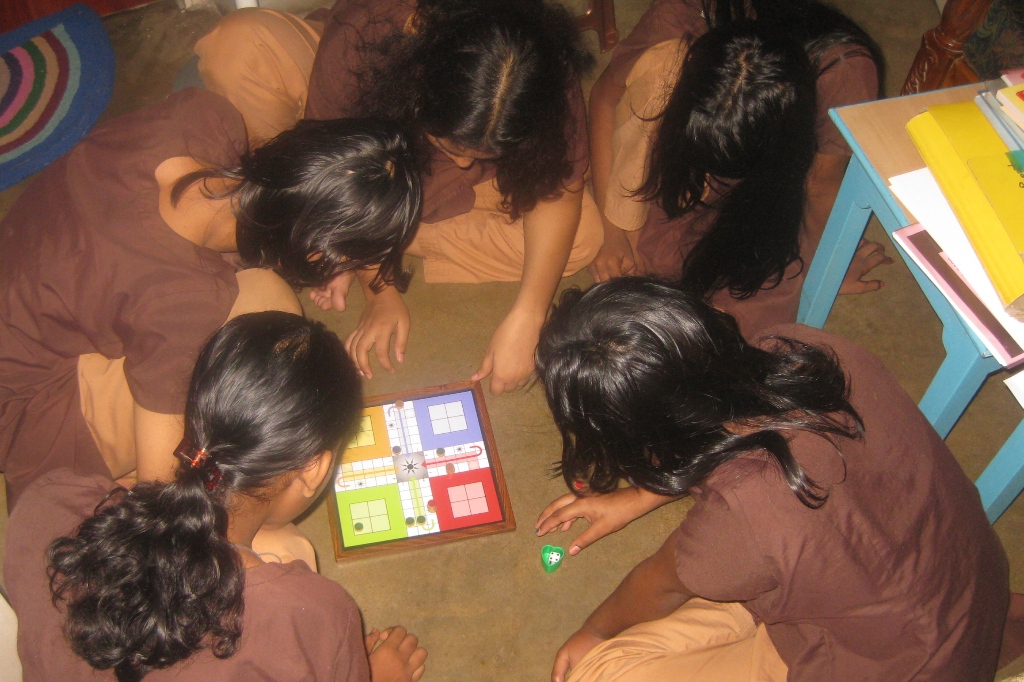
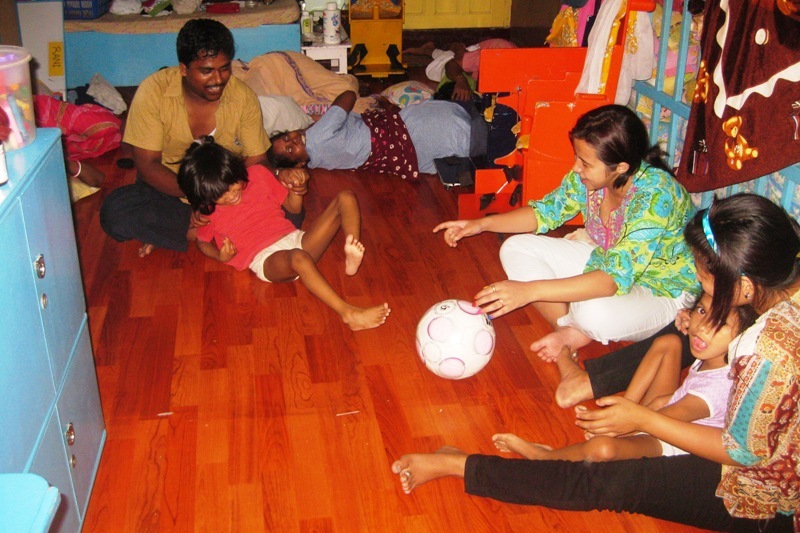
We had a visitor earlier in the week who was concerned that the girls did not have enough "play" time, so here is a picture of them playing before class this morning.  The teacher arrived as I was taking this picture, so upstairs to the classroom they went… without protest, and even if there had been protest, they still would have had to go.

 IMG_6956CrW

We play lots of mind games, the girls and I.  One day a while ago they complained that there was too much work, that all they did was study.  Usually this happens when teachers sympathize with them, sometimes around their being "poor orphans."  By the way that's a term we all joke about…  Well anyway, I said to them, "It's not my fault you are here.  The government could have sent you anywhere, but they sent you to an education home!"  The girls are smart.  They got it.

We are on holiday.  School is closed for another two weeks.  Friday is a Puja.  The girls decided to celebrate the Puja in the morning and to study all afternoon.  I'm proud of them.


When a Girl Learns Her Name

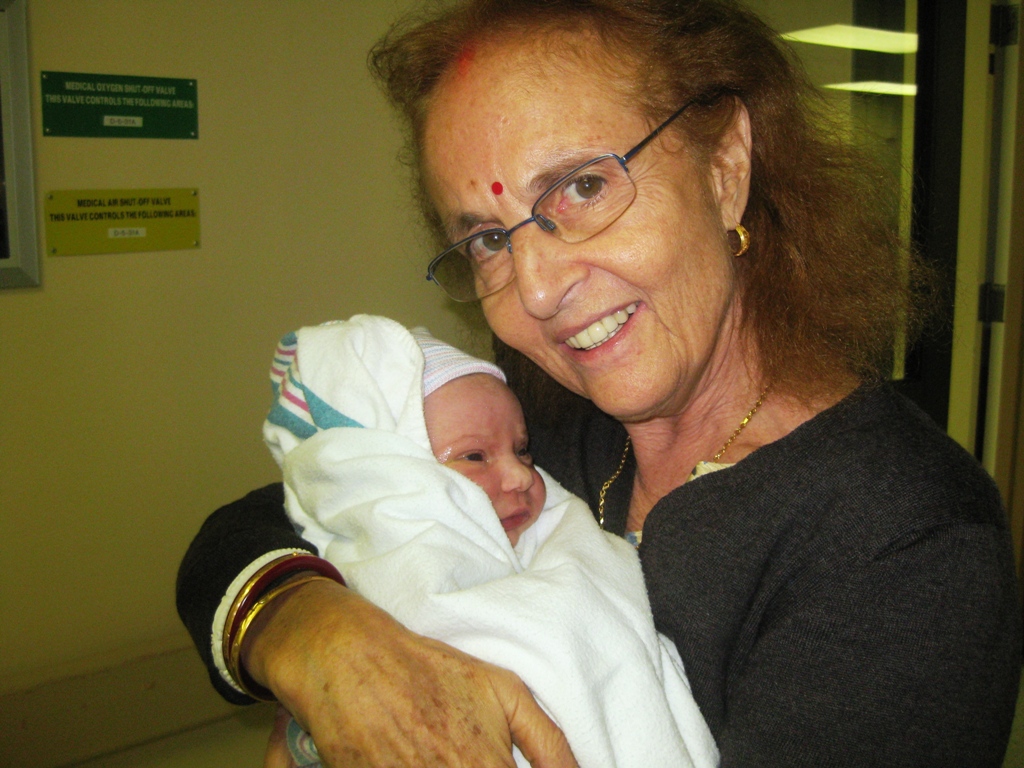
First, there is no way to make up the gap of time of blogging, so I’ll just give a quick summary, and over time go back over some of the events of the last 2 months.  I went to the US for the birth of Victoria, my first grandchild. Mom&Victoria_6417W 
Victoria decided she was comfortable where she was and not eager to get born so soon, so my trip was longer than planned.  It was my first/only extended trip back to the US since I started Shishur Sevay.  It was beautiful as we waited, and all had time together we’d not had before, especially that intimate mother/daughter time framed in the expectation of birth.  Then Victoria arrived, with a few more complications and fanfare than planned… I, as Grandma, sang Bengali songs to her, walked her, soothed her, and handed her back to Heather and Andrei, who morphed beautifully into parents.  

IMG_6757 

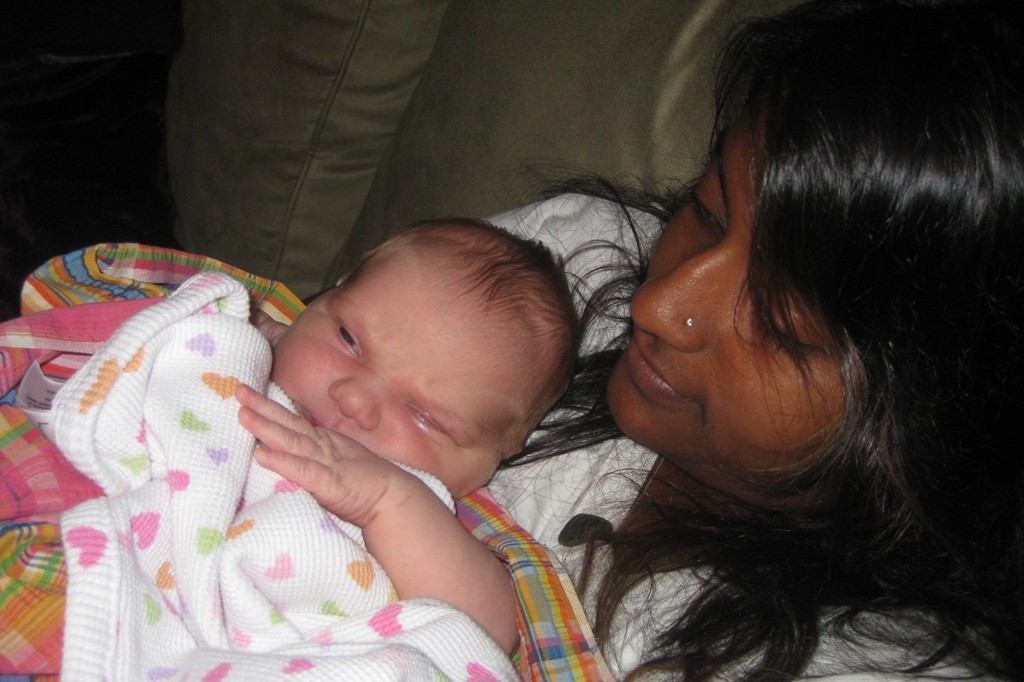
 Cici became an aunt and bonded in the style of “instant-glue.” NYC_6557-4x6wA 

Each day I talked to my children here in India.  I posted to Facebook for them, and also sent pictures through an email we set up just for this time. For a few days we had video conferencing, but the internet didn’t function well enough.  For Ganga and Bornali, each day I repeated to them, “G A N G A — Ganga!, and then B O N O — Bono” and they squealed.  Rani was thrilled seeing me on the video conference call but couldn’t connect by phone.  She slept a lot, and sprung alive when I returned.  She was joyous, as I was.

Today I post “When a Girl Learns her Name”, because it appears that one of our older girls has learned her family name, and for the first time in her life, has seen a thumbnail xeroxed picture of her (deceased) mother. I cannot write the details, for obvious reasons, but this discovery has had a profound effect on her as well as the others.    She beams.  She has a name, a place of birth, people she comes from… all hidden from her in the past.  One day she wants to change her name.  First though there are many questions to be answered, including veracity. The government is managing that well, and in the interest of our girl.  This will be a long, careful, and protected process.

I am an adoptive mother;  My daughter Cici was born in Kolkata, and came home to me at two months of age, much smaller than Victoria was at birth.    I wish so much she knew her name, her people, her place of birth. Years ago in Inda we walked many roads, some village areas, and she felt the ground, wondering if she came from here, or there, if the people around her were her people… She looked at faces.  Did anyone resemble her?  “Are you my mother, sister, brother, father?”  Where am I connected?  Where is my anchor to this Earth?

Cici is a drummer in New York, Last month while I was there, she played with a new band.  They played in the Lower East Side of Manhattan, in a place on Ludlow Street.    My people, those who survived, came from Ludlow Street and the streets around.  My father’s father was a peddler, only a few blocks from there.  He sold pickles from a cart.  When he wasn’t selling pickles he was driving a taxi, or a limo.  Now Cici, my Calcutta born daughter was playing drums there, and I was in the audience, so proud of her.  When Cici first started Bengali lessons, her teacher was teaching in the high school where my mother and father first met.  Her Bengali teacher was being funded by Grand Street Settlement, where my grandmother was a social worker, and where I was in daycare at 2 years of age.  My family “came up” through education.  This is the only way I know.  This is part of my drive with my children here in India. 

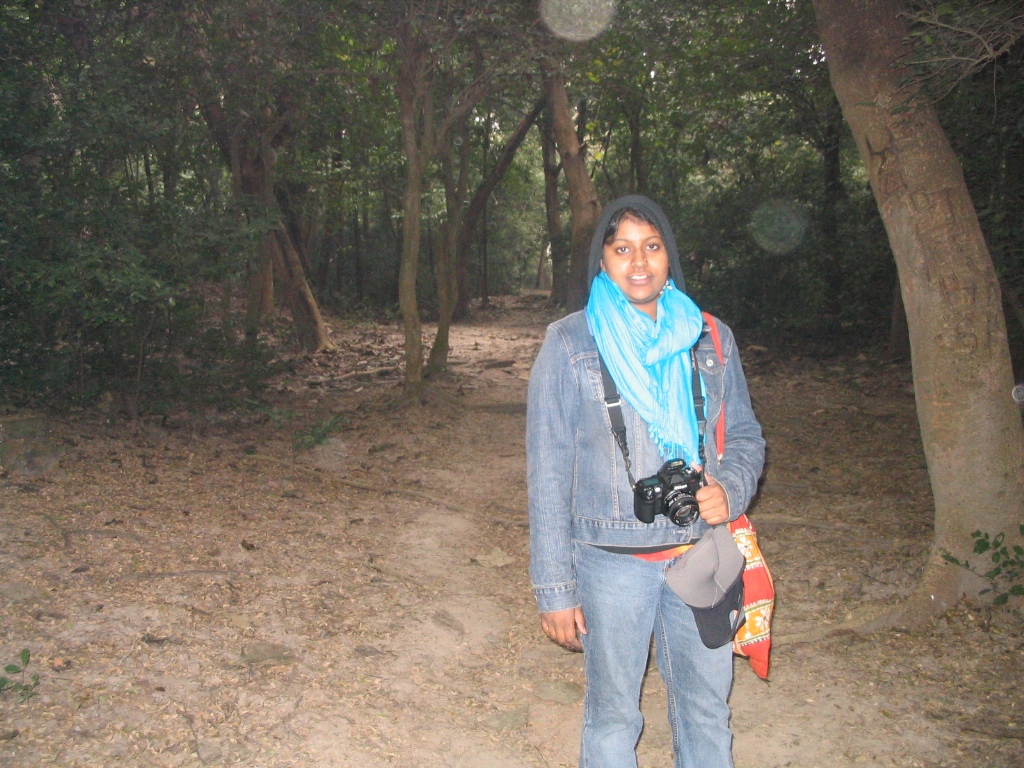
In one of our trips to India, Cici and I visited an area north of Calcutta, a small deer reserve (We saw one deer).  This place had a special feel to her though.  She described it as her “spirit forest” and imagined she was from there — an image that gives her comfort.   After our visit she wrote to me, “When I am alone on the subway listening to my Indian music I think about West Bengal and that day we went to the spirit forest… I feel this sense of pride about where I come from… I think about who my parents might’ve been… I am Indian, and I am Asian-American, and I have a sense of pride and connection to a geographical, spiritual, ancestral place.” Cici (2004).Momcf20116W

In our current lives, I walk the roads of her forbearers; she walks and drums the streets of mine.

 NYC_6663CrW

There are so many reasons I started Shishur Sevay, but one was to have a home where I could imagine my daughter could have been raised if she had not been adopted.  Adopted children live with so many “if’s”, so many alternative or parallel realities.  Most of my girls here will not know their “real” names.  In their families, father was Baba, if he was there, mother was Ma, if she was there, and the children didn’t really know their formal names, or family names — title — or caste, or the village they came from.  Our girls talk about what train stations they were from, where they “lived” until police brought them into the government’s protective services.

A wise psychiatrist friend of mine used to ask her patients two key questions:  “Where do you come from?” and, “What is it like being you?” For the adopted child, the roots are missing from the answers to the first question.

NYC_6790-4x6Corw 

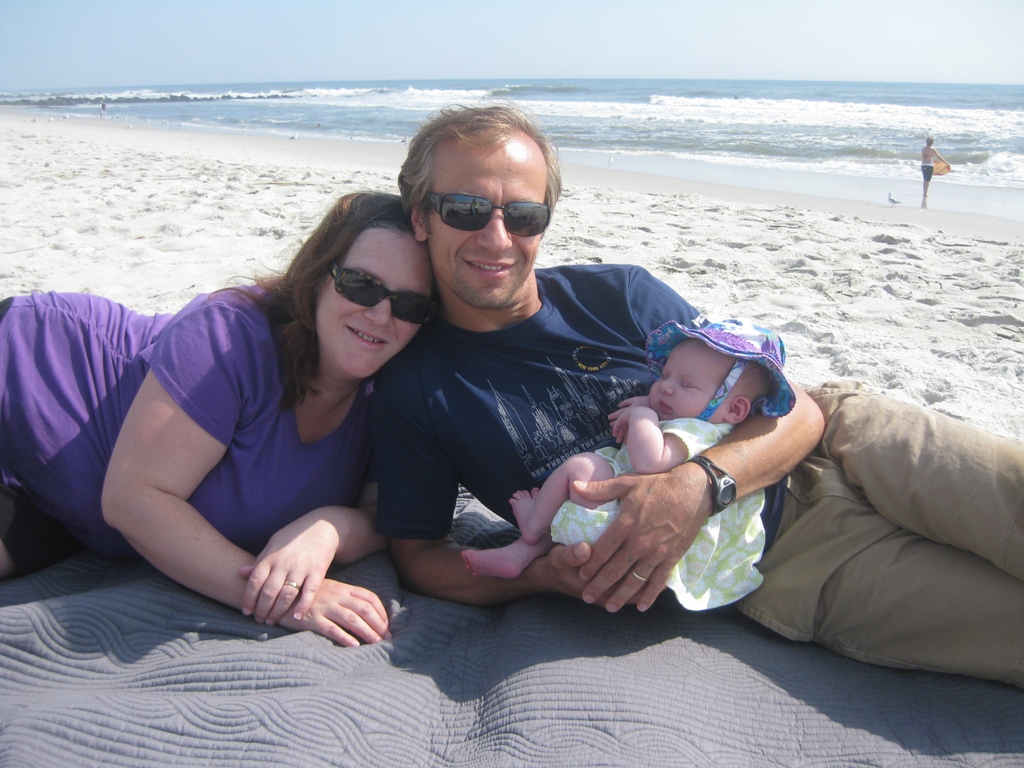
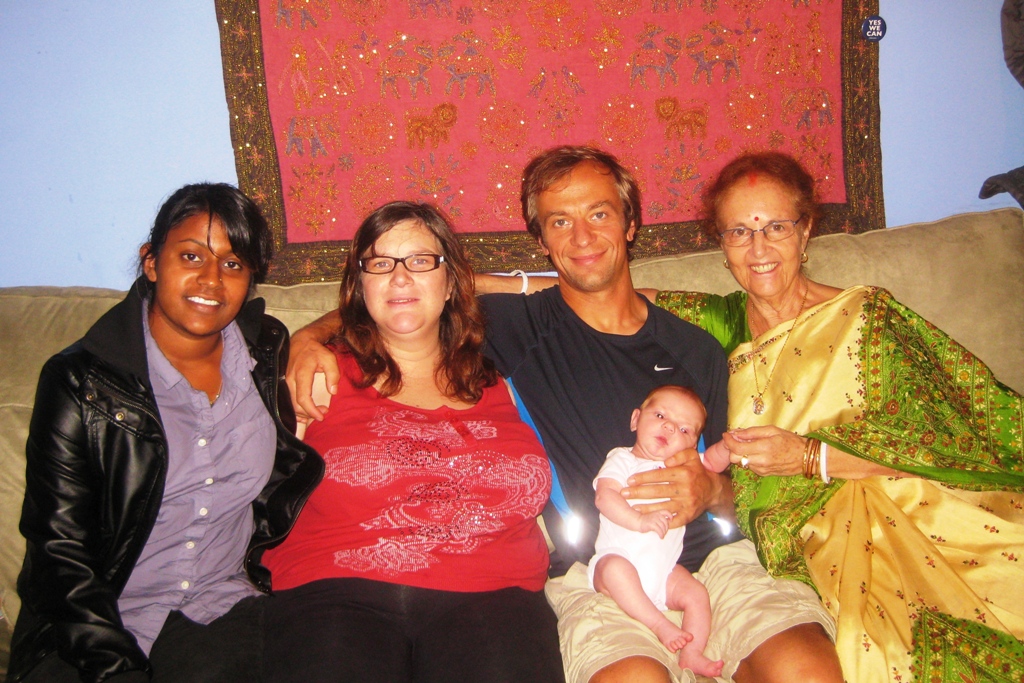
 My family in the US, with Victoria at two weeks of age.

NYC_6804-4x6W 


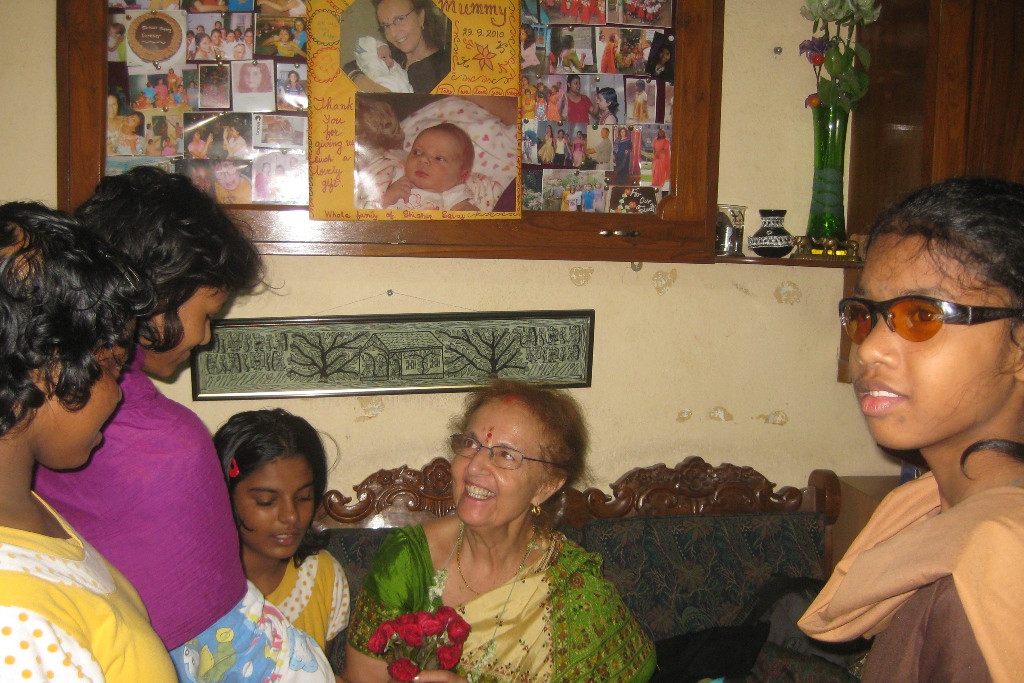
Twenty eight hours later, my family of Shishur Sevay, with a poster of Victoria they put up to welcome me home.

I am blessed.

Ganga has PTSD

April_4744CrW

I am asleep.  Ganga is asleep beside me, as usual.  My back hurts and I roll to my other side, leaving six inches between us.  Suddenly she begins to scream, and scream, and thrash.  I jump up to hold her and she is stiff, screaming.  I try to sing to her, to soothe her and she screams and now also sobs.  Others wake.  The light goes on.  Ganga screams in terror, looks to the corner as if something is coming from there.  She doesn’t seem to know who I am or where she is.  She pauses for a moment, looks at me, and screams more.  I pass her to one of the girls.  She still screams.  This goes on and on.  She thrusts out her tongue as she does when she is thirsty.  We talk to her.  She takes a sip of water.  She looks at me, terrified.  I feel helpless and frightened.  It has never been this bad before.  One of the girls takes her and walks around with her.  Ganga calms down.  She wants to come back to me.  I hold her.  We fall asleep.  It is 3 am.  This night is not over.  Twenty minutes later she is screaming again.  The look of terror on her face is so awful, painful, and yes, frightening to me.  Now I think of this as seizure of some sort.  I give her some Dilantin, Rani’s seizure medicine.  I don’t know if it really helps, but eventually we are asleep again.  In the morning she is smiling.  She goes off to school, as though nothing has happened.  I don’t know what she remembers.  She cannot speak.

I leave to have breakfast with a visitor and then take him to the airport.  On the way, talking about what happened in the night, it clicks.  This is flashback.  The picture comes together…. pieces always there, but not as PTSD.  Ganga wears a special locket given to her by the Imam at the Mazra where we took her once.  There an Imam does healing.  She loved going there, always arching her body towards the entrance as we approached.  He gave her special water, and the locket, and he blew softly on her face.  She is a wise child.  She understood.  But it hadn’t been so bad then, and for a while, a long time, she was fine.

PTSD, Post Traumatic Stress Disorder, most well known in relation to soldiers in war, soldiers who return from war but have flashbacks in which they believe or experience being back in the battlefield, in it again, terrified, trapped, and unable to re-join the present.  It happens in the day and in the night.  The episodes result from triggers, internal and external that evoke the fears, the memories, the terror, and the terror takes over.  They cannot escape.

Ganga does not take her eyes off me.  She used to cry if I got up in the night to go to the bathroom.  Once I even tried holding her at the same time.  Then I started waking her lightly to tell her I was going.  That worked well.  But that was just crying, and she was immediately soothed if a massi came to her, or when I came back.

The first time I went away, for three days, she ran a high fever.  Then she got used to it.  But always I told her.  One time she became very fussy, more clinging, and I couldn’t figure out why.  I was going to Bangladesh just for a day and coming back the same day.  But she had heard staff talking about my going.  Once I explained I was going and coming back, she calmed, stopped being clingy.  But always she is concerned about where I am.  She is hypervigilant.   When I went to the US for two weeks, I prepared her.  I practiced talking with her on the phone.  I would go in the other room and call on another phone and go G A N G A, GANGA!  She can’t speak, so I can only look for the ways she understands.  She did well.  I called every day.  She kept her eye on the phone and understood when I wasn’t on the phone.

Ganga’s attachment to me was always treated as a “trait” and people took delight in teasing her that I was going away.  It makes me furious, but I could not stop it.  It was done when I wasn’t looking.  On that trip when she ran a fever I left hearing her screaming because someone told her I wasn’t coming back.  I’ve never understood why people enjoy teasing in that way.  Here it was also a way of getting at me, of hurting where I was vulnerable, hurting the child who lived in terror of my disappearing.

It has been three years, four months, and one day since she came.  Normal “separation anxiety” should have gone away a long time ago.  But nothing for her is normal. 

Ganga’s History.  We don’t really know her history.  She is about 7-8 years old, by her teeth.  She has severe Cerebral Palsy.  When she came, at about four years, she was 8kg, and could not use any of her limbs, or lift her head. GANGA-Sukanya-1520CRW She was totally limp.  I remember asking the physiotherapist if he thought she “knew” she had hands.  She had no reflexes, no grip.  But her eyes spoke and spoke.  She loved a Bengali movie about a father who wanted to give an elephant to his daughter.  She loved Charlie Chaplin.  She wanted to be in the classroom with the big girls.  When they went upstairs she cried, and when I picked her up to follow her eyes, she took me up to the classroom.  There she was happy.
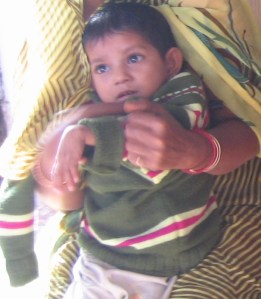
Shishur Sevay is Ganga’s fourth home, that we know.  She has pierced ears, tiny holes that have since closed.  But that means she had a family.  She had a home where initially she was accepted, and her ears were pierced.  At some point she was moved to a hospital, but we don’t know when.  About six months before she came to us she was moved to Sukanya Home, the government institution for orphans, abandoned children.  And then she came here.  There could have been more homes in between. Ganga is an abandoned child, an aware one, a thinking one… and aside from abandonment, we don’t know what other traumas she had, and now experiences as flashbacks. Sometimes when I hold her she looks at me and just gets sad and begins to cry softly.  I think she is remembering.  I ask her and she seems to tell me yes.  My question soothes her.

I don’t remember how or when Ganga claimed me as hers.  In the beginning I slept with all four little ones nearby.  The others gradually started to sleep with the big girls.  Ganga stayed.  Often she would not fall asleep until I turned out my office light and came.  She would just lay in the dark waiting.  I told a friend about her once, about her hanging on to me, staking her claim on me, and my friend said, “Smart kid.”  But here it was also seen as a vulnerability.

Why Now?  Why was it so bad this time.  What were the triggers?  Looking back there were several.  There had been some teasing… that Mummy would punish her for something…  She’d had “accidents” which is extremely rare for her.  Regression, yet another symptiom of PTSD. And then there was the visitor coming and Ganga misinterpreted my telling her we were going to the airport.  When I have to leave, she comes to the airport to see me off, with the other kids and Gibi, and then comes to pick me up.  But this time we were going to pick up a visitor.  So when I told her the night before, she couldn’t get to sleep.  I wondered why.  Now I realize she thought I was leaving.  I took three big girls and Ganga and Bornali to pick up Ferdinand Rodricks, (http://www.HandicappedPeople.com)who was coming from Mumbai to design a way for Ganga (and eventually the others) to dance with the big girls.  When we started to go towards the gate to meet him she thrust herself towards me — and I held her.  She clung, and I suddenly realized she thought I was leaving.  I held her; I reassured her;  when later we got back in the car she was smiling and smiling; when we got home she was smiling even more.  Ganga was safe, until the night when the triggers and the fears came back and she was lost to the past, gripped by the demons of her history, cut off from the abundance of love that surrounds her at Shishur Sevay.

Maybe the visit itself was difficult because of all the attention to her, though she clearly loves attention.  Ganga loves to be with the girls when they are dancing.  She adores the dance teacher and lights up when he comes and takes her upstairs to class.  She studies the dance, concentrates, and when I ask if she wants to dance she says she does.  I have a vision of the four little ones dancing with my eight big ones, dancing with partial weight bearing support from above, twirling, twelve girls in groups of three.  So Ferdinand Rodricks came to help us.  He designs devices out of passion to help those with disabilities share experiences they usually miss.  His biggest area is in adapting all kinds of cars so those with disabilities can drive — any kind of cars.  Now he was here to share this vision of dance.  How was that for Ganga?  What did she feel, think?  We don’t know.

NAMING is a game changer.  I came home from seeing Ferdi off and hit the internet for PTSD and flashbacks.  There I found her “symptoms” of flashbacks, sleep disturbances, separation anxiety, startle.  STARTLE is interesting because I knew how easily she was startled and had adapted my behavior over the years so as not to startle her.  I never moved quickly around her.  I adapted without really naming it.  If I sat next to her I would get up slowly… no sudden motion or noise.  But of course everyone was aware that Ganga startled easily.  It just wasn’t named. Rage — a couple of times, after I got back from the US, she had been naughty and I scolded her.  She had started bubbling water out of her mouth.  It was class time.  I scolded her.  She went into terror/rage and stayed that way for hours, checking me.  I think that because of the CP, it is hard for her to modulate, or maybe because of the PTSD.  But for months after she continued to “test” the situation.  She would fixate on my face and start to bubble, and then actually react with the fear, waiting to see what happened.  Since admittedly she has control over me I would say, “Ganga I promised I would not scold you again for that.”  Scolding makes her feel like her world is coming to an end.  That doesn’t mean she can do what she wants.  I tell her and teachers tell her what she can or cannot do, but “scolding” has a different meaning, and tone.  I don’t do that.  Maybe one day i will be able to, or she will be able to tolerate it.  That can be a goal.

I had a long talk with Ganga after I put all this together, and told her what she has.  I named the PTSD.  I also told her I would not leave without telling her.  And then because she must also deal with reality, I told her that if anything happened to me, she would still be OK because of all the people who love her, and I named them each.  She was very serious.  I think she understood.

From the beginning I have wanted Ganga to be able to tell us what she is thinking.  I want to know.  I want her to know we know.  It’s been my frustration with much of the teaching in “special education” because that seems to be about what WE TELL the children, and not about listening to what they are trying to tell us.  When Rani went to school they would hold her hand and tap it on a drum.  At home, I discovered I could imitate what she tapped and she would suddenly look at me, with amazement, and tap back.  We connected.  I was listening and she knew she was being heard.  A key to her internal imprisonment had been unlocked, just a bit.  Rani has a lot to say.  So does Ganga…  And I want to know what they want to tell us.

I have been on the path of assistive technologies and augmentative communication.  There is a vast array of products and devices.  I have chosen already the symbol system I will use, Widgit, formerly Rebus.  I like it.  I can understand it.  The software just arrived from the UK.  I want the little ones taught in English because one day I hope to have teachers, volunteers from US or UK, people to take us further.  As for the devices, I think I will wait until August when I have to be in the US, and can look at different ones at the same time…. It’s hard to make these decisions online.

But back to Ganga and PTSD.  What is the therapy?  There really is no medicine and the flashbacks happen only once in a while.  Talking is the best therapy for this, awareness of triggers, prevention, and finding ways to desensitize.  I have to talk to her about startle, about her fear when I move quickly.  I really want to use the new system of communication, Widgit to write stories about loss, about trauma, about healing, and start to read them to her, and talk to her.  Then I want to find a way for her to make the stories, to point to what SHE wants to happen next, and how SHE feels reading the story.  The system has symbols and words so I hope to teach it to the big girls too, so they can read stories to and with the little ones.  My plate is full.  My cup runneth over.
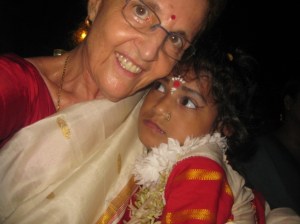
Ganga-Mom_5112w

I’ve been writing this over the course of the day.  I want to add pictures.  I also want to write of how the naming changes what we do.  I was standing next to her, and joked about “tiptoeing around the Princess” an acknowledgement of her startle reflex…The girls all needed shoes and I only wanted to take two at a time.  I took Rani and Sonali and told Ganga I would take her and Bornali another day.   It’s not about avoiding separation, but of building her capacity to manage separation.  The difference here is subtle but no one is making fun of her… rather just reassuring her.  Ganga’s terror has a name and so it is not funny anymore.  The NAME makes it “real” to people, though it was just as real before the name.  That is part of our culture though.  Naming defines what is real and what is “imaginary” or made up, or looking for attention, or any of the ways we tend to dismiss inconvenient feelings and vulnerability.

Ganga is serious about learning.GangaComp_5186
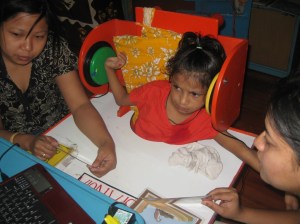
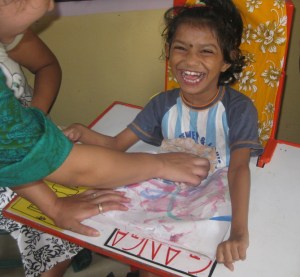
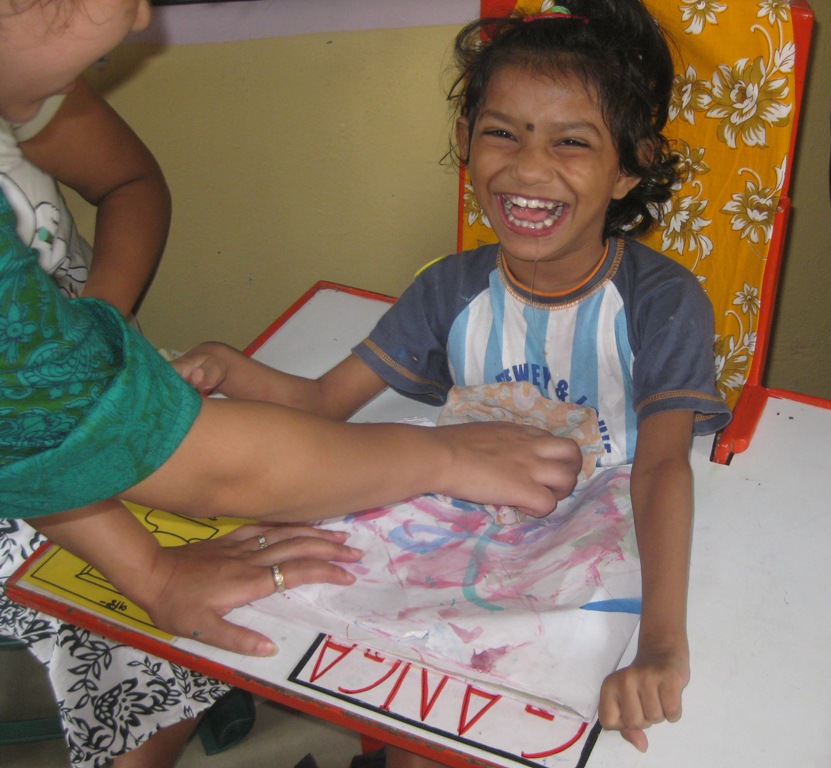
Ganga is a joyous child.

Canga_4892CrW

Until her demons of the night, or day, rob us from her and send her screaming into her past.

From the Office of Dr. Harrison, the Principal of Shishur Sevay Academy –

So, now I am a principal too.  I have tried and tried to find someone to run the school aspect of Shishur Sevay but it isn't happening.  We are in May and the school year will end in Dec. or Jan this year.  So, first of all, I am Principal of a school with 12 children and 11 teachers, at the moment.  They come different overlapping days and hours.  We have some variety of teaching going on seven days a week. The obvious question is why so many teachers?  The simplest way to answer that is with pictures. 

The children with disabilities:

April_4911w-W 

April_4918w-W

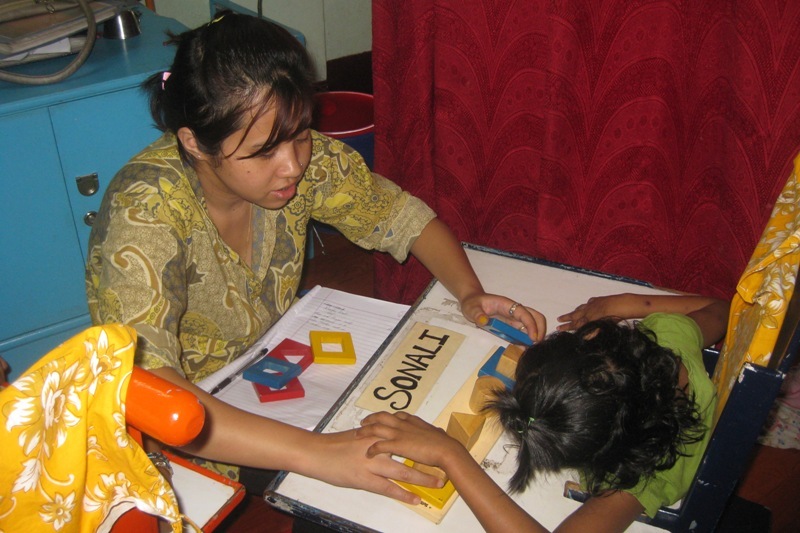
Four children are in this category:  Sonali, Bornali (Bono), Ganga, and Rani. For the children to learn requires one-on-one teaching, as they are at such indredibly different stages.  Ganga and Bornali are the closest to each other so often they can be taught together, but as they have little use of their hands, a teacher has to work closely to understand what they know, what they are trying to point to — requiring a high level of attentiveness.  Three teachers seems like an ideal number as one child is usually out for feeding or toileting.  As the four girls represent three distinctively different groups and levels, two teachers is an insufficient number.

April_4910-W 

The girls all used to nap after lunch, but Ganga and Bornali no longer want to.  So, it's play time.  Bornali loves action.  Ganga was more interested in posing.

 IMG_5155-W
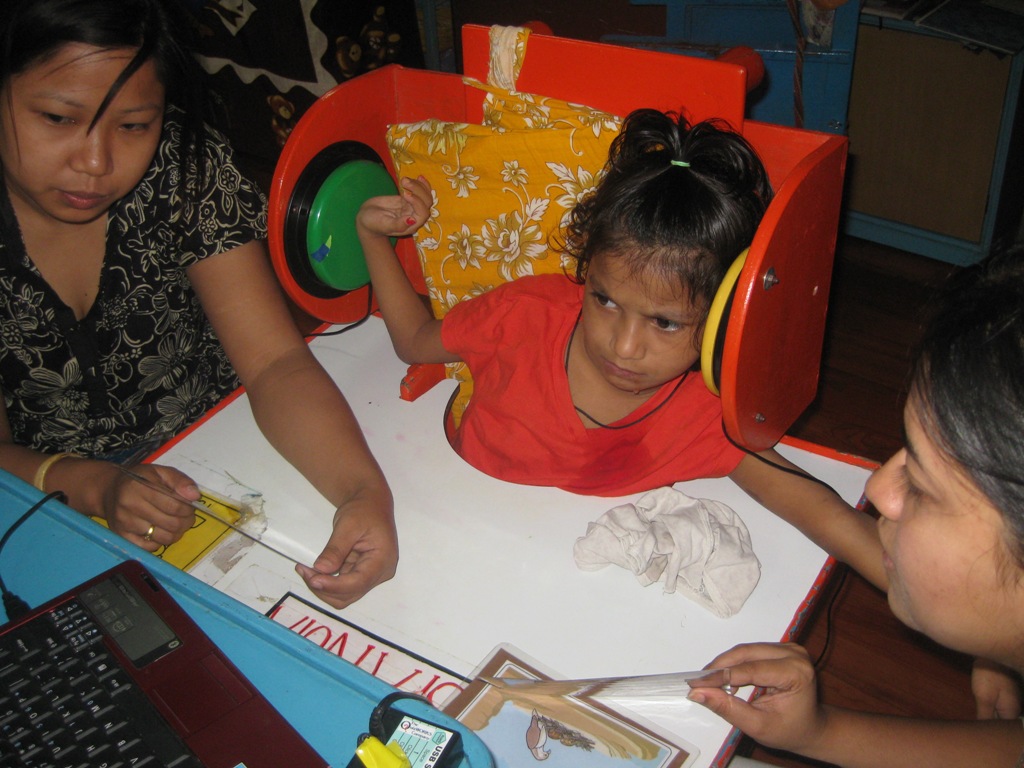
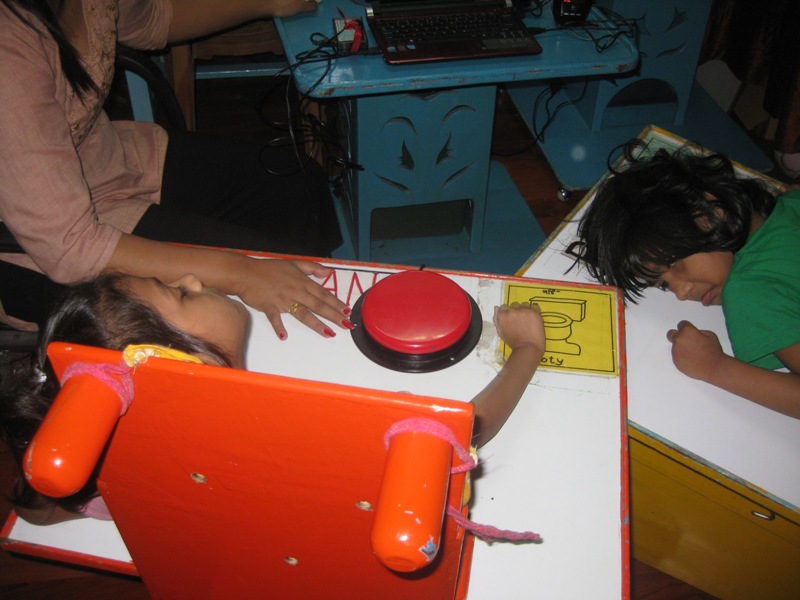
Computer time often comes next.  This is the area where I feel most frustrated in finding help.  I am determined to use high tech communication appliances because I believe these children want to communicate, and can communicate with assistance.  The holes in the back or the orange chair represent where we had head switches mounted on a board for Ganga.  We may go back to that.  I also want to evaluate her for toe switches.  I spend hours going through catalogs, communicating with people online, trying to find some guidance.  But we have started at least and Ganga and Bornali love it.  Bornali is pouting because it is Ganga's turn.  I need to set up a two switch system and that just requires some time.  I'm the IT department here too.  

Recently the girls received their disability examinations by government doctors.  The four little ones each were rated as 90% disabled.  One of the older girls received a 75% disability rating due to her learning and behavior difficulties.  So yes, I need a teacher for her too because everyone here has to learn, at whatever level it is.  She often assists the special educators with the little ones, thus developing her own level of skills with them.  If she can really grow in this role, then she can eventually find employment helping with children who have disabilities.  She is very good with the little ones.  We still continue some academic work with her, partly because she loves it and feels successful in figuring out very simple numbers.  Her alphabet chart is the same as the one we use for Ganga and Bornali.  She also helps them with their homework.  Ganga and Bornali go out to the government school from 6:30 to 8:15 and return with homework in Bengali.  The teachers also review the work in English, so the girls get both.

Well, back to upstairs… here are some pictures of what the classroom looked like on a recent afternoon.

Img_5124-W 

For this math class, the teacher on the right is teaching, and the teacher on the left is doing "back-up."  She is helping the girls who disruptive and having a hard time understanding.  She is a Learning Disability Specialist, trained abroad, and central to how the educational program is structured.   She is giving them the attention they require in order to work.
 

What does that mean, "the attention they need in order to work?"  This is really a critical question I ask myself every day.  I'm often faced with an attitude from outsiders that if the girls can't study and behave, let them stay uneducated, let them have regrets one day.  But that is not what we do with our own kids when they don't study.  I've been through lots of stages, including anger, punishing them, taking away TV, time out — but if a child really is resistant those things will not work.  So I go to a "need" basis, rather than a bad behavior basis.  I still discipline.  The rules are that you can't stay in the room if you are disruptive — when only one teacher is there, because you are not allowed to interfere in the learning of others.  If a second teacher is there she will help in the room, or take you out of the room.  But the teaching doesn't end.  "I will fight with you forever!" is what I tell them.  But punishment?  How do you punish children who already lost everything, who see themselves as unworthy, who have been beaten and punished in all sorts of ways….?  They care about what I think, and what others think, but this only goes so far in overcoming their difficult behavior.  And fundamentally they need the help because it is human attention that translates into caring, commitment, really a crutch to help them stand as they try to solve math problems that frighten them.  They are afraid of making mistakes.  Emotionally they feel like the world will end if they get it wrong.  It's easier to rip up the paper, or create distraction.  So back up teacher does a lot of, "You can do it."  She breaks down tasks to doable pieces and then the work seems almost easy.

Img_5127-W 

Another teacher has come and she will do back up for a while and then start Bengali class.  The teacher doing math will then do back up as well as the LDS.  Without this support this girl will fall behind.  Her confidence will drop more.  She will hate herself and everyone around her.  She is probably our smartest math student.

Img_5150-W
On another day the LDS is working on math with two girls who have some trouble with basic concepts of quantity.  So even though the girls are doing high math numbers and functions, she is having them use the red blocks to show the functions of multiplication and addition.  One of the girls has trouble with concepts and abstract thinking.  She is also easily distracted.  But her behavior also had improved tremendously.  The other girl though is very smart, but is just settling in after three years and putting energy into study.  She used to just give up.  Now she tries, and asks for help with her work.  She wishes that when we have previous lifetimes we could keep the multiplication tables with us so we wouldn't have to work so hard to learn them in this lifetime.

While all this is going on upstairs, there is yet another teacher downstairs working with one girl who is a year behind the others.  She technically passed Class I but I wanted her held back because I knew she had no idea what she was doing, and I wanted her to have a good foundation.  She is doing well, but also needs constant reassurance.  Sometimes she just stops working.  That's it!!!!  Then I'm called and I pretend to wind her up like a clock and then I push a "button" on her back and she goes back to work.

So, the afternoon all this was going on, there were three teachers upstairs with the six, one teacher downstairs with the girl who is a year behind, and then the girl with dyslexia working along side them.  In the big room were two teachers with the little ones.  That's six teachers for 12 girls.  That's what it takes.  I don't see how to do it without the support of many teachers.  The girls still struggle with "how to learn."  They often work in groups now. 
  Img_4815-W 

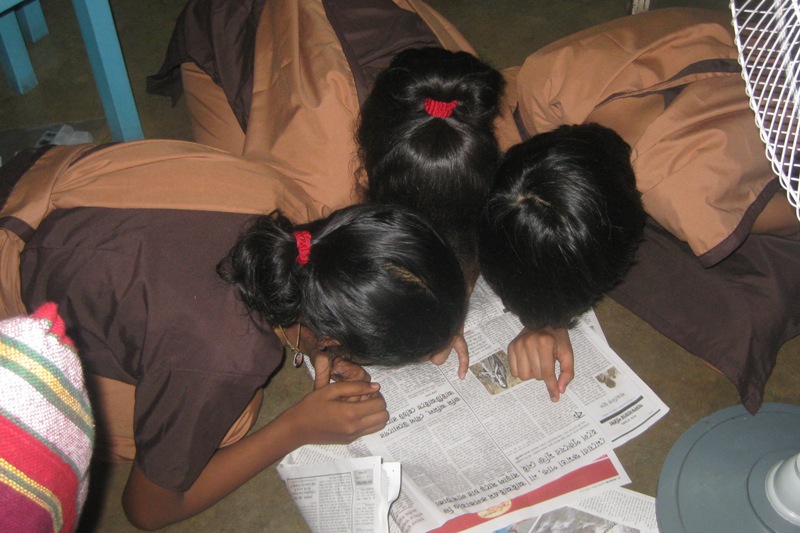
They read newspapers:

IMG_4617W 

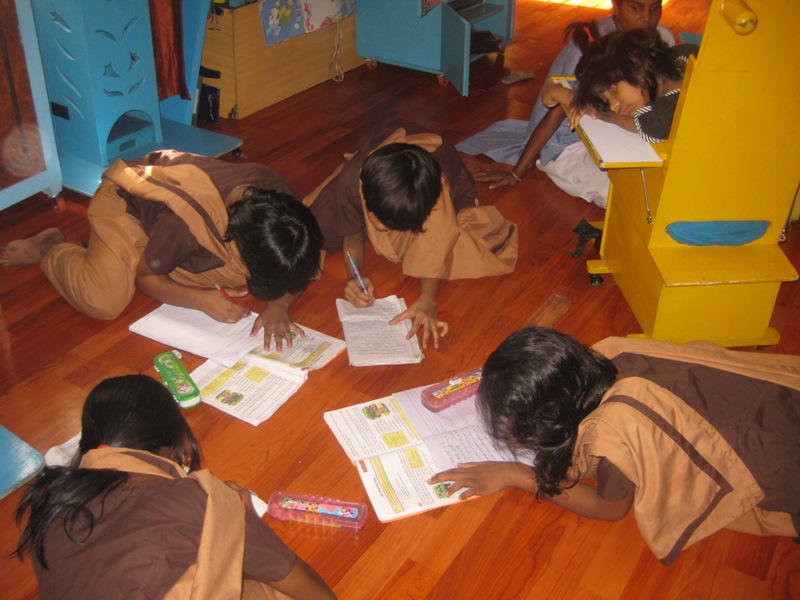
They do homework:
 

Img_4851-W 

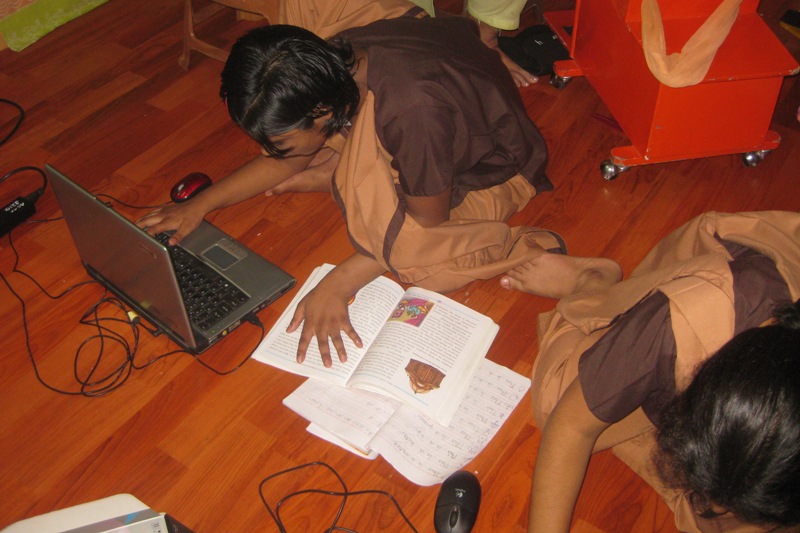
They learn computer.

IMG_4614W 

So, what's the problem?  The problem is when they are in a classroom and MUST perform, must do the problem, must confront what they know and do not know.  It's the necessity of work, the lack of free choice, the expectations.  Sometimes they freeze. like deer in the headlight.  And then it takes a human voice or touch to put them at ease to face the task given to them.  They are very tough kids, and very scared kids.  At some level they know they have been given an extraordinary chance at life, and they must worry that it will disappear, Poof!!! and they will be alone, again. 


Previous Older Entries Next Newer Entries

August 2026
S M T W T F S
 1
2345678
9101112131415
16171819202122
23242526272829
3031