Theater: Laughter at the Expense of Those With Disabilities

We attended a drama, Anubhav, by Ramaprasad Banik, being put on by the Theater Group of Nehru Children’s Museum at the Academy of Fine Arts.  It was presented as a play about the emotional sensitivity of children, and it took place in a school for boys.    I took the five big girls, Kalpana,and Ganga (in her chair).  Seema Gupta, on our Board met us there.  She had friends whose children were in the play, an she had gotten the tickets for us.  She had also clarified in advance that we had one child in a wheelchair, and it was agreed the chair would be next to us in the aisle.

We were on the early side and went right in.  We found our seats in the second row, up to the aisle, but the aisle was so narrow, the chair totally blocked the aisle.  So I moved forward temporarily to the front row and put the chair in front of me, leaving a very wide area for people to pass.

“Madam, you must move.  This (the child in the chair) is blocking the way.”

Me: “Well there is still a lot of room for people to pass, but there is no room in the aisle for anyone to get past.  I have a seat just behind me, with the others.”  He looked back and figured out  we were a group.  I added, ‘We arranged all this in advance.”

“Madam, you can move her to the back of the auditorium so she does not block the aisle.”

“You mean where she can’t see as much?  That wouldn’t be nice to treat her that way just because she is in a wheelchair!”    Iwas being as sweet, dumb sounding, and immovable as I could.

“Oh yes, well then move her over to the end of the row, by the exit.”

“Oh my, but then she can’t see the full stage.”

All this happened over about ten minutes, with different men coming to replace the ones who had been unsuccessful in moving us.  Seema Gupta was wonderful in trying to help negotiate, knowing I wasn’t moving, and as upset as I was. I talked to Ganga as this was going on.  I asked if she was OK, and I said we were doing this so people would have better places for people who needed wheelchairs.  She smiled, grinned, and seemed to get it.  I asked again if she was OK, and she grinned.

A compromise was reached, wherein Ganga would be in the front with me before the play and when it started I would move back into the second row seat on the aisle and she would be in the aisle next to me.  All I could think of was the fire hazard of this arrangement now that we WERE blocking the aisle.

The play was in Bengali but I’d heard that it was about emotional sensitivity, and there was an orphan in it… and I could follow some of what was going on.  There was slapstick… I kept noticing that.  Early there was slapstick about a boy who couldn’t speak.  He would open his mouth and words wouldn’t come out.  The others would yell at him to talk.  His mother hit him over the head.  The whole place burst into laughter, including Ganga.  But then Ganga couldn’t stop laughing, couldn’t get herself under control.  Because it was fastest way, I picked her up out of the chair and left through the exit.  I sat with her in the lobby, just soothing her.  She calmed down.  She was upset.  We just sat, her head against my chest.

The theater group director happened to come by and said hello.  He had no idea what had gone on.  He was proud of the production, and said it was good our children were here “because it’s about these things.”  He talked with pride about his school, and the boys… (he then quickly added girls) who were in it.  But the play was a boy’s play.  There were NO good parts for girls.  They either were girls who giggled, or mothers of the boys.

I tried once to carry her back in but she started uncontrolled spasms of laughter as I opened the door.  But during intermission we did go back in.  I carried her in and sat with her on my lap, which is where she wanted to be.  Usually she would rather be with the big girls.  She didn’t laugh.  She was somber.   In the final scene the boy who can’t talk was being goaded by another boy.  Just another happy ending.

I just kept thinking how glad I was that Sudip wasn’t there, my Secretary with CP, who lives it all.

A few days ago we visited an NGO, which is part of an international group that serves the poor and those with disabilities.  Sudip had visited them seven years before as part of his activism with Ankur in Disability Awareness and they remembered him fondly.  We visited all their buildings and grounds and then they took us to the meditation room, a beautiful architecturally designed brick structure, but inaccessible to those with disabilities.  This had not changed in the seven years since Sudip had been there before.  I asked what they did with people in wheelchairs, whether they just carried them in.  “No, they sit outside the building.”

From inside this beautiful meditation room, I took a picture of Sudipendu Dutta standing outside.
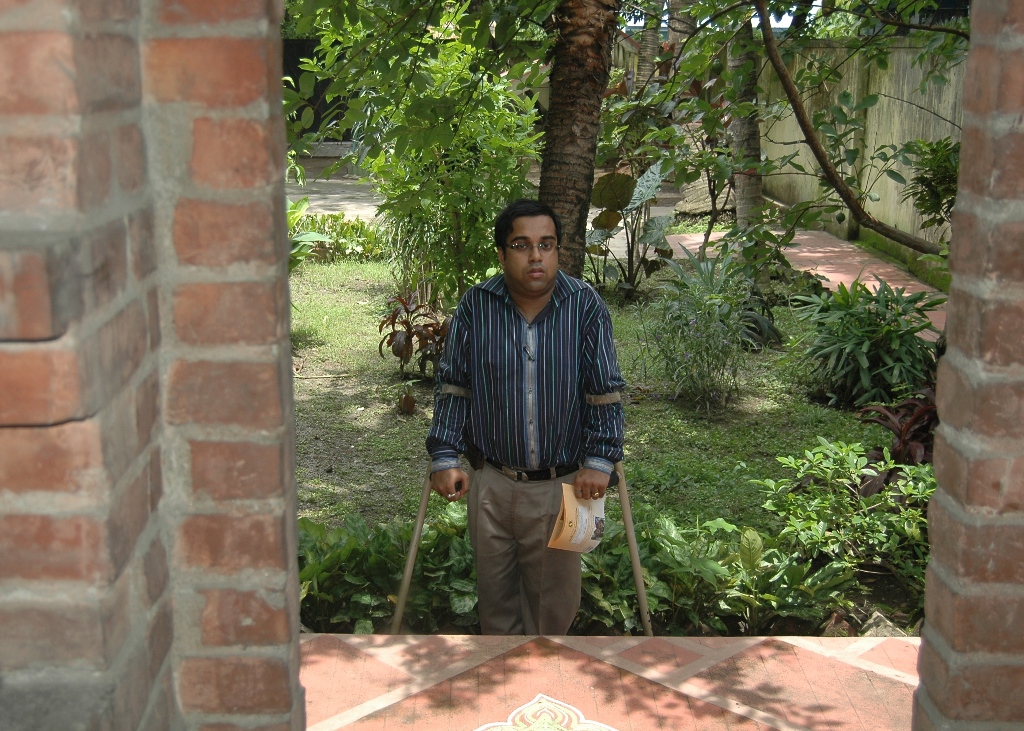
Sudipendu Dutta on crutches standing outside inaccessible meditation building

Sudipendu Dutta Outside the Ashram’s Inaccessible Meditation Room

Our Visual Voices – Via Widgit Software (c)

These are my thoughts as I finish the website, and explain our use of  Widgit (c) symbols in our work. First I ask you to read

OUR VISION:  A society where orphaned and abandoned children, those with abilities and disabilities are not segregated but are respected as necessary members of our society.

 It’s nice, with lots of honing of words and meaning in putting it together.  Is it memorable?  I’m not sure.

Now read Our Vision below,  illustrated with symbols, and you know exactly what I mean.  Hopefully it is more memorable.

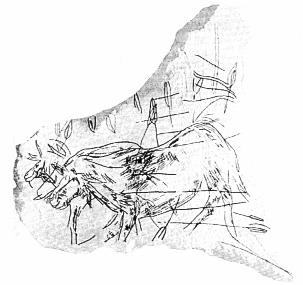
More than 30,000 years ago, before our written language of letters and alphabets, we communicated in drawing and symbols, on mammoth teeth and bone, in caves, and probably many other places lost over time. These were our expressions of meaning, communications, aesthetics, our visual voices etched to last over time.

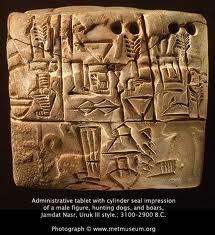
More than 5000 years ago, the Sumarians used symbols and drawings on clay to communicate, to express themselves, to tell and pass on stories to those who would follow. Art and symbols have never been replaced by written language.

Rather they have complemented each other.

 Symbols have become an accepted and integral part of communication in the disability community, as part of what is called assistive and augmentive communication, but at the same time acquiring a status of “lesser” than regular.  But symbols enhance meaning, add aesthetics, and add to the community of people with whom we can communicate. Shishur Sevay uses the language of Widgit for just these reasons.

The blog is my “thinking out loud.”    Our website will be Widget enabled in two ways.  First, we have a license to use the Widgit symbols on the website (Insite) and also here in the blog.  Second, there will be a way for symbols and spoken voice to appear when the cursor hovers over a word, called Point.

We have worked hard to have a site that is accessible to hearing impaired, visually impaired, and also the language impaired.  In a way I think of this as people who understand more by JPG than by DOC.  My minimal understanding was that the Apple frame was more based on image, on a form of JPG, and DOS on more linear byte building. (WikiMe requests info on this.)  One of our  older girls is severely dyslexic, still doesn’t know the alphabet or meaning of numbers, but she wins at memory games that require matching images of cards turned over.  For her, the use of Widgit symbols allows her to understand, to follow what is being read.  We’ve also used it in teaching English, using the symbols of up, down, in, on, under, etc.

But our biggest user has been Ganga, about whom I’ve written a lot before.  Currently she is in Class III in a regular school with the other girls, and is the only child there with motor disability.  Ganga is very bright and loves to study.  She makes sounds, but not words.  When the teacher asked all the children who had seen a globe, Ganga called out loudly.  In her class she was the only one.  How does she use it?

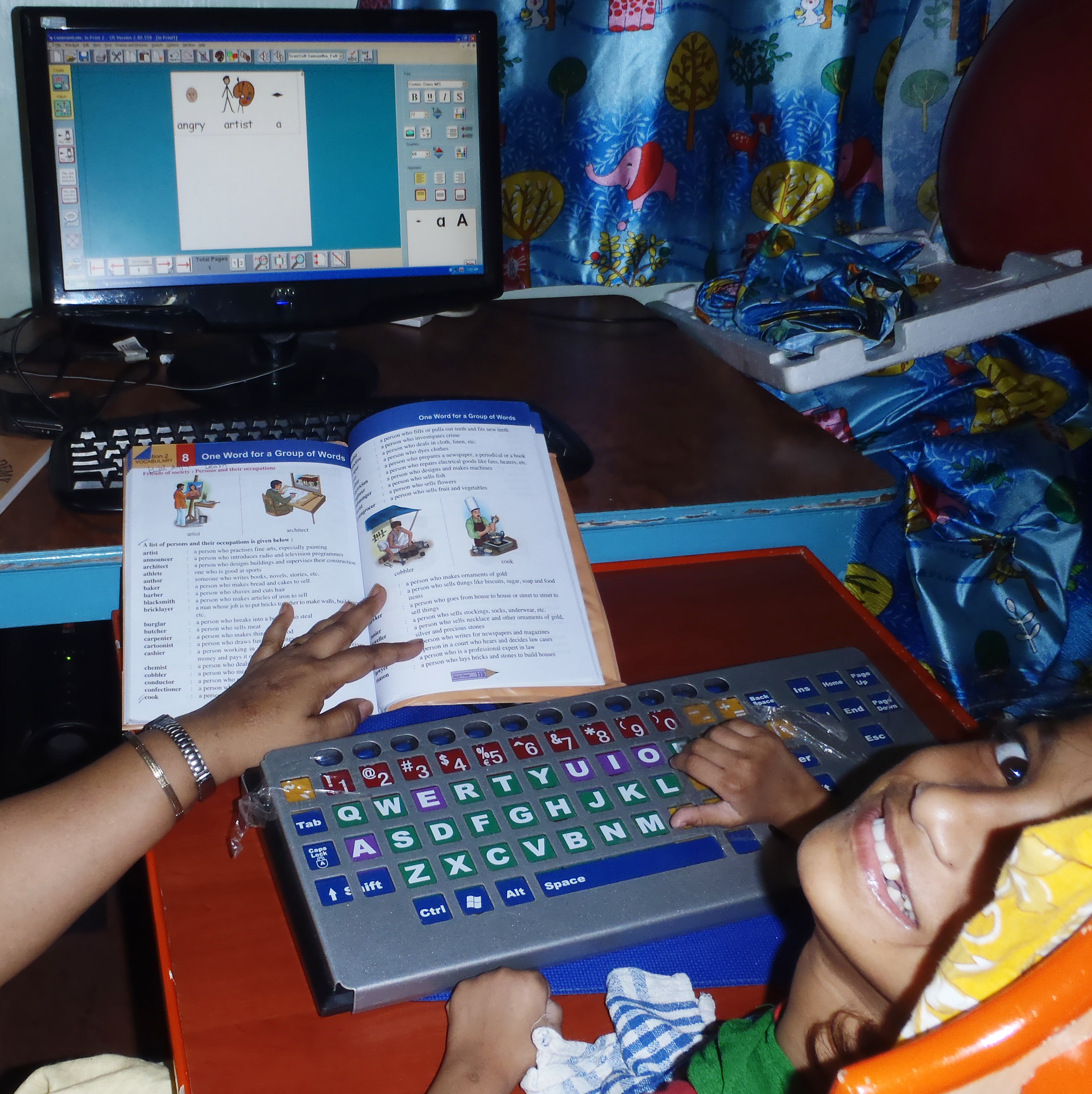
In this picture, Ganga is practicing her typing, and also learning what has been taught.  As the keys are pressed, the program voice sounds the letter, and then the word, and then the sentence.  So there is constant feedback visually and aurally.   And it is fun.  Sometimes she is naughty and presses many numbers, and then the spacebar and giggles as the voice tries to read off zillions, trillions, billions…  sounding like random syllables.

If you click on the link below you will see a story I wrote in Widgit for Ganga.  It’s about why she has a disability.  To me, the illustration makes the story what it is.

ganga cp story-2

I like the aesthetics of the Widgit symbols, the cuneiform markings, similar to the Sumarian writing.  (I just learned about the cuneiform aspect of writing today — the triangle shapes that are part of the Sumarian script, and some in the Widgit).  It is similar to Hieroglyphics.  I have a children’s story I wrote some years ago and I want to write it with the Widgit symbols.

I looked at a number of symbol systems before I chose this one.  It was a big decision as it is costly for the software and now for the licenses to use it on the website and this blog (if we can get it to work on the blog).  I want this site to be truly accessible, even as I struggle to define what that means.  But the challenge is also to make it accessible, including with symbols, without creating a “cumbersome” aspect that will cause the “normals” to click off the site.  Isn’t that what it always is with a minority (even if the minority is the majority)?  It’s about power in part, those with power not wanting to be “slowed down” or have their thinking or reading interrupted because of something useful or even necessary for those with disabilities.

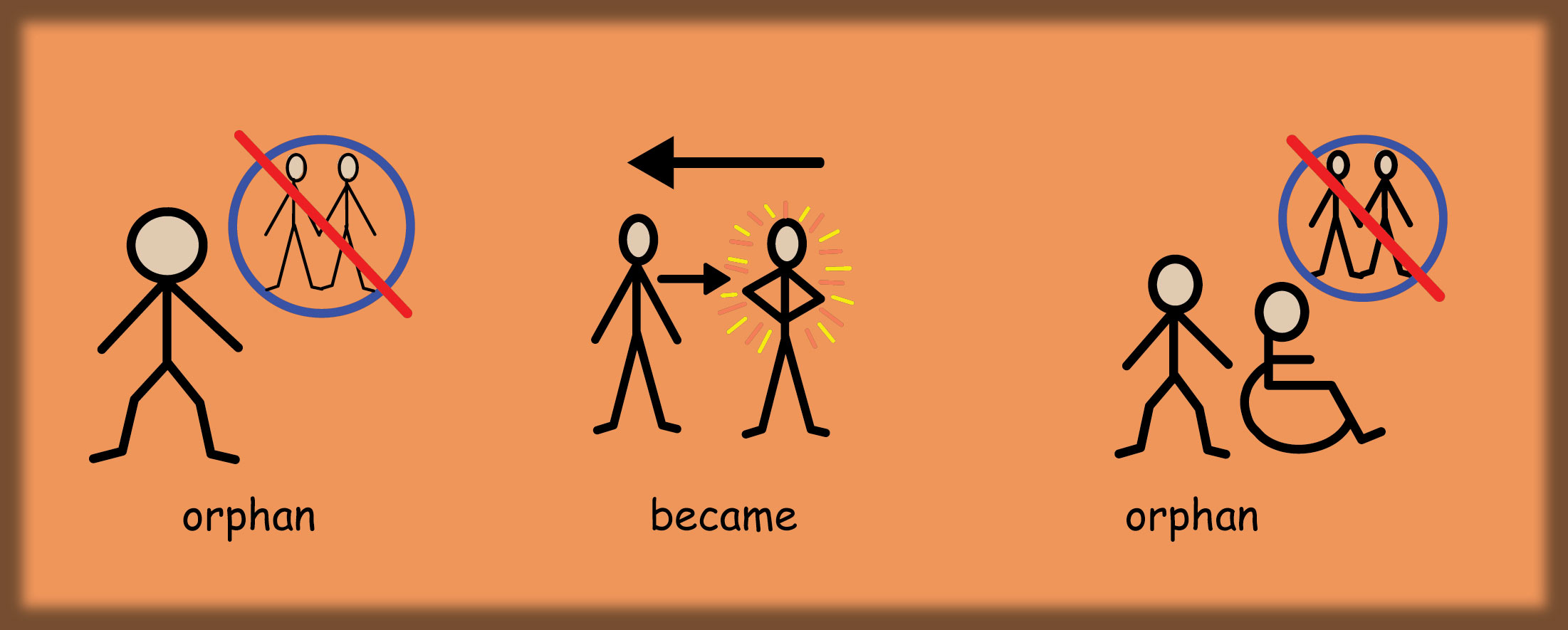
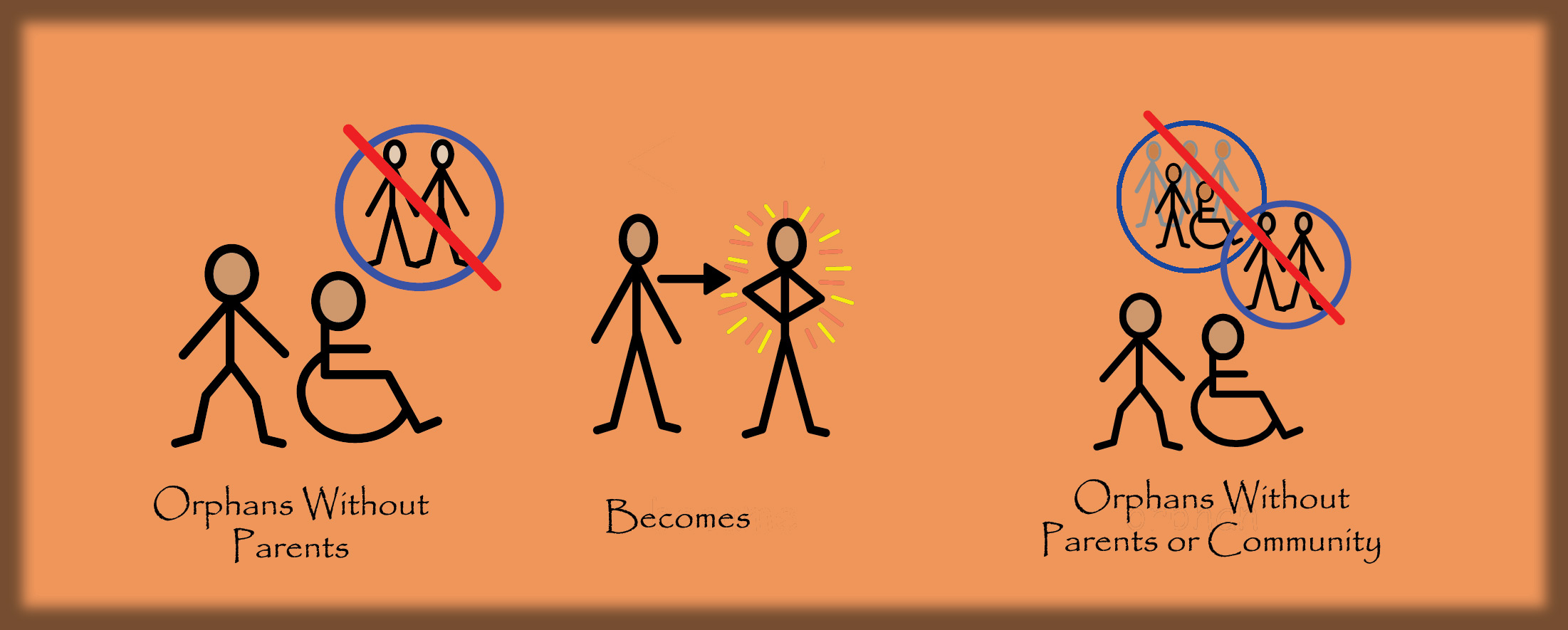
What I like about symbols is that they are less ambiguous.  When I started using Widgit a couple of years ago, their symbol for orphan was a child, and no parents.  I talked with them and they made a new symbol, orphan with two children, one in a wheelchair, one without, and without parents.

But now that I look at it, I realize there is one more step in the creation of the orphan line of symbols.  For our children it’s not just the loss of parents.  If you look back at Our Vision, you will see a symbol of “community” but it’s that community, or society that our orphans do not have.  Yes, first is a loss of immediate family, but then to end up in an institution there is also the rejection, actively or passively by the community.  So the symbols really should be:

Understand now?  These are the girls we brought here. lost, abandoned, living in an institution, but nothing can say it better than the symbol  Well, I feel I’m closer to what I’m trying to say.  I’d be grateful for comments.

Widgit software (c) is at http://www.widgit.com.    We have the icon for the website and it will go up with that.  We haven’t been able to get Widgit working on the blog, or I’d be writing much more in Widgit.

This blog is my thinking out loud, and my conversation with  interested parties, whomever they may be.

Ganga’s Disability Story… and other matters of the day

Ganga’s Disability Story (click to open)

I am trying to put Widgit ©symbol language into the website that is being developed, and this blog.  It looks like I may not be able to do it in the blog.  But I was able to link a pdf file to the blog and it seems to work.

Ganga knows she has a disability.  In fact she knows she has CP, or at least she recognizes anyone else with CP.  I know from living and working with her, that sometimes she is very upset that she cannot do what other children can.  It is compounded by her constantly being seen in terms of her disability rather than her intellect.  The world of children, people, with disabilities easily becomes the world of caretakers.  The children sit and listen but cannot talk to each other, nor can they have any influence over the discussion.  Ganga wants to be with the older girls.  She wants to study with them, listen to their teachers, make comments, and even sometimes be naughty like the others.  I founded this home.  I live here.  I hire the teachers, but still it is hard to make this happen.  Ganga is happy with someone reading to her from an encyclopedia but she is often left with the group doing nursery rhymes.  I keep trying to find teachers for her, but also trying to balance a situation where some people think I’m out of my mind and imagining her intellect.  I’m writing this because it MUST be familiar to others.  Most of our struggles are fundamentally quite similar, wherever we are.

Ganga is learning to use a head pointer on the computer.   I am short of people who can teach or use computers.  Today the special educator was using a real mouse with a child with CP, simply taking her hand and pressing the mouse.  I hooked up the switches (I’m the IT dept here too) but then had to stop the teacher from hitting the switch.  You have to give the kids time to respond.

The rest of the day was spent dealing with a new crisis with the older girls.  They had begun receiving tutoring (called tuition here) in their school after it let out.  It’s a common practice.  But it seems the principal has forbidden the teacher to teach our children so we had to make other arrangements.  I can’t say more.  I don’t want the kids kicked out because mom says too much.  But if India is serious about corruption, it should start with the educational system which (in my opinion) is far more corrupt than the government and far more serious as the minds and futures of the children are at stake.  And it teaches children very early about the power of money and influence.

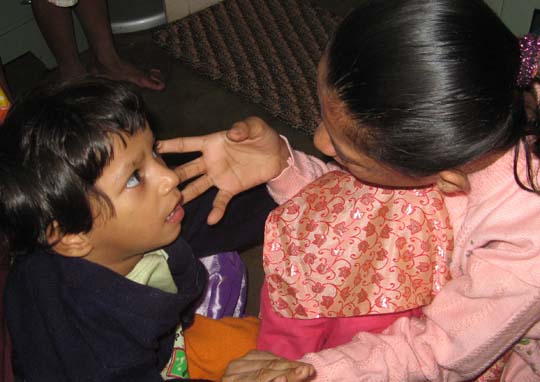
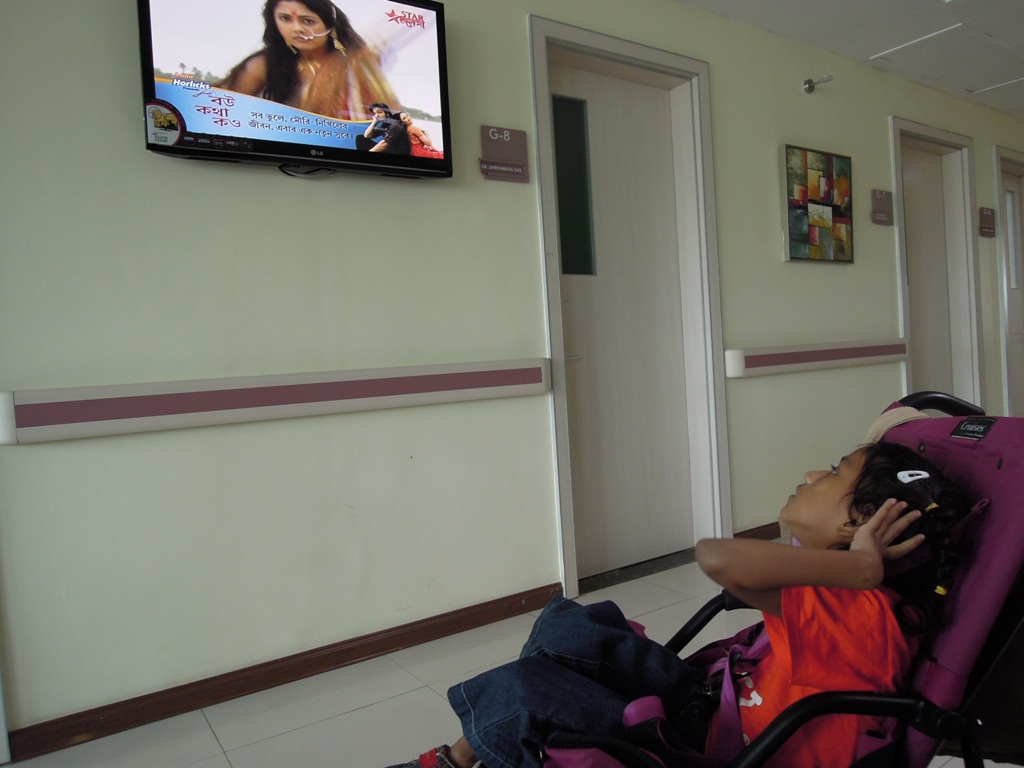
Ganga looks up to her Didi with CP

Ganga looks up to her Didi with CP

Here is the link again to the disability story I wrote for Ganga: Ganga’s Disability Story (click to open if you didn’t before)

It’s 11 at night here and I’m just going to post this and go to sleep.

(Widgit Software a product of www.widgit.com; ©)

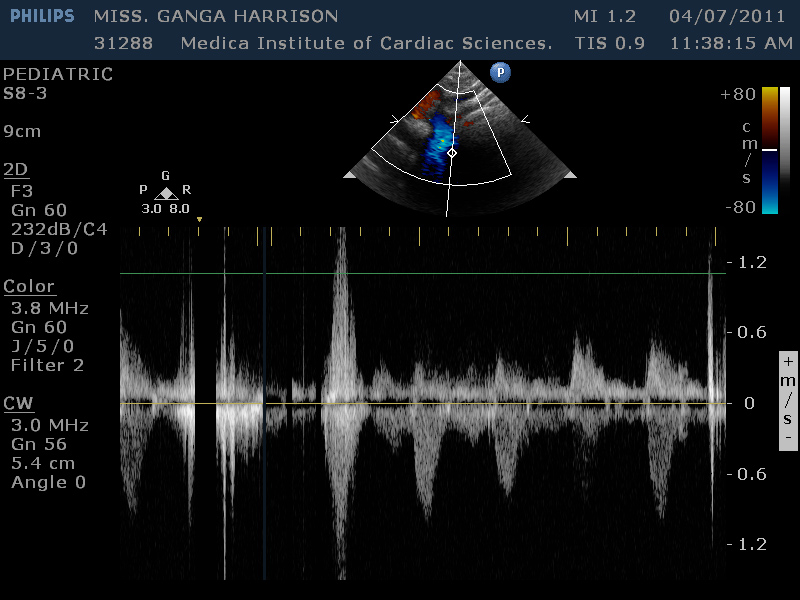
Ganga’s Pediatric Cardiology Consultation

Ganga and Dr. Dhritabrata Das

Ganga and Dr. Dhritabrata Das

Beautiful and surreal.

Forbidden movies

Previous Older Entries Next Newer Entries

August 2026
S M T W T F S
 1
2345678
9101112131415
16171819202122
23242526272829
3031