The Pujos 2009

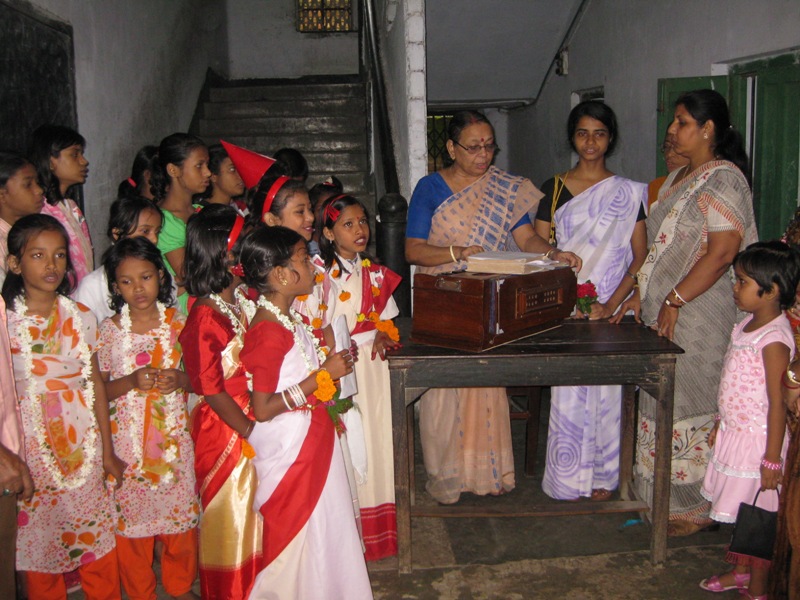
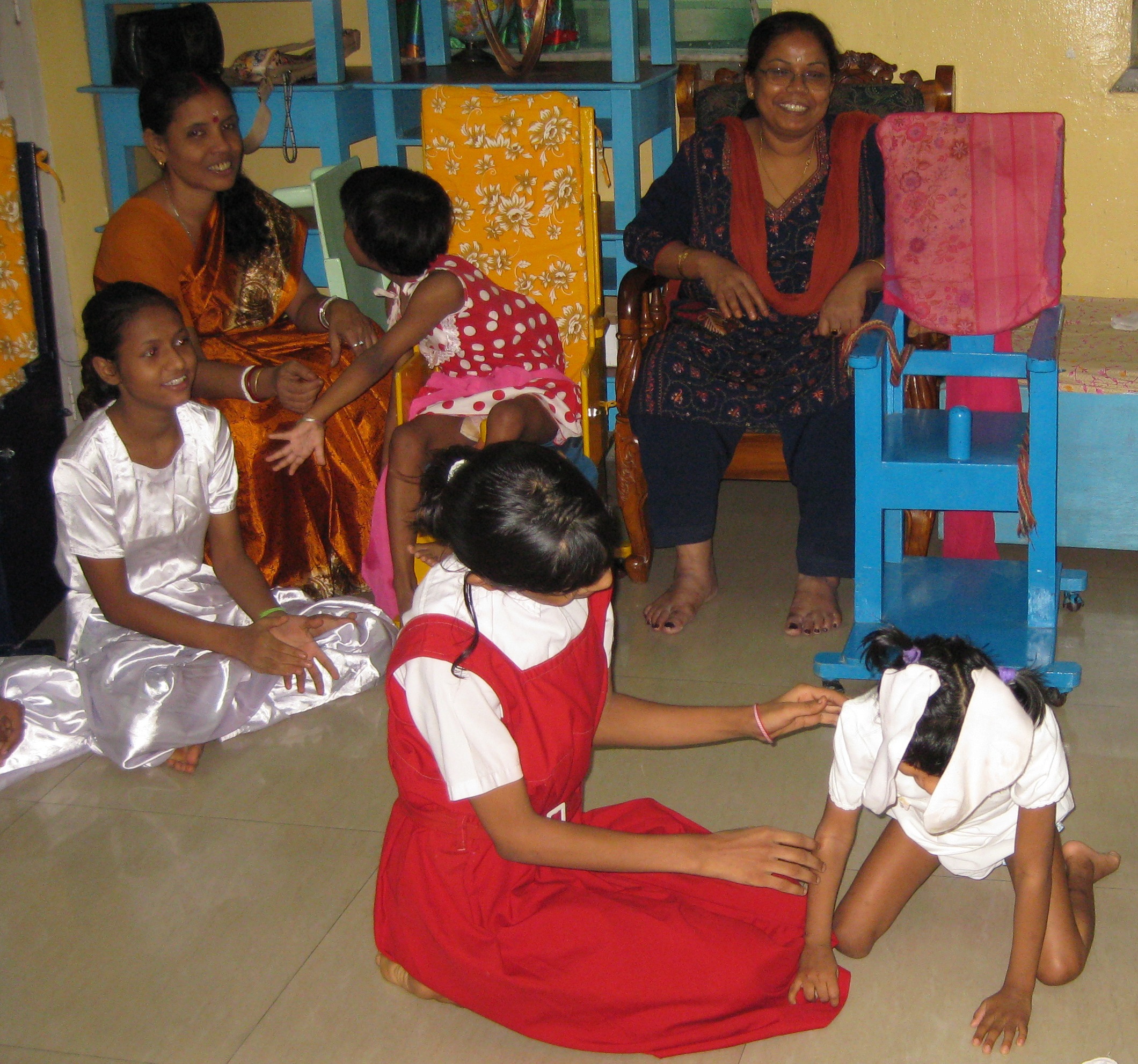
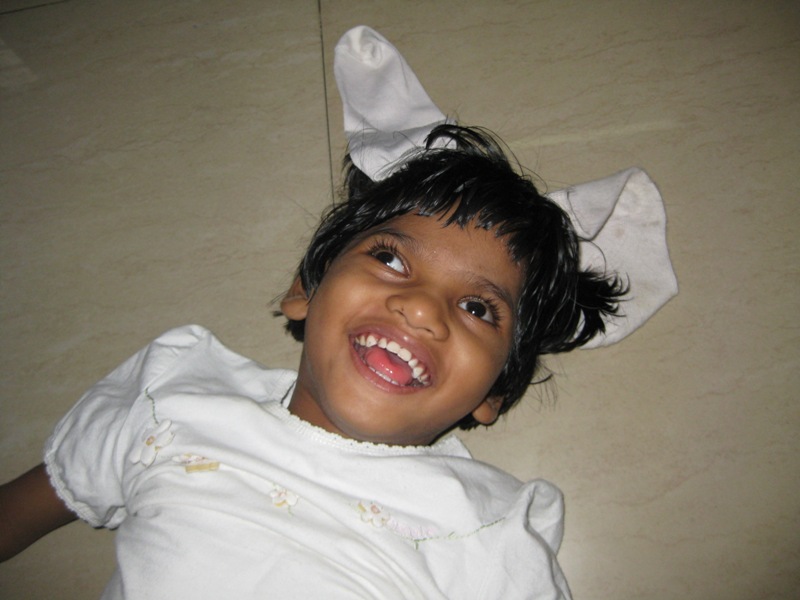
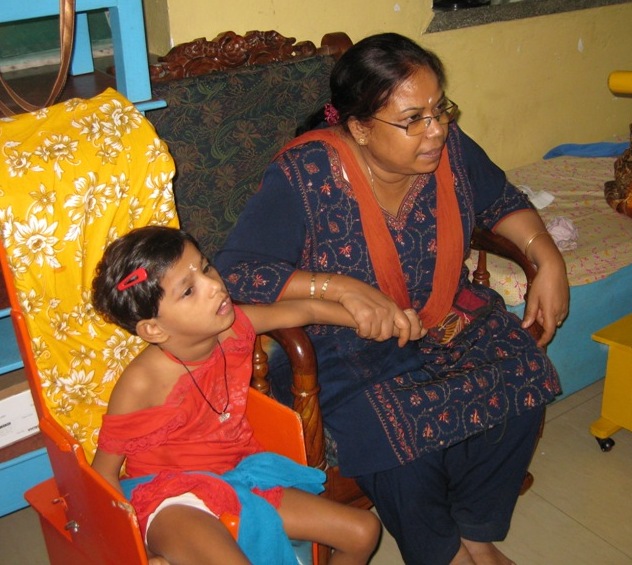
"The Pujos" is a way I see these holidays described sometimes.  I'm unclear why that spelling or phrase.  Blogging during Puja 2007 I went through the meaning of each day. This is our third Puja season with the children, and each is different.  They have grown up!  This year they wanted to be in saris.  Meanwhile the little ones fit in the clothes that the big ones wore in 2007.  It's too fast. 

12Girls_0788W

Above, 2009; below 2007 

Puja07_2095W

This was Puja 2007. The girls look so young.  We were not yet adept at taking everyone.  We had no strollers.  I had no idea where we were going or what it would be like.  It was my first Puja in India, my on job training.  The year before, during Puja 2006, I had been in the US, thinking about the girls whose voices played in my head, and planning for Shishur Sevay.  It still feels like a miracle.

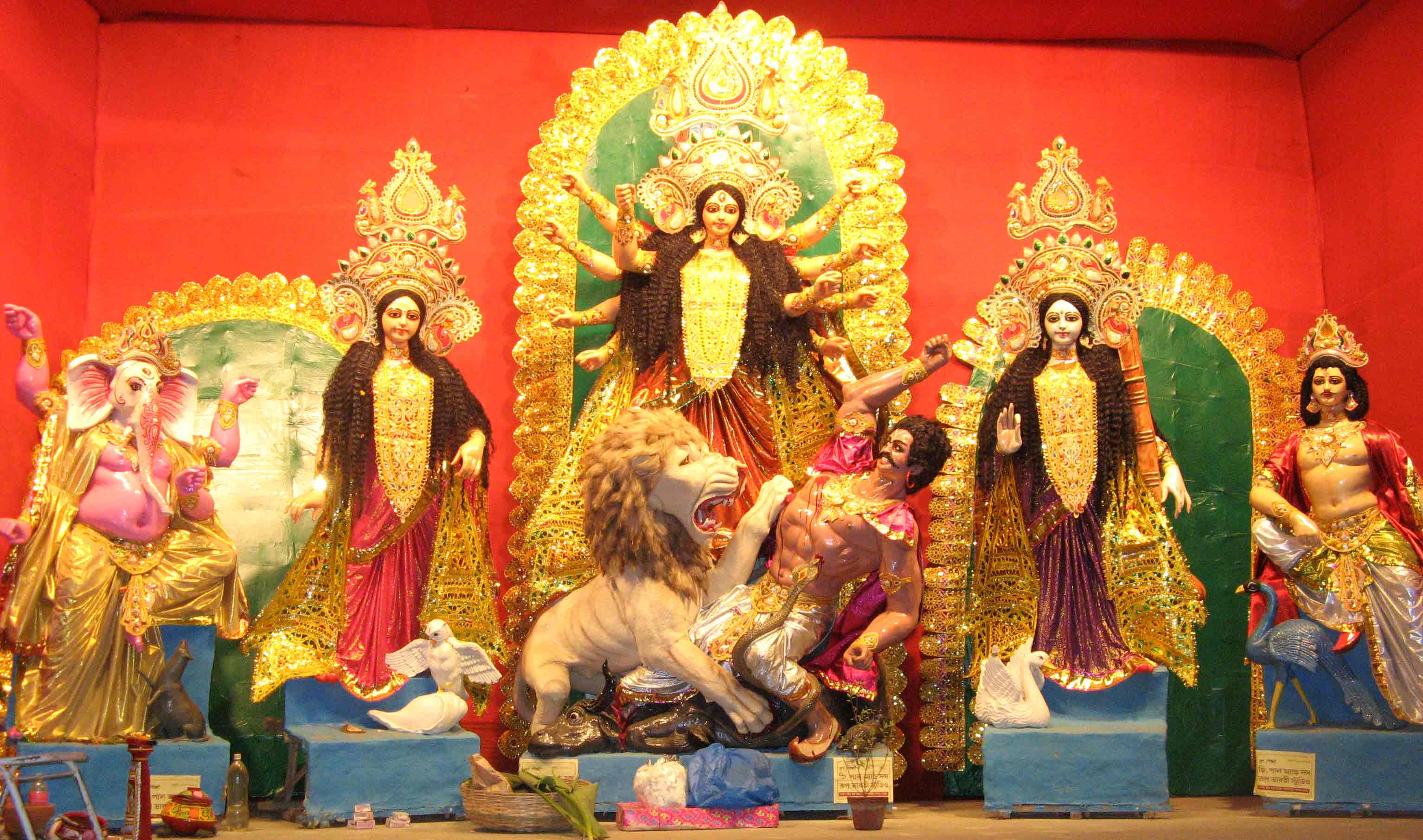
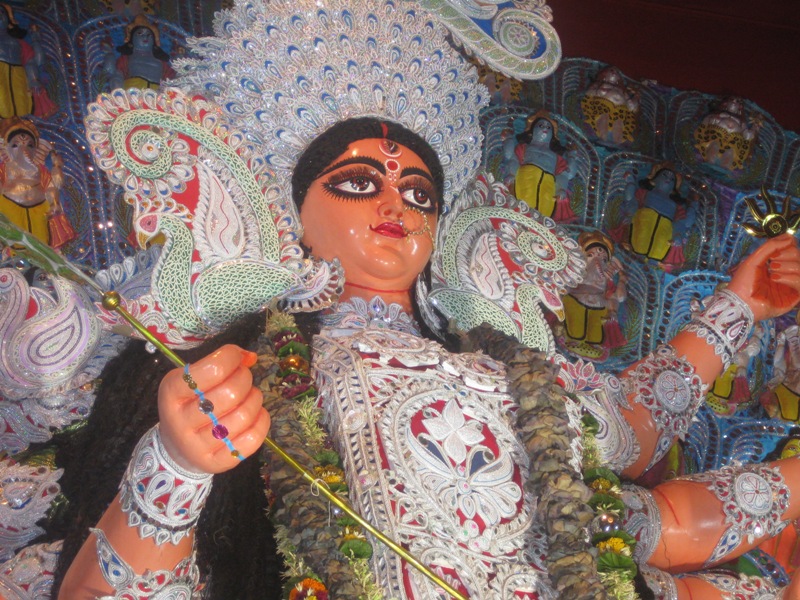
We are seasoned now.  We rarely leave the little ones behind.  We have strollers. We decided to carry the two smaller ones as it's easier for them to see.  And here is what they all get to see:
Puja09_2079w

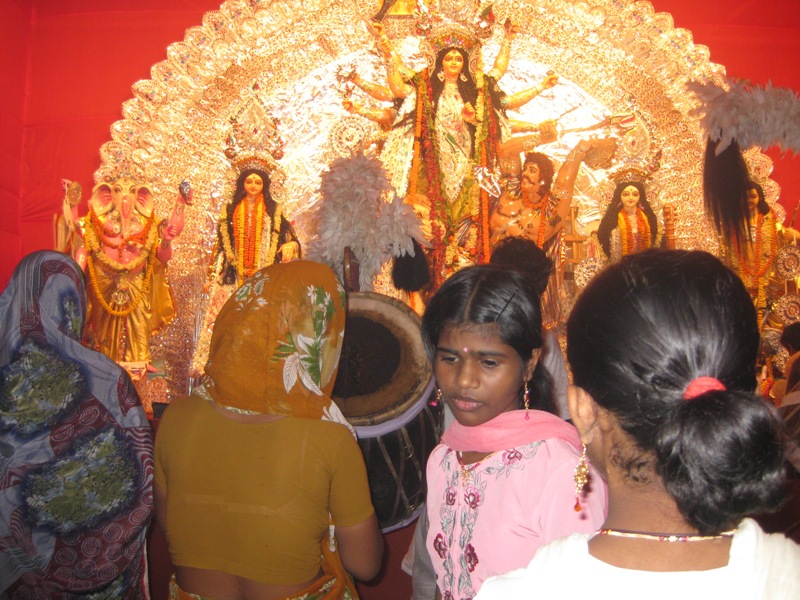
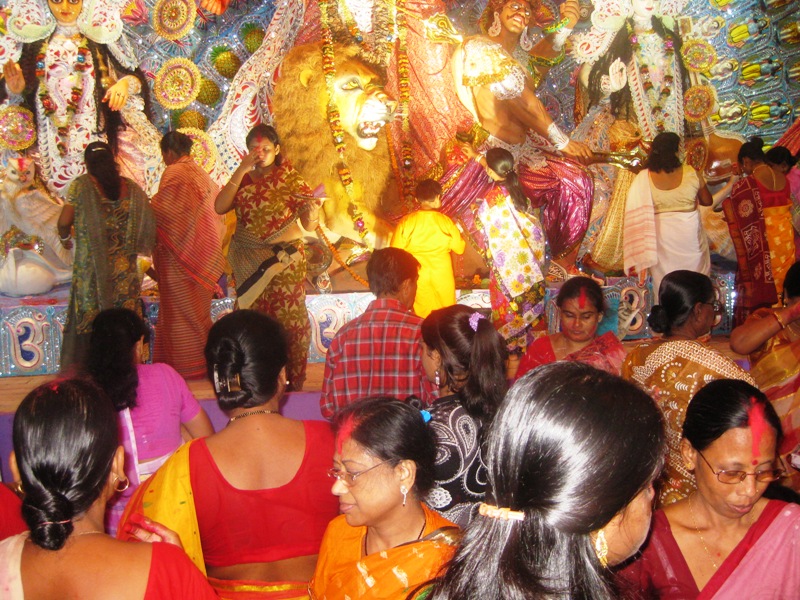
This is the pretty traditional Durga Puja Pandal.  This particular pandal is in the park near Shishur Sevay.  It feels like "our" pandal as I am President of the Puja Committee.  On each of the four days we went out, we stopped at this pandal first.

I write now on the day after Lakshmi Puja, which means we have had many many activities and I have taken hundreds of pictures and I don't even know where to start.  So typical of writers who procrastinate,and clean up after yesterday's Puja.  We moved Lakshmi to the top of the steel cabinet next to the wooden pandal.  That's for the Gods who don't fit in the little temple made for little brass statues.  And of course the girls like the large idols, so we have to do some shifting.  Some Gods go to the sea after one year, but I learned this morning that Lakshmi doesn't go to the water.  She stays in the house.  So, we had to find a place for her too.  I also learned that Loki is the Bengali name so our Lakshmi is really Loki, which is good because I've been trying to figure out why I was so confused.

So I think I will be a bit random, just some pictures and notes about what the last week has been like..
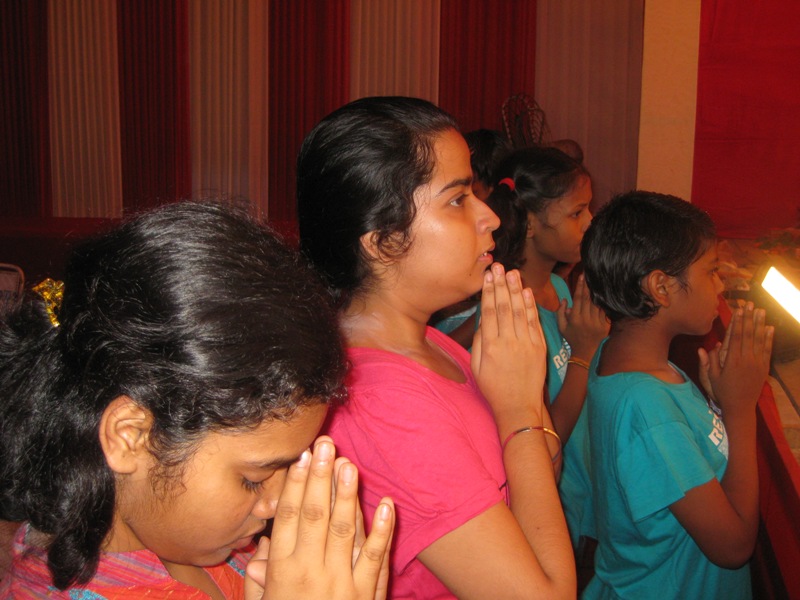
IMG_0710w 

The evening before the dressing up… a visit to our pandal.
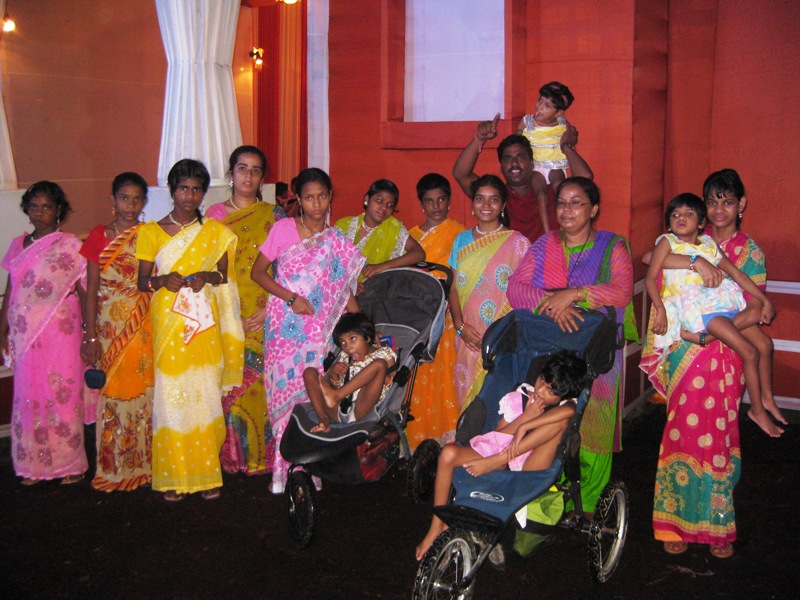
IMG_0860ww 

Opening night…. the community religious part.  And then, after a few pandals, we came to the community social part — reflecting the mood of these celebrations. 

Three of us have been together since the beginning of Shishur Sevay: Gibi, Bijoy, and I.  This year was just more celebratory for us.  We have achieved so much.  I don't think anyone in India really believed all this was possible.  I realize that more and more as I look back and think about how everyone around me reacted.  So, this third Durga Puja has been quietly celebratory for us.
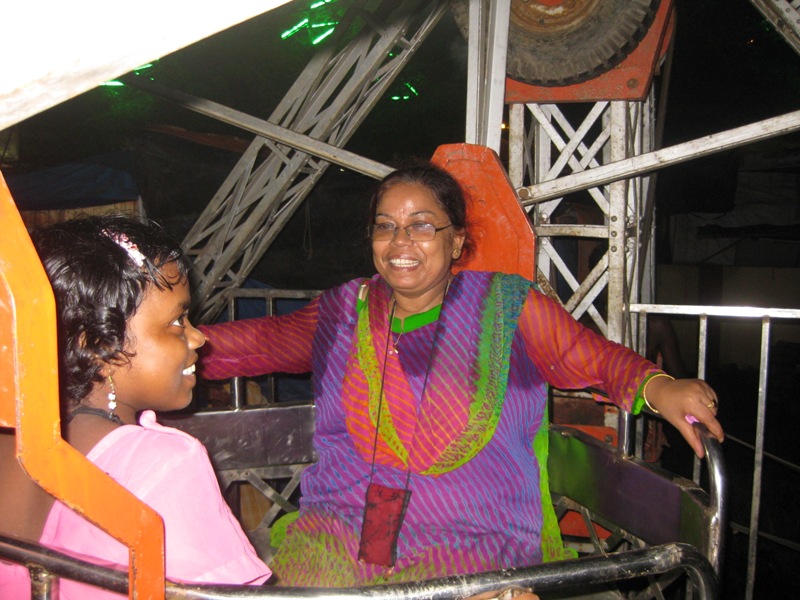
IMG_0909w

Gibi and one of the girls on the Ferris Wheel
IMG_0914crW
Rani, Bornali, and me on the seat of the merry-go-round.
 IMG_0904W

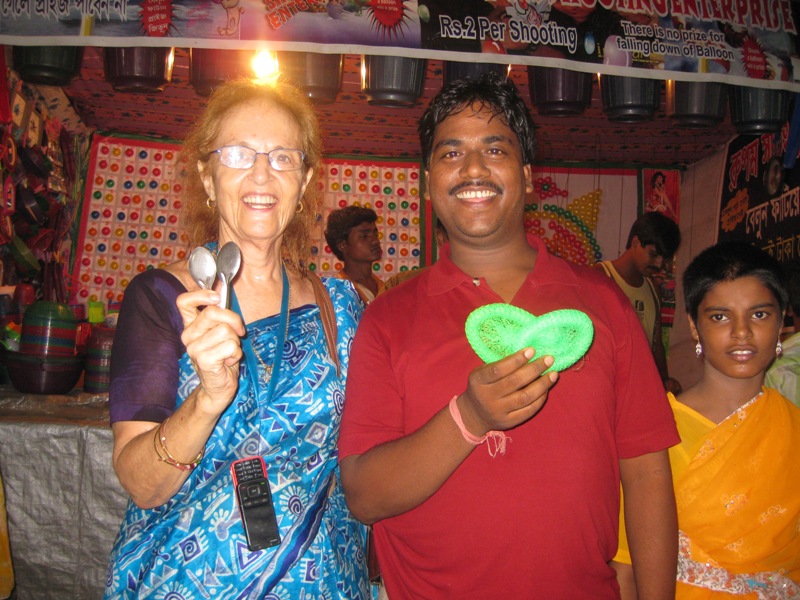
Bijoy and me with the prizes we won in the balloon shooting gallery.  I won two stainless steel spoons, and he won two scrubbies.  They are in our prizes/trophy cabinet.

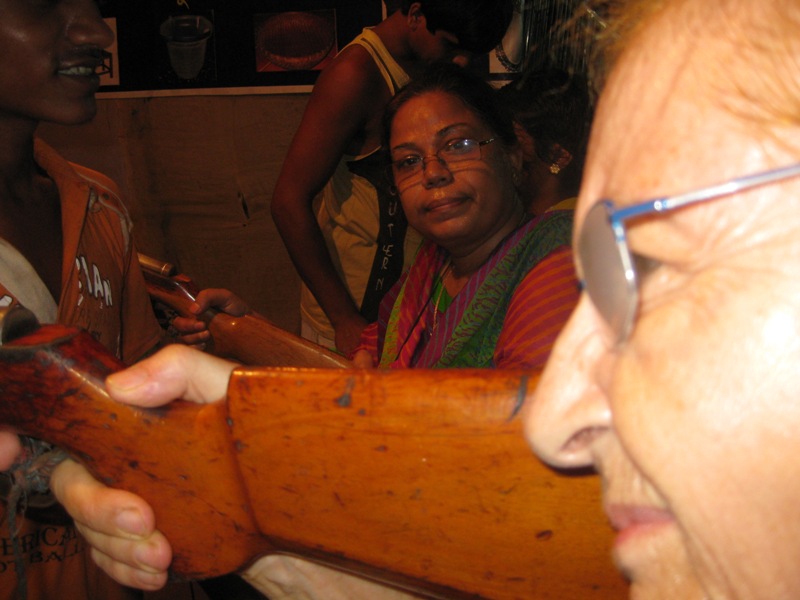
This is me shooting at the balloons.
IMG_0897W 

I'm a good shot.  I learned to shoot when I worked as a doctor in rural South Carolina.  It was a necessity then.  I don't like guns but I like being a good shot… human contradictions. 


IMG_0942w 

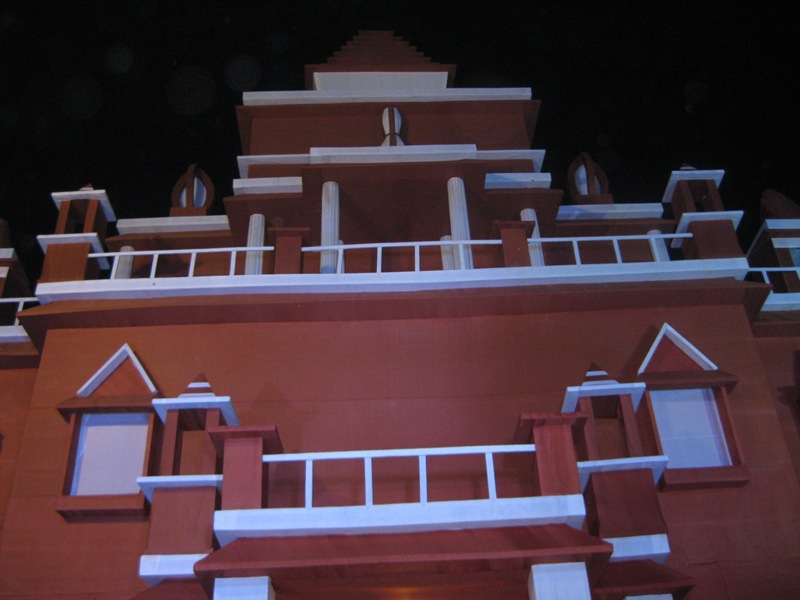
This is OUR pandal. The structure is of bamboo, then covered with thin cloth. 
IMG_0944w

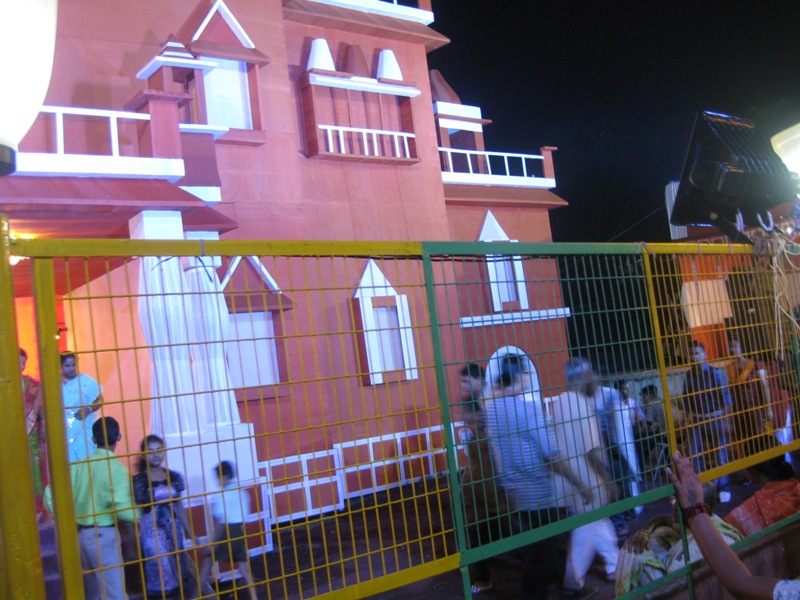
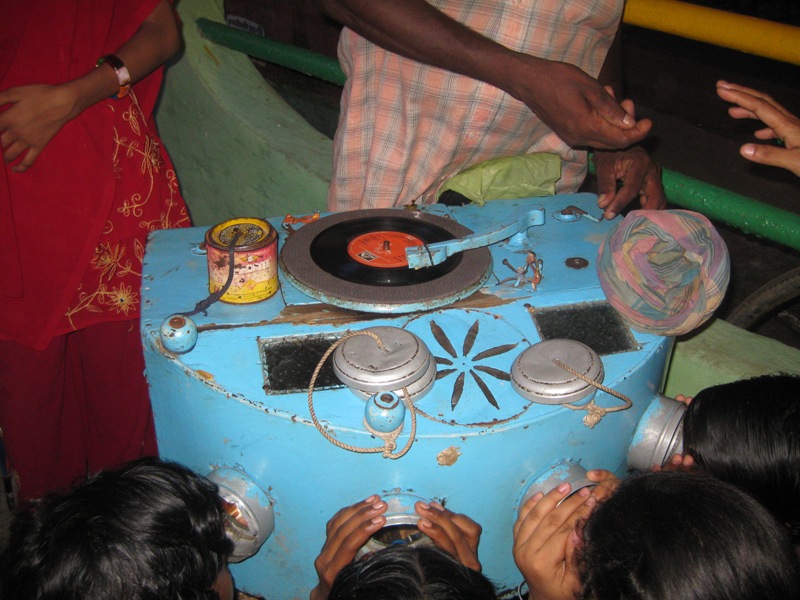
It is huge and towering, and is already gone.   We ate puchkas outside and the girls peered into a variety of hand powered gramaphone that also had moving pictures inside.
IMG_0952w

IMG_0990w

Back inside the pandal for prayer and music — mingling.  Each year when I file for license renewal I have to describe what I'm doing to "re-integrate" the children into the community. 

The girls had never been in pandals before they came to us.  They knew about the pujas, knew about Maa Durga and the other Gods, but there were no pandals they could visit.  They were outsiders to Indian cultures.  They could look, but not enter.  Then a nice Jewish lady came from the US to take them into their temple and teach them the rituals of relating to their Gods.  It IS funny to think about.  The local women showed me what to do.  I showed my girls what to do….

I am comfortable in our local para.  People are friendly towards me, and helpful, and very happy when I take part in the social and religious life here.  I am ambassador for my children.

Another evening and another pandal:
IMG_1075w


IMG_1078w

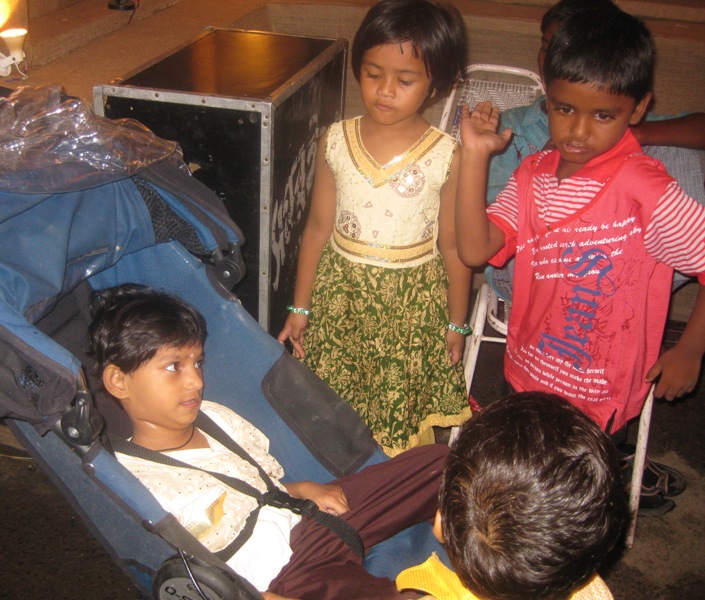
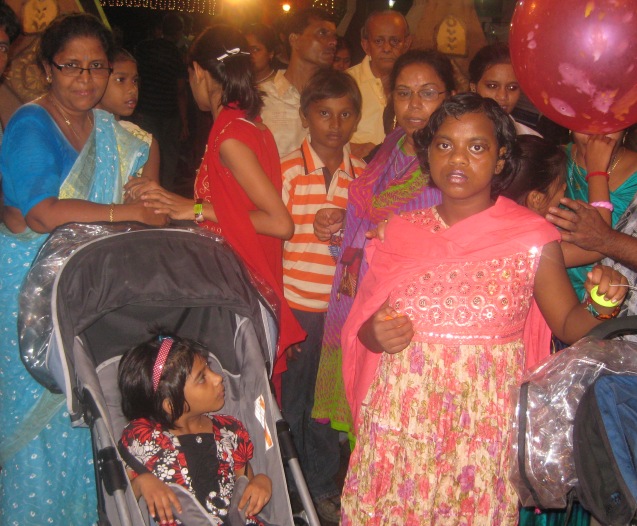
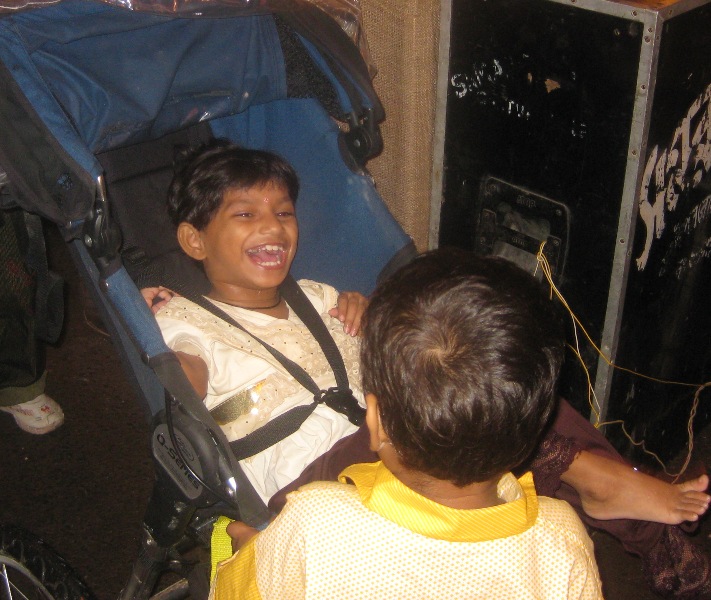
 Ganga made friends with some kids there. They decided it was great fun to push her stroller back and forth.
 IMG_1080w 

IMG_1081w

She didn't want to leave, but everyone else was already waiting for us outside.
IMG_1110w 

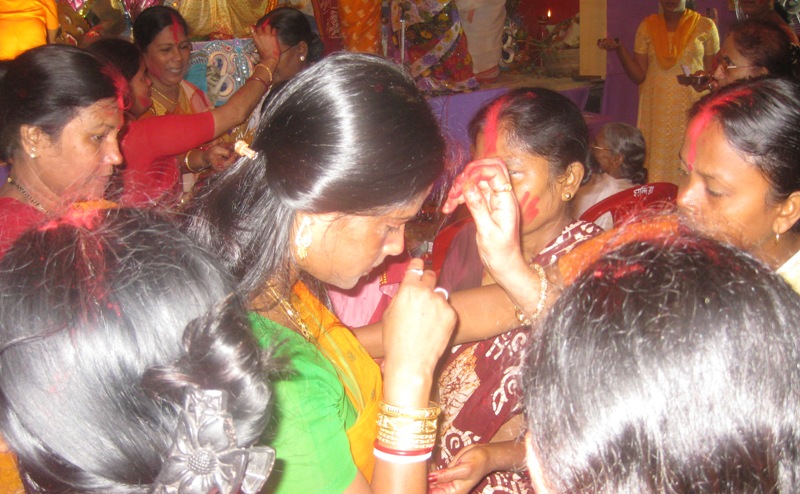
The next night, the last night of Durga Puja, is the night when Durga is bid good bye for the year.  
IMG_1111w 

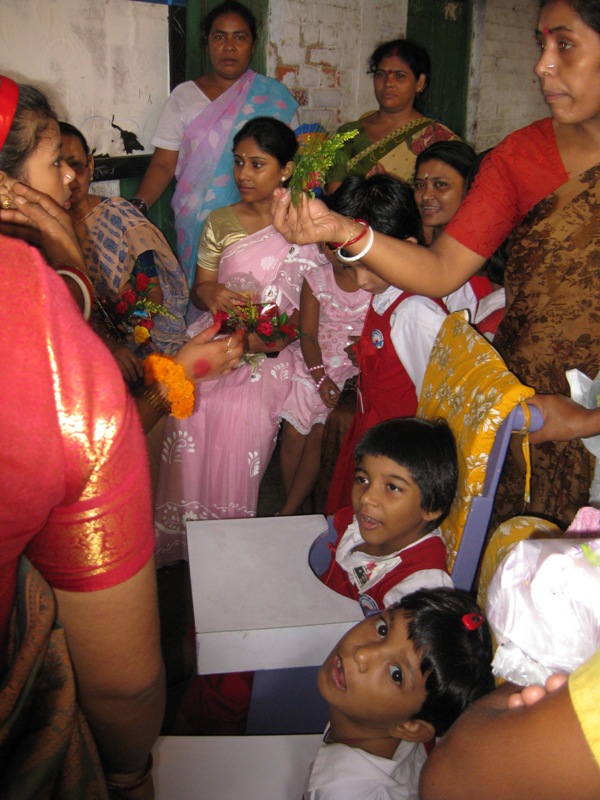
Women, particularly married women celebrate by putting sindoor on each other's faces.  Sindoor is the vermilion powder that symbolizes marriage.  On this day women pray for blessings over the next year, and particularly for blessings for their husbands, to keep them well.

I try to understand my comfort among these women, a comfort I've had throughout the Pujas.  It's not that I feel Indian or want to be Indian.  I feel like a welcome visitor though.  I am an outsider, but a welcome one.  Most of my life I have been an outsider, and not always a welcome one.  Here I am also the welcome visitor who helps her children to belong.
IMG_1143W 

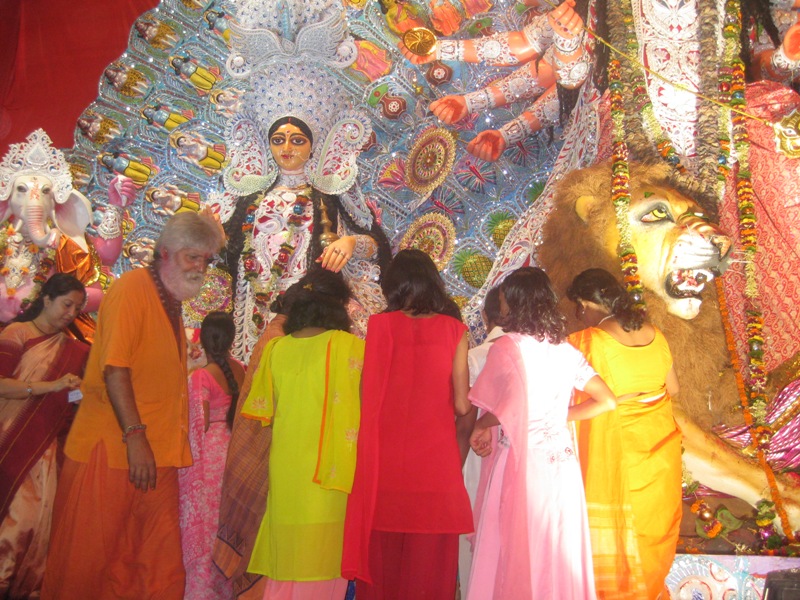
My children offering blessings to Ma Durga
IMG_1141W 

Good Bye to Ma Durga for this year.  We will be waiting for your return.  Safe Journey.



“SAFE”

"S A F E"

The girls were taking turns reading a story about an ant who was in danger of drowning.  Then a bird dropped a leaf for the ant to float on.  The next sentence was about the ant being safe.  But that word evaded the girl reading, and the others.  She tried spelling and sounding out the letters to form a word, S A F E , but no word came.  I answered for her, "SAFE."  Yes, they recognized the word.  So I asked them what they thought it meant, because I use the word a lot.  This was a class with our LD expert, a gifted teacher who enjoys stretching their minds.  So she asked them in Bengali, and they said, "Free!"  No, they didn't understand the word and so they probably hadn't understood the times I'd used it.

"SAFE" is what Shishur Sevay is about for me, making a safe place for them.  So I reminded them of the times I'd talked to them about being safe here, about protecting them, about the difference between being on the street where they were not safe, and here where they are.  I reminded them of how much I worry when we go places, worry they will be lost, which is how some of them ended up in government care, worry that people will say bad things to them (that has happened), and just worry because I'm a worrying kind of mom.

One of the girls began to talk about her life, and that gave me a chance to talk about our having protected her from a man who tried to take her out from here — a man the government had warned me about when they sent her to us for protection.  Keeping her safe… explained over and over, as all of them listened intently.  Then I asked about a piece of paper she had brought and had among her things, a name, address, phone number and directions.  She said at the time a friend gave it to her in case she ever got out.

The teacher who was translating is one who lets the girls talk, and she seems to really tell me what they are saying and asking.  This is unusual, as often I can tell that my question has been expanded and the "appropriate" answer has been given to the girls.  In some cases the girls have then been afraid to tell me what is going on.  But this day I felt I had the right person, and indeed she was.  First I asked about the paper and was told this girl was a friend in the first institution, someone who came and went, and had wanted her to leave with her. 

BINGO!  I had heard that the traffickers plant girls in the institutions in order to lure the girls to the traffickers.  I explained it all to her.  I asked how a girl in and out of an orphanage would have a phone, address, and such good handwriting… that this had been a trap.  I have also heard that some well-known NGO's are helping traffickers.  This must all sound insane.  But it's what I hear "off the record."  So I explained that I had taken the paper because I didn't think it safe for her to keep it….  Shishur Sevay, a place to keep children safe.

I thought a lot about SAFE as a concept in my life.  I've written two children's stories (unpublished) — with about 30 years between them.  I have more in my head, which I'll write when life settles even more.  Both are about safety in a way.  The first, written while I lived on a boat in the Bahama Islands is about two girls who go for a walk to another town, bringing bread for the aunt of one of them.  NOTHING BAD happens.  It lacks any major suspense.  It's a safe story.  The second, more recent, is a story about a flying elephant.  A young princess listens to where her father, the King, and his hunters will be going the next day, and then she goes out into the meadow early in the morning and sings and dances with the animals and warns them where the hunters will be.  As the sun comes up, they scatter for the day, safe from the hunters.  The flying elephant comes later — more of the story — an adoption story.

Safety is a theme in my life.  One of my hats is that of psychiatrist — one who deals with internal and external threats and safety, struggles to fine safe places within and without.  Shishur Sevay is a safe place in terms of external dangers, or at least as safe as any place can be.  But I also try to help the girls feel safe, to find safe places within themselves, to find ways to both address and isolate the bad times and pain so they are not at the mercy of their internal struggles.  We call it "bababa" here, my word for the stuff that gets in the way when we try to relate, try to learn, try to  work, try to find comfortable places to be within ourselves, within our environment.  "Bababa" can get in the way of everything.

Something else is happening here in relation to safety and bababa though.  I am feeling safer.  This is the first Puja holiday we have not been in a major crisis that left me feeling alone and terrified.  Our legal position has become stronger, and I am relaxed, more like I was at the beginning before the long string of obstacles appeared.  As I am more relaxed, so are the children.  Their disruptive behavior and bad language has almost disappeared.  They are easier on the teachers; they are not hot fuses ready to blow at the first chance; they laugh with and at me more, and as I am more relaxed, they have more opportunities to laugh at me.  In those bad times I was vigilant with respect to "services and education" for them.  But it is really hard to be a good mother when under attack, when afraid of losing one's children, of being driven from them…..

I am feeling safer.  So are they.  It shows in all of us.  These are good times in our lives, and I will surely enjoy and appreciate these times for as long as they last.


Orcas and My Children

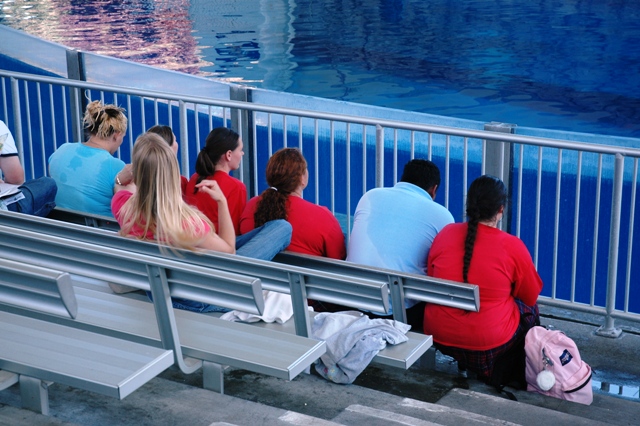
Orcas have families.  They swim, sing, chatter, and love in familial groups.  When the family gets too large, they split off, extended families, with relatives in all parts of the ocean.  Orcas in captivity live alone, do not swim, sing, chatter or love in pods.  Some live in parks, far from the sea, with trainers they learn to trust and obey, SF-06_0637-crW

and visitors who come to watch them. SF-06_0582-CrW  

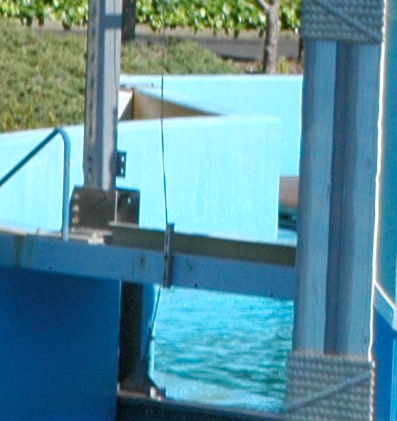
But when the day is over, when the show is over, home is a tank behind the stage.

  SF-06_0653-Blog2 and they are alone.

It was May 2006 when I came back from India to see my two daughters graduate, Cici from Barnard College, Heather from New York Law School.  I came also to close out the apartment I had rented in NY, put a few remaining possessions in storage, and leave for India.  But before I left, Cici and I took a long postponed trip to San Francisco and Northern California.  It was an adventure, and a chance to just spend time together.  She was my baby — the youngest is always the baby.  Now she had graduated and would move in with Heather and Andrei, and I would close the nest (even the temporary one) and fly off to care for orphans in the city of Cici's birth.  Yes, I felt as though I were abandoning my children (grown as they were) but I heard the voices of the children calling me from India.  I had to go.

The epiphany of the trip, the ten days together, was at Six Flags Marine World outside San Francisco.  We had stopped there on our way back from the redwoods up North.  But for reasons unknown, the plight and life of Shouka, the killer whale brought home to each of us the meaning and intensity of separation and belonging.

 Shouka_0634-Crw

Orcas have been a part of our lives since then.  For Cici's birthday the next year I contributed to a fund to save Orcas, particularly those in marine parks and other amusement places.  The world of orcas became part of the conversation of our separation.  For Cici, as a transnational adoptee, pods, families where one belongs or not, countries where one belongs or not are part of her everyday thoughts and experience.  For me as a mother who Cici describes as "overly attached" leaving my children in the US behind, to come to India to care for the children here pulled at me, weighed on me — sometimes I drove myself nuts thinking about all this.

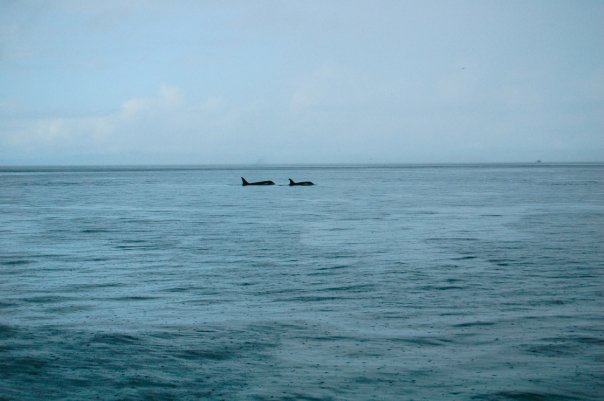
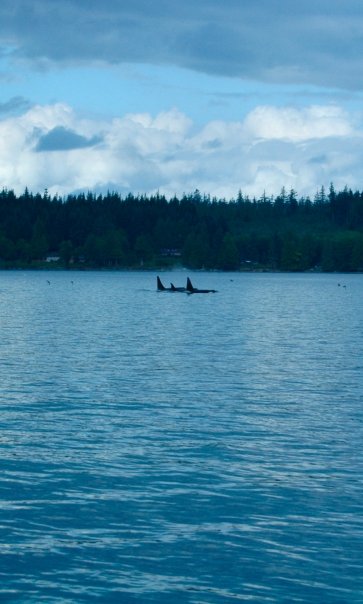
I write now, 10th September 2009, as Cici, Heather, and Andrei are in Alert Bay, Vancouver B.C. where they were hoping to find whales, and where today the found them and other sea animals in abundance.  Cici wrote on Facebook:

Dream day! Steller sea lions, humpback whales, muerres + guillemots (seabirds), porpoises… and… ORCAS! A family of 4 (three siblings, one mother)! It was pouring but now the sun is shining over Johnstone Strait.

Mother-and-babyW

This is a mother and baby.  The people on the boat knew their names.  They know all the whales who visit, their ages, their relationships with each other.  Here is another picture, a mother and baby flanked by her two sons, swimming in synchrony.   Whale fam

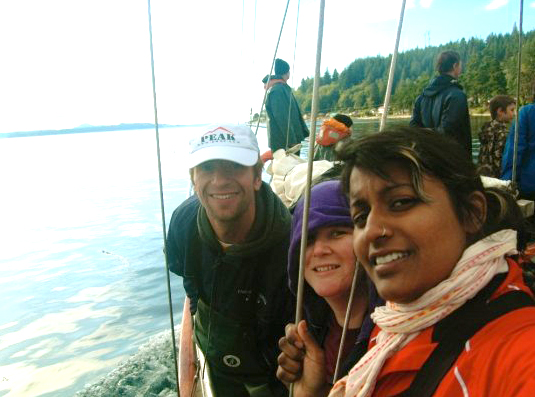
The visitors have to come to THEIR home to see them. My MarinersCR

This is my pod, or the American part of my Pod.  Today was an epiphany for me too.  I miss my kids terribly.  I wish I could be with them to see the family of whales, mother and baby, mother, baby, and sons…. but I am mother to another Pod now, or another part of my Pod.  I am here because the children who called to me had lost their families, but more importantly they had lost their pods.  They had no extended family to swim with.  They had no familiar songs or chatter, or even familiar strands of love.

I have made a pod here.  My children no longer live either in the sea unprotected, or in an aquarium, captured. It's what is often not understood, the the orphan loses her pod.  She can't tell what sea or island she comes from, who are her aunts, uncles, siblings, extended pod…. they have all be lost. In the most profound way they are alone.  

Now I protect the children who called to me, the ones no one else would nurture and love, the disables who had to be excluded from the family.  And yes, as Cici described, I am probably "over attached" and "over protective" as others say.  I love being a mother.  One day I WILL be able to spend time away, but this pod is not yet secure enough to swim without me.   That's why I can't just go off to watch the whales in Alert Bay.  That's why I can't cross the ocean to join my grown children.  But I do miss them, and I treasure the modern means by which we can talk, chat, share pictures, and extend our love to each other.


Teacher’s Day 6th September 2009

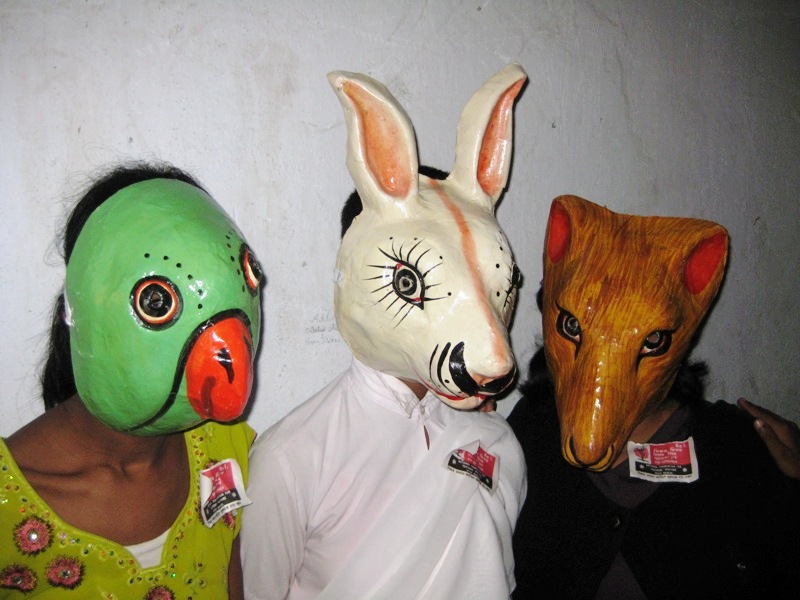
The girls put on Little Red Riding Hood for Teacher's Day (in Bengali).  They were fantastic, twice.  They did one production at their school to honor their teachers there, and then again later at Shishur Sevay to honor our teachers here.  Time is always short, and this time I canceled classes at Shishur Sevay all day so they could prepare for the next day.  Our special ed teacher took responsibility and also developed a program that included all 12 girls, the abled and the disabled, or as we call them boro bacha (big children) and choto bacha (small children).  She is the only teacher who can manage all 12 at one time, and keep everyone engaged and happy.

I went out to the big market in North Kolkata to look for costumes and masks and found a wonderful little shop in Barrabazaar, up a narrow flight of stairs, and into a room with paper mache masks of all sorts hanging from the ceiling.  I quickly found my wolf, parrot, and rabbit masks, and also saw the huge variety of costumes they have, including for dance.  This place is a find!

IMG_0358

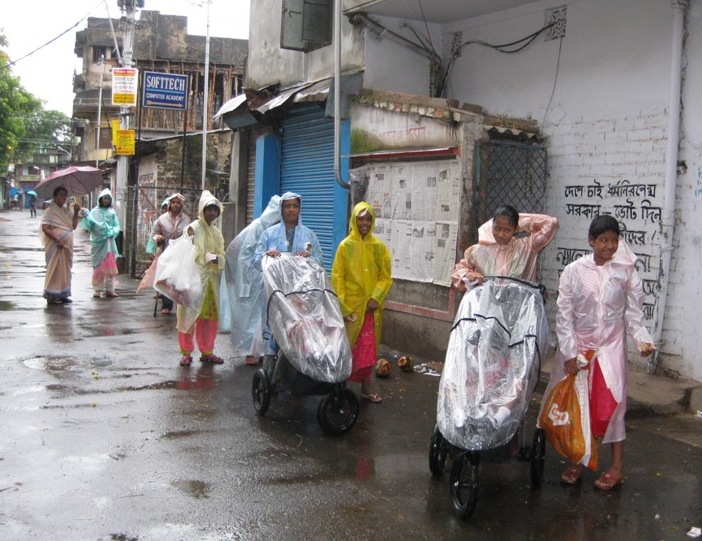
The next morning we all went to school in the rain.

IMG_0328

Ganga and Bornali go in their runner's strollers.

IMG_0347

The teachers sing for the students.  The students give flowers and other gifts to the teachers.IMG_0354

Ganga and Bornali watch (well, Ganga watches the camera because she will then insist on seeing the picture).

I shot the pictures of Little Red Riding Hood production as video so I have no stills to post.  After school we returned to Shishur Sevay where after some chaos we started our Teacher's Program.  The chaos was because the girls dutifully washed their costumes because they were wet so we had to totally re-outfit them for the second production of Little Red Riding Hood.  I wish I could say I was calm about it but I wasn't.  I hadn't wanted them to change at all, only the ones in white. But the staff interpreted that as wanting all the clothes washed and the girls totally pitched in to be sure that NO costumes were left unwashed — all in a matter of ab out ten minutes. I think my real reason for upset is that I'd wanted pictures of them in the same costumes to post — the photographer me upset that my shoot had been disturbed.  I do laugh at myself — frequently!

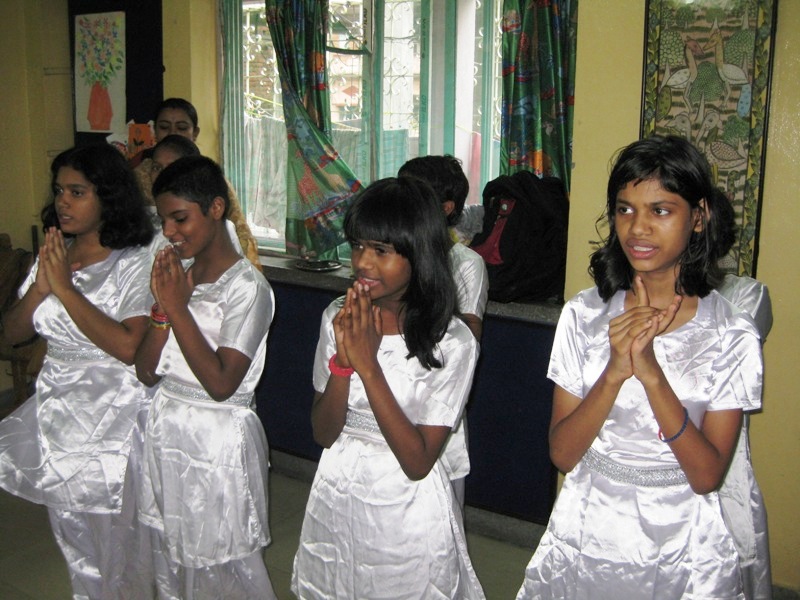
Back at Shishur Sevay the program began with the girls blessing their teachers.IMG_0377 

Then Sonali was prepared for a dance, but she wasn't altogether happy about it.IMG_0403

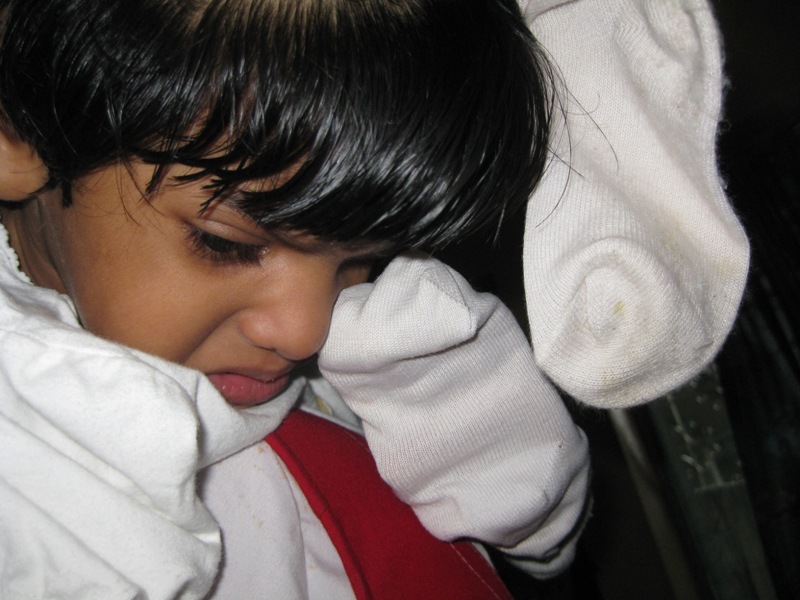
She didn't like socks as ears or socks on her hands as paws.  In fact she really didn't like being a rabbit.  Or, maybe it was just stage fright.  When the music started she rose from the floor and moved gracefully with the song. IMG_0415-crop web

You can see that she has already shed the socks on her hands. But in the end she was very happy with her performance and promised to do it again.  Her one request is that she not have socks on her hands because in case of emotional emergency she can't get her two thumbs into her mouth quickly enough.  We have agreed, so expect to see more performances from her, and the others. IMG_0411

The performance by all twelve is only on video.  Little Red Riding Hood as performed at Shishur Sevay is also mostly on video.  But the Shishur Sevay Players are an enthusiastic group, as you can see from the intense interest of the audience. 

IMG_0423

One day I will figure out how to get video into this too.  But stay tuned for the eventual further performances of the Shishur Sevay Players. 


Previous Older Entries Next Newer Entries

August 2026
S M T W T F S
 1
2345678
9101112131415
16171819202122
23242526272829
3031