A “South American” Fable

I posted the following on FB today.  Mostly I think of FB where I try out some ideas and don’t work hard to formulate full and reasoned thoughts.  But lots of people liked my spontaneous writing, and I used to do it more on the blog, so i thought I’d talk about today, what’s on my mind.  here is what I posted on FB:

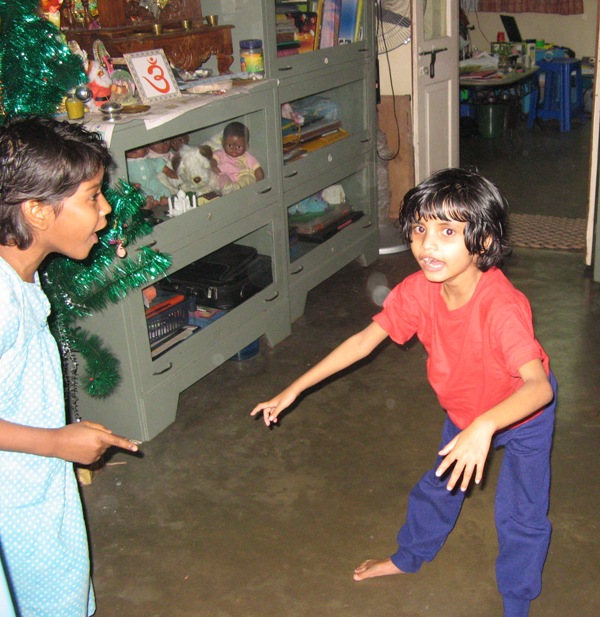
special moments… the girls come home from school and Jelly, our dog sneaks in with them as they come in the doorway. They laugh, scold her, and try to carry her out as she wiggles. ordinary life, what they need the most, and what I enjoy the most.

So that made me think about what a really “normal” family we are, just that there are lots of us, and I am a single mom, as I was before.  But I have lots of help.  That’s a major difference.  And when the girls come in, and the dog slips in with them, it feels as normal as my life ever did.  It’s late now, and the girls are giggling at the supper table.  We are eating in shifts some days now because the girls are in three different schools with different hours, and now since the trouble at school, four also go out in the evening for “tuition.”  The ones who go to school all day have rice for breakfast to fill them.  But by the time they eat, two others have already left for school at 6:15.  Harmonium and singing practice start at 6:15 am, and then studies with Seema Di from 6:45-8.  And the day goes on this way, with kids coming and going (always accompanied when they are out) and teachers coming for individual girls who are here at different hours.  Gibi comes and monitors some of the classroom work, and goes for the afternoon pick-up.  She usually leaves after prathana at 6pm. Three special educators teach the girls with disabilities from 9 am to 1.  Another comes at five to work with Ganga on computer.  Today I told the teachers that I want more content in the teaching for Ganga and Bornali.  I”ve started a new academic effort for Ganga.  She is probably more motivated to learn than ANY of the 12 girls but her inability to speak makes people think she is a little child.  I think I’ve written this before.  It’s on my mind a lot.

OK, there IS something on my mind that is not safe for me to write about.  It is every parent’s fear that a negative encounter with a school will result in punishment or expulsion of their children.  Therefore I cannot talk about what is on my mind.  But suddenly today, I found in my head a make-believe-story, that like TV shows, carries a disclaimer that it bears NO RESEMBLANCE to any situation or people it might resemble.  Got it?  This is NOT a true story!  This story has absolutely nothing to do with any events here.  It is only coincidental that I thought of it today.

Once upon a time in a big city in a South American country (unnamed) there were five orphan girls who had learned a lot and came to be admitted to a fine school!  This was a school very proud of its values of generosity and the King of the school was very happy to have five orphan girls there.  Everyone was happy until one day the  North American Lady who was a mother to the children had a dream that there was no water in the school for when the children went to the bathroom.  The NA Lady thought her dream was true!  So she went to the school to see if her dream was real!  But even after the King explained that they used invisible water and showed her the invisible water, she continued to believe no water was there!  A crowd of teachers came and stood around her.  Everyone showed her how they washed in the invisible water. 

They said, “We cannot see God, but we know He is there.  We cannot feel the water…,”  but before they could finish the NA Lady called out, “..BECAUSE IT IS NOT THERE!!!!”  She could not feel the water and could not lie.  She even could feel God, but she still could not feel the water at the school!!!!! The King was shocked speechless!

The King could not forgive her, and carried a vendetta deep in his heart.  So sometimes he did mean things to the orphan children.  He tried to shame them.  But the children would not be shamed because they knew in their hearts that when water cannot be felt or seen, it is not there.  And they were proud too, because their mother’s dreams were true, and the children had come to love hearing about her dreams, even if they caused trouble at school.

And they all lived happily ever after.

You see, they were just a typical normal family with a stay-at- home mother who sometimes made trouble at the school. 
Ganga’s Disability Story… and other matters of the day

Ganga’s Disability Story (click to open)

I am trying to put Widgit ©symbol language into the website that is being developed, and this blog.  It looks like I may not be able to do it in the blog.  But I was able to link a pdf file to the blog and it seems to work.

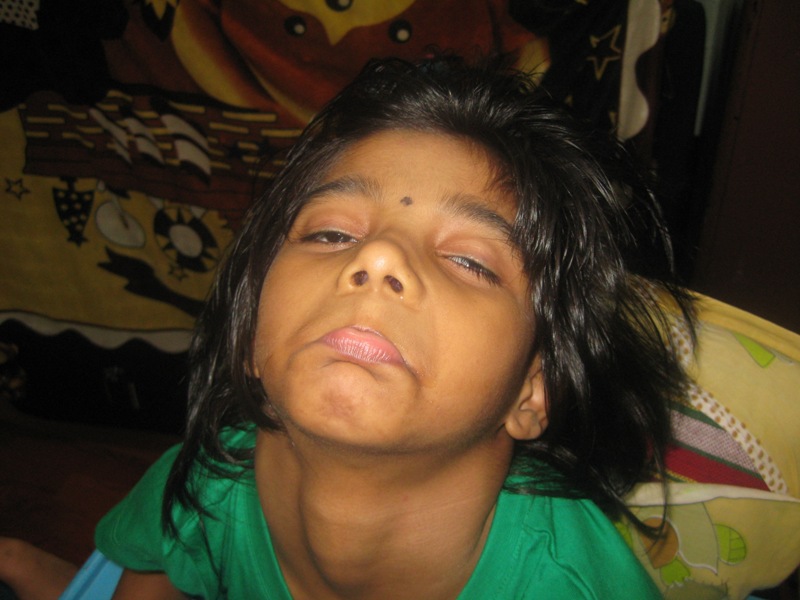
Ganga knows she has a disability.  In fact she knows she has CP, or at least she recognizes anyone else with CP.  I know from living and working with her, that sometimes she is very upset that she cannot do what other children can.  It is compounded by her constantly being seen in terms of her disability rather than her intellect.  The world of children, people, with disabilities easily becomes the world of caretakers.  The children sit and listen but cannot talk to each other, nor can they have any influence over the discussion.  Ganga wants to be with the older girls.  She wants to study with them, listen to their teachers, make comments, and even sometimes be naughty like the others.  I founded this home.  I live here.  I hire the teachers, but still it is hard to make this happen.  Ganga is happy with someone reading to her from an encyclopedia but she is often left with the group doing nursery rhymes.  I keep trying to find teachers for her, but also trying to balance a situation where some people think I’m out of my mind and imagining her intellect.  I’m writing this because it MUST be familiar to others.  Most of our struggles are fundamentally quite similar, wherever we are.

Ganga is learning to use a head pointer on the computer.   I am short of people who can teach or use computers.  Today the special educator was using a real mouse with a child with CP, simply taking her hand and pressing the mouse.  I hooked up the switches (I’m the IT dept here too) but then had to stop the teacher from hitting the switch.  You have to give the kids time to respond.

The rest of the day was spent dealing with a new crisis with the older girls.  They had begun receiving tutoring (called tuition here) in their school after it let out.  It’s a common practice.  But it seems the principal has forbidden the teacher to teach our children so we had to make other arrangements.  I can’t say more.  I don’t want the kids kicked out because mom says too much.  But if India is serious about corruption, it should start with the educational system which (in my opinion) is far more corrupt than the government and far more serious as the minds and futures of the children are at stake.  And it teaches children very early about the power of money and influence.

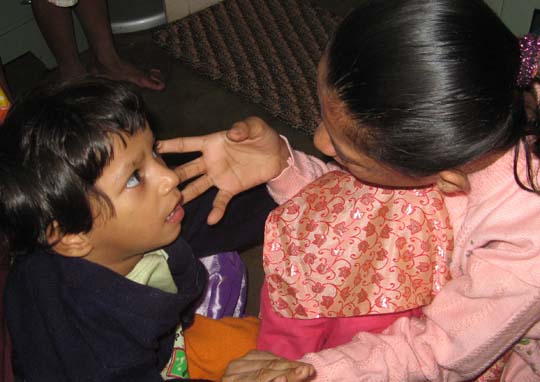
Ganga looks up to her Didi with CP

Ganga looks up to her Didi with CP

Here is the link again to the disability story I wrote for Ganga: Ganga’s Disability Story (click to open if you didn’t before)

It’s 11 at night here and I’m just going to post this and go to sleep.

(Widgit Software a product of www.widgit.com; ©)

The Children — Their Origins

This post is yet another part of the website content.  I seem to do better when I’m writing for immediate release.  If I just put it in a folder I am forever going back to it.  My website developer won’t take things in parts.  They are waiting for the full package from me.  So bit by bit I do it, in my spare time.   The website will be connected to the blog, or rather the reverse.  This process also puts everything into html and labels the photos — all in all, a process that seems to work. 
 
Soon I will also get back to reporting on day-to-day life here, which goes on with its highs and lows of any household of 12 children.   From time to time the girls will be writing and reporting.  They have each chosen “pen names.”
 

Sukanya Government Home for Lost and Abandoned Children

 All twelve orphan girls arrived at Shishur Sevay in February 2007. All came from Sukanya Home, the Government of West Bengal institution for abandoned and lost children.  All came by Order of the Child Welfare Committee as established by the Juvenile Justice (Care and Protection of Children) Act, 2000 (Act No. 56 of 2000).  This is significant as the Government of West Bengal has a more rigorous screening and inspection system of approval for homes that will care for children who are in government custody as true orphans. 

Within the first month, the following became clear:

  • The children were in need of immediate medical and dental care as well as immunizations. One child arrived with malaria; another had open sores all over her body. Several required immediate tooth extractions.
  • The children had all seen a lot of violence, murder, suicide, and had experienced all forms of abuse. They were at times tearful and fearful. They had no reason to believe that Shishur Sevay would be any different from places they had been before.
  • Education, in basic skills of language and math, was an emergency if they were to eventually move into formal schooling.  The girls arrived with NO previous schooling and did not know numbers or alphabets in Bengali; they did not know colors or shapes in Bengali, and did not recognize the map of India. Their Bengali was the vernacular of the illiterate.
  • The children did not understand HOW to study and learn, so these skills and disciplines had to be taught alongside the basic skills. Sitting still was a challenge for them.  The children were energetic and enthusiastic about learning. This was also clear from the beginning. They actually knew what they had missed and threw themselves into the work.
  • The children with disabilities were listless and non-communicative when they arrived. They had little control of their heads and limbs. One would just spin in circles; another would bite anyone or anything within range of her mouth. It was unclear as to what they might eventually be able to do.  Our initial focus was on feeding and holding. Their diets had been primarily gruel of some sort; all were small and thin.
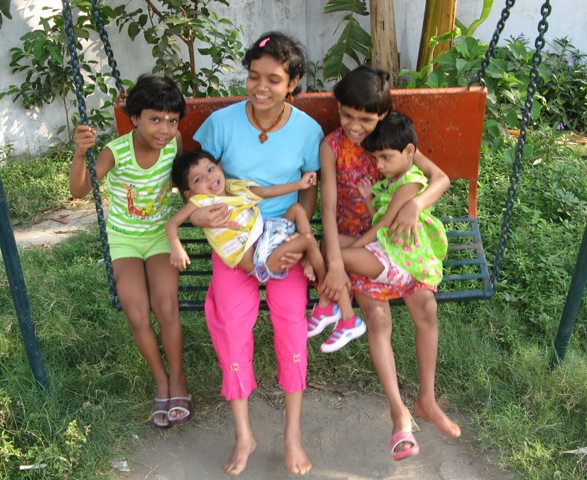
  • A strong and caring relationship between the older girls and the children with disabilities became evident very soon. The older children began tending to the disabled children, holding them, and talking about their own lost families and siblings. Those relationships have become even stronger and more important over time.


The Children With Disabilities — Their Stories

 A society’s treatment of its most vulnerable population, children, people with mental disabilities, people with physical disabilities …. these are all an expression of a society’s view of human life and its worth.   What makes a life worth saving? 

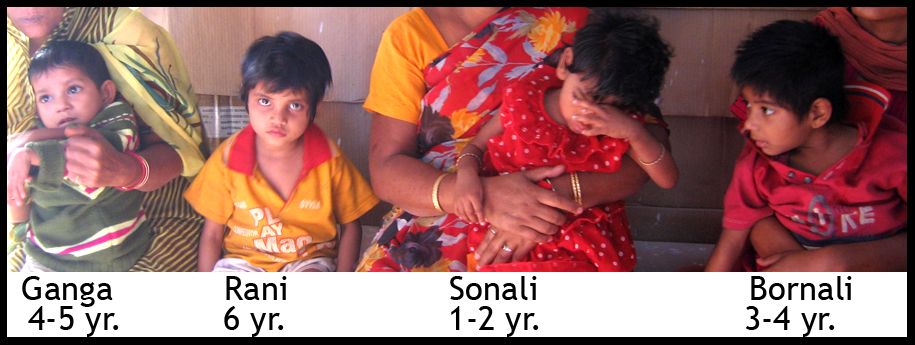
February 2007: The Four Little Ones We Couldn't Leave Behind

Shishur Sevay’s position is that all children deserve an education, whether or not she will ever achieve independence.  The decision is to feed their brains as we feed their bodies.  The education is designed to impart knowledge and skills.  Equally important is developing ways the children can communicate their feelings and needs to us. We want to know what THEY want to tell US as much as what we think they should know.
    
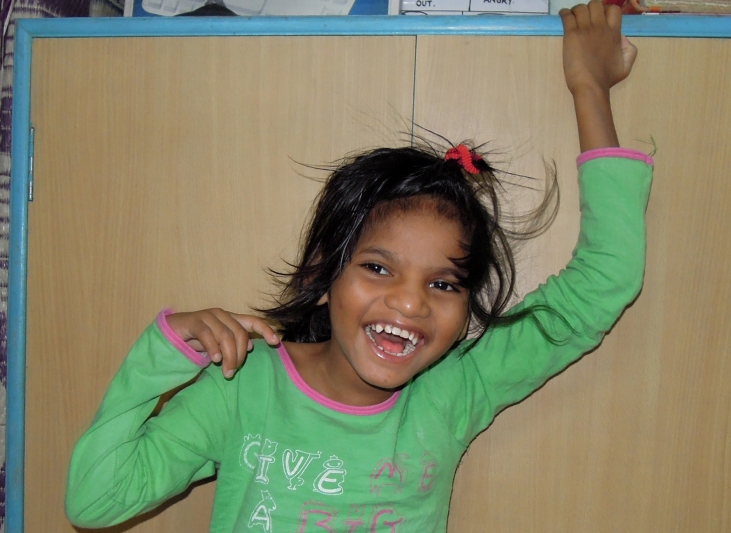
They can tell us when they are happy.
 
Pure Joy
Sonali — Pure Joy


When they are sad…
  
She tells us she is sad

Bornali Tells Us She is Sad


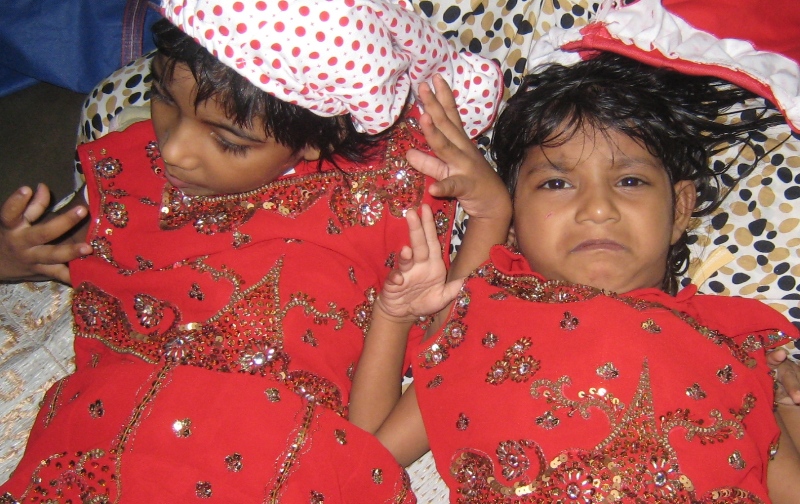
Ganga is Jealous; Bornali is wearing the SAME dress!


But they cannot tell us what they are thinking… what worries them of makes them smile.  They cannot tell us what they dreamed the night before.
  
RANI’S STORY
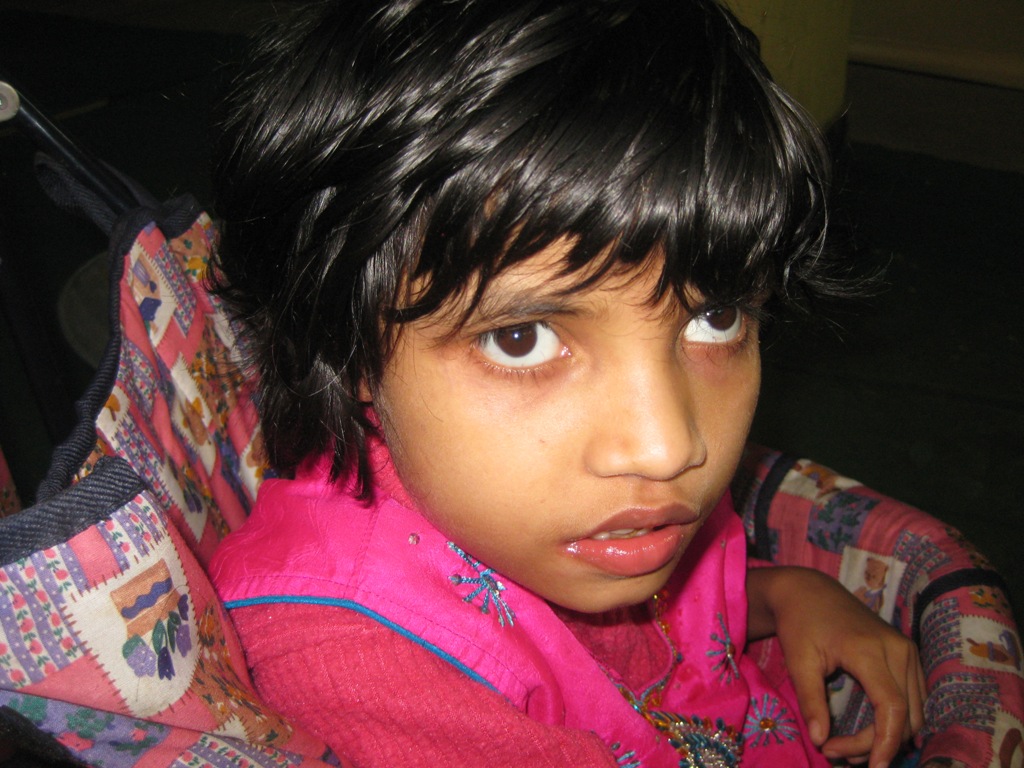
What is she thinking?

What is she thinking? What does she need?

  
The older girl had encouraged and encouraged Rani to stand and then one day she could stant!

I'm Standing!

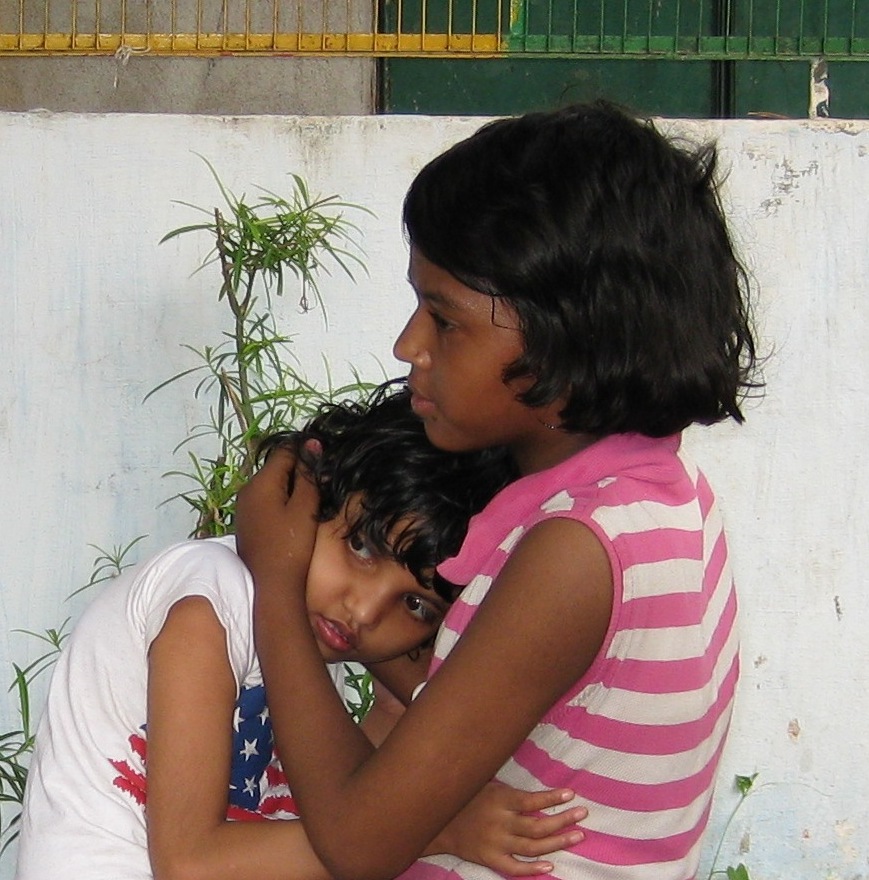
This is Rani standing on her own for the first time, thanks to being urged on..   The older girl said to us later, “I had a little sister and I taught her to stand like that..”  They have a special bond. 

 
Sisters

Sisters


When Rani came she didn’t make eye contact.  She mostly wanted to spin in circles, bang her head, hit, bite, scream, and indulge in very bad social habits.  Keeping her safe and clean required a full time childcare worker.

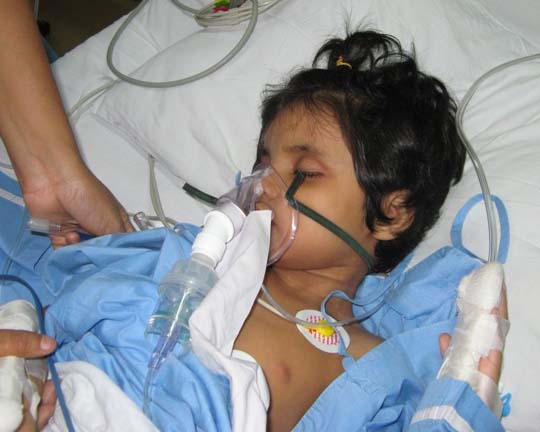
Rani had two serious hospitalizations in 2008 and 2009 for seizures.  Her encephalopathy, has improved over time, evidenced in her behavior and confirmed by her EEG.

Rani_1106

Rani in PICU

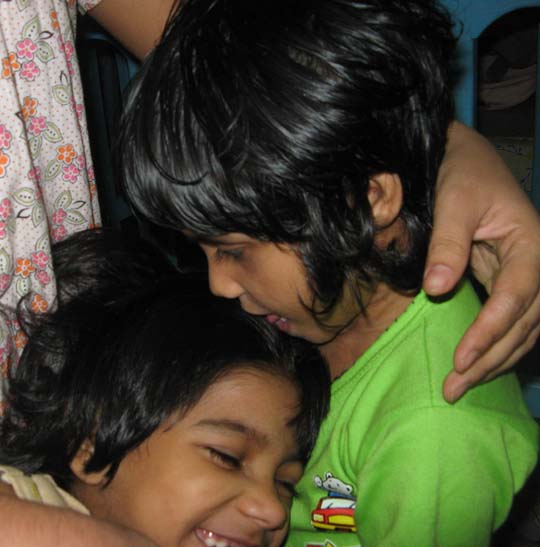
 Rani is affectionate.

Rani and Bornali when Rani came home from the hospital.


Rani goes out to the bus stop each morning with the school girls.    The other children and their mothers love seeing her.  They talk to her, take her hands, and all the children wave to her as they get on the bus.  Rani is part of our lives, part of the life of our community, and Rani has a life.   Rani is “differently abled” but then everyone is really a bit differently abled.

Diamonds have sparkles –
Imperfections that name them,
One diamond, one soul.
 
                                                                             michelle harrison


Previous Older Entries Next Newer Entries

August 2026
S M T W T F S
 1
2345678
9101112131415
16171819202122
23242526272829
3031