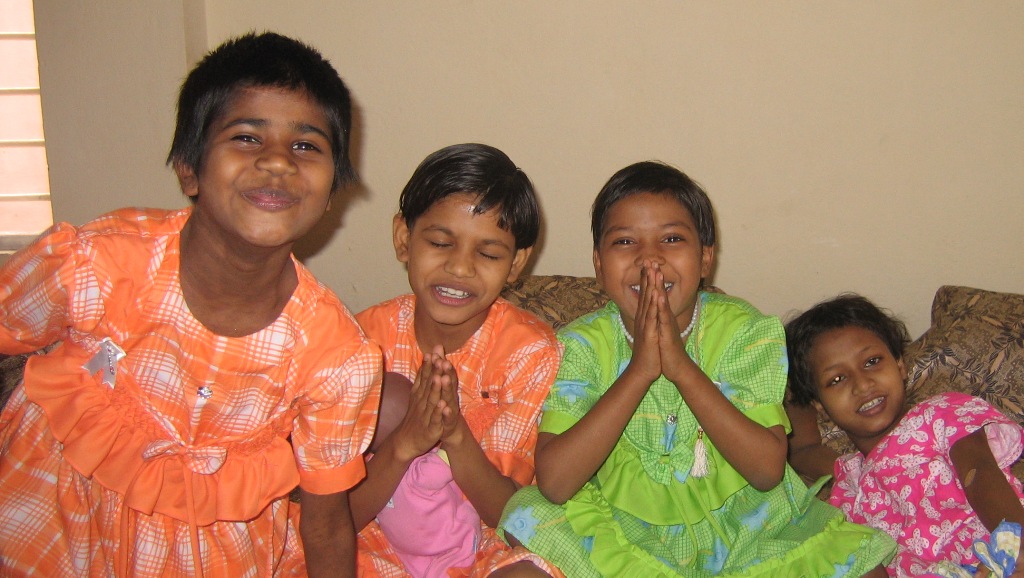
The Children: 2007


(More for the website — work in progress)

The Children

2007

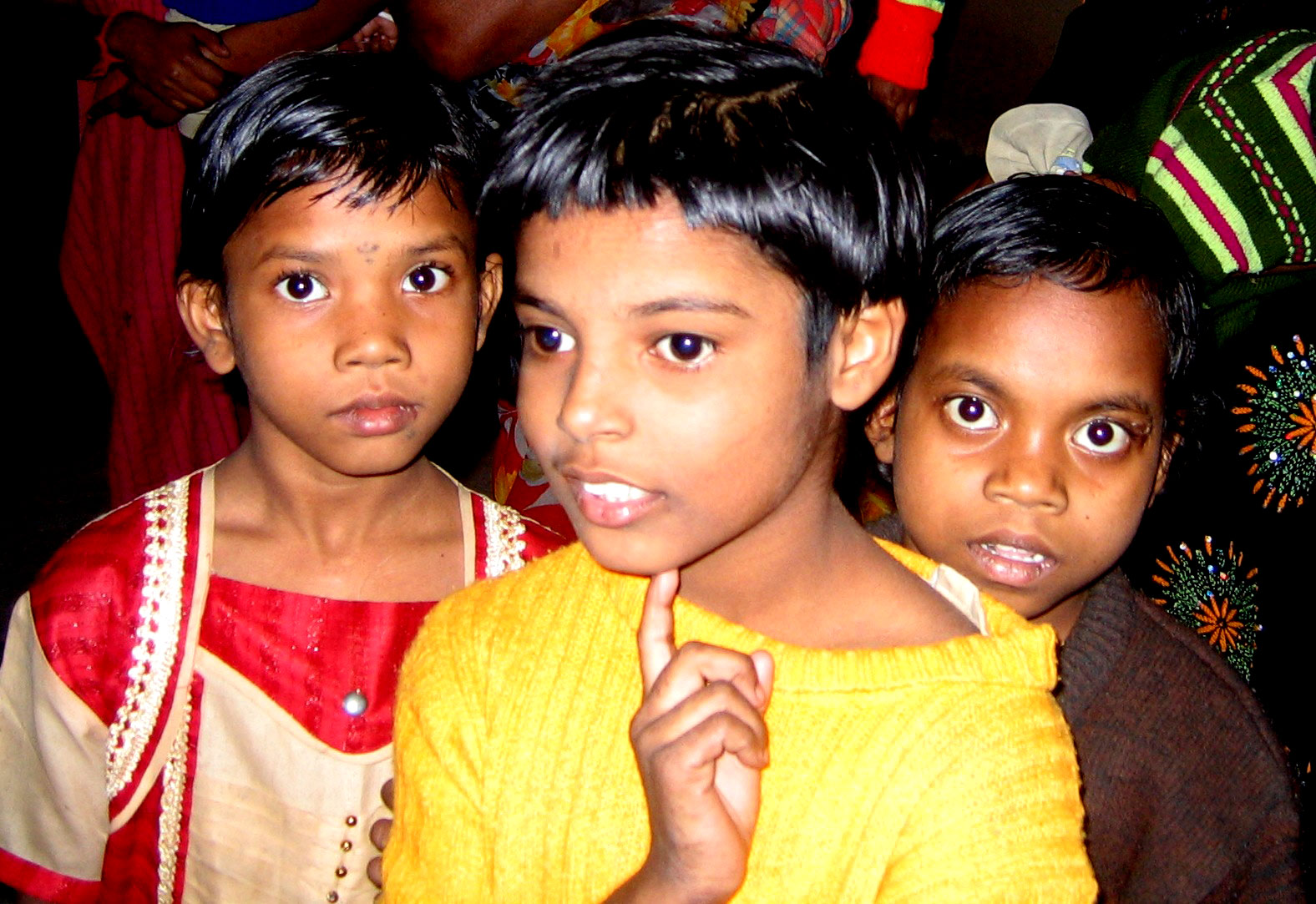
Twelve orphan girls

The Night We Brought Them Home

Four of the twelve with profound disabilities 

All with social and emotional deprivation

All from a government institution for orphans and abandoned children

The original plan did not include children with disabilities, a true oversight.  But when we went to pick up the others, the government asked us to consider these additional four.  We said yes immediately!

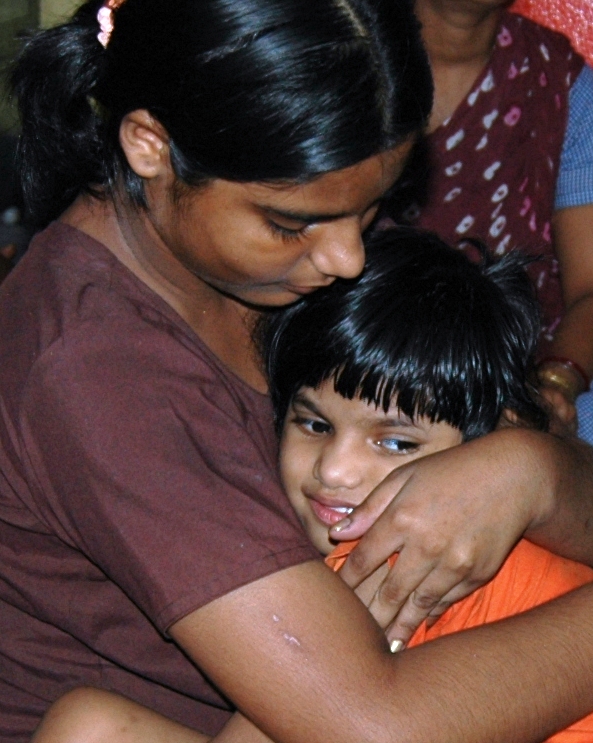
 This decision to also accept these four changed the nature of the home in a very exciting way. The two groups needed each other.  They needed to love and be loved, to accept and be accepted unconditionally, in a way children are more able to give than adults.   

They Needed Each Other

Serendipity created a template for emotional stability, a home of mixed abilities that mirrors our Vision of a society accepting of mixed abilities. 

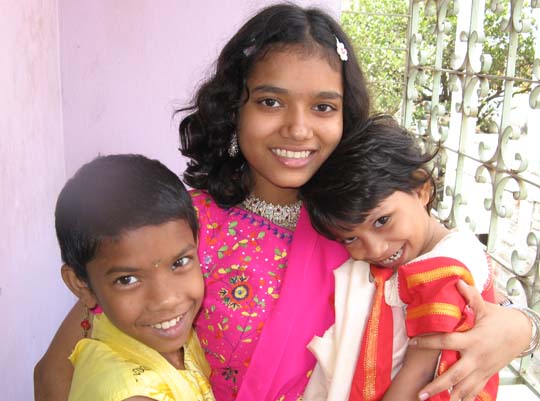
They Are Sisters

The Children — Their Futures

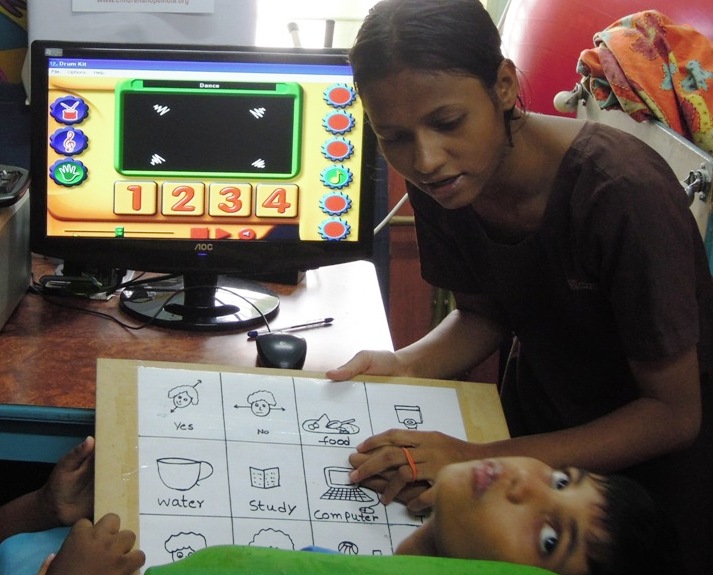
(Preface: The symbols used in this post are from Widgit, a symbolic language for people who have difficulty with reading.  At Shishur Sevay we use it to communicate with our children who are language impaired.  As one types a word, the symbol appears, as well as a voice of the letters and the word, or a sentence is that is what has been written.  Our website, www.shishursevay.org, still under construction, will be accessible for hearing impaired, visually impaired, and the addition of Widgit for language impairment.  We have obtained all the necessary licenses, and as usual, I am the hold up in getting content to the web people.  My hats runneth over.  One day I will be able to blog that in Widgit. This post will be a page in the website.)

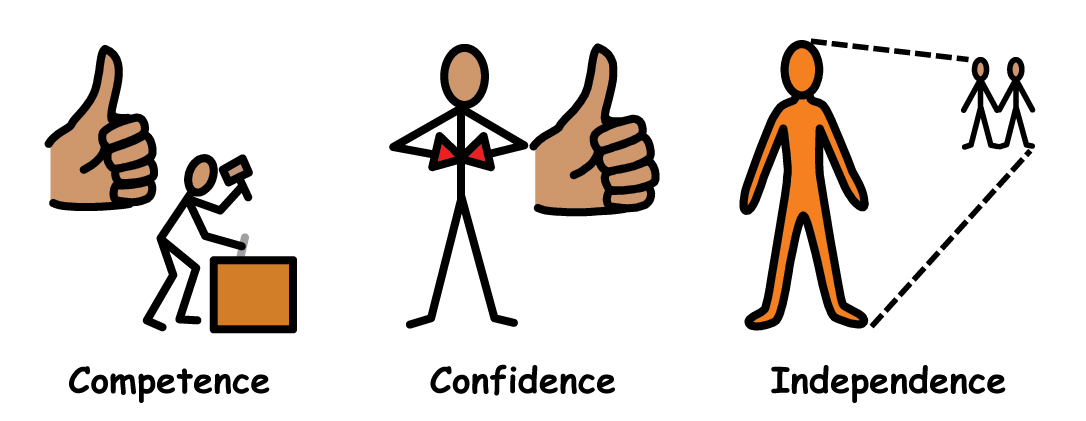
 Shishur Sevay is envisioned as the “Mother House” of the girls. Consistent with Indian tradition, we will give them in marriage if they wish, and we will celebrate their husbands on Jamai Shasthi. Shishur Sevay is the home in which they grew up.  Some may leave to get married; some may leave to work and have independent lives; some may work and come home to mother house; some may stay and take care of children at Shishur Sevay.  Our goal is for them to be employable, marriageable, and able to achieve success, independence, security, and happiness.  From our mission statement: Competence, Confidence, and Independence.

Competnece, Confidence, and Independence

 Among the girls, the futures they want include teaching, dancing, becoming a doctor, a scientist, a mathematician, orphanage director, childcare worker, wife, mother —

 Some of the girls have already expressed a commitment to their younger sisters with disabilities.  One girl was asked what she wanted to do in the future.  She responded, “Well, I have four sisters to take care of, so I want to have a good job.”

 The goal of Shishur Sevay is to stretch the boundaries of expectations for orphans, particularly girl orphans who started their education late, i.e. Late Learners.  Therefore their futures will be shaped by what we and they are able to accomplish.

 Our girls who have not been able to move forward in school are being given vocational training in care of children with disabilities so they can become assistants to special educators, and/or skilled caretakers of children with disabilities.  That is the focus on capabilities, finding what they can do.

Their hopes for their futures 


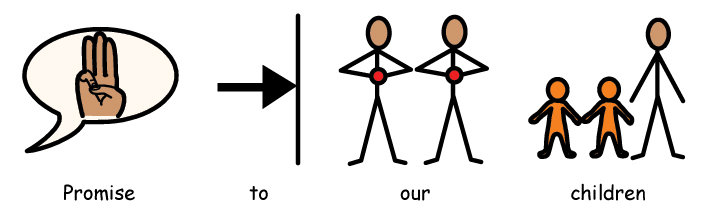
The children with disabilities, the four youngest, will never live independently.  They will most likely remain at Shishur Sevay, even as Shishur Sevay evolves and re-defines itself over time, a natural process.  We have promised we will never separate the big girls from their younger sisters, and they have pledged their commitment to their younger sisters.  These discussions came up in the context of adoption.  We are not an adoption home, but at times people have asked about adoption.  We will not break up this family.  This is our promise to our children.

Our Promise to Our Children


Widgit Symbols (c) copyright Widgit Software 2011  http://www.widgit.com


The Children — Their Education

The Children – Their Education

If we really try our best with these girls,

how far can we bring them?  

The Frame of Reference:  A family where education is valued.

The Model: Asian education principles of discipline, hard work, study full-time, with few vacations, and holding students to a high standard. 

The Methods:  Use every strategy to get the child to learn: Tutors, special educators, rewards, praise,  punishments (except corporal punishment or denial of food), yelling, never accepting that the child will not study.  The child cannot opt out.  At Shishur Sevay everyone studies; everyone learns – a little or a lot.  We will never stop trying.  The education may be academic or vocational but the same principles apply, as those are the principles for an independent life with some amount of self-determination  and choices.

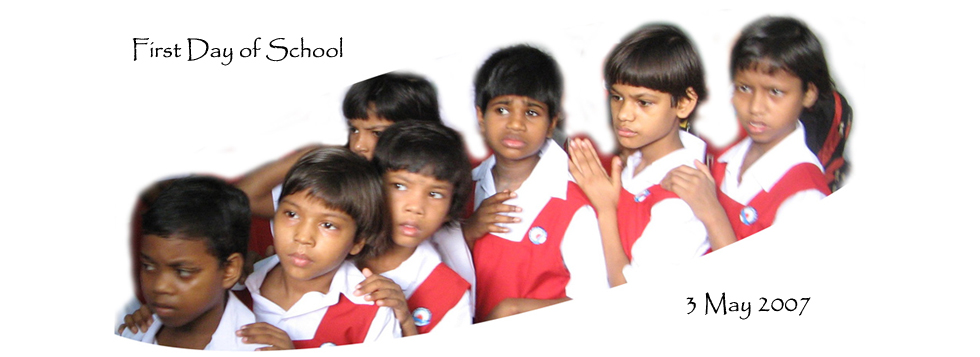
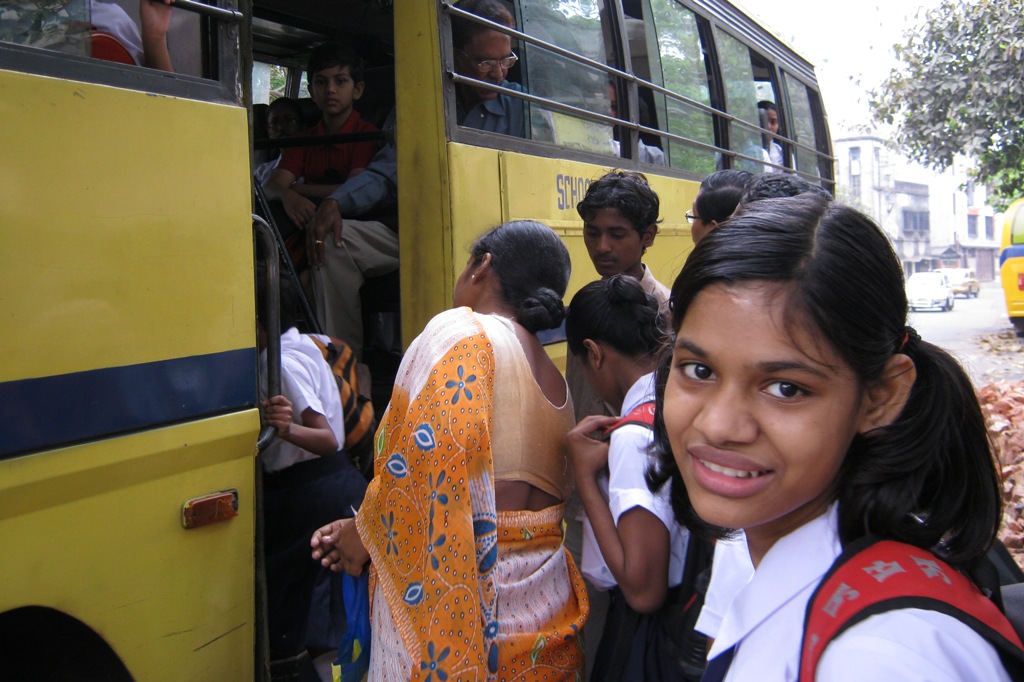
We planned to educate the girls at home for a year, but they desperately wanted to walk to school each morning like children they had so often seen and envied.  They wanted to dress in the uniform of social acceptance, white blouse, tunic, patent leather shoes, white socks, clips and ribbons in their hair, backpacks slung across their backs…  They were actually terrified at first, but they wanted to go in spite of their fears.  They just wanted to be “regular.”

The girls came in February; school started in May, and by then, just three months after their arrival, the girls had mastered enough to be admitted to Class I at Sahapur Sabitri Balika Vidyalaya,  the local government primary school. They had learned the alphabet, numbers, colors, shapes, and the map of India! 


The first day of school

They were scared but determined.

At home, Shishur Sevay resembled an Academy as much as an orphanage. After school, classes were held in the classroom six days a week from 11 am to 6 pm on school days, and from 8 am to 6 pm on weekends and holidays. In the evening, the girls had classical dance the weekend.  They had drawing and sometimes mime on Sunday mornings.  A homework teacher was with them until 8:30 pm.
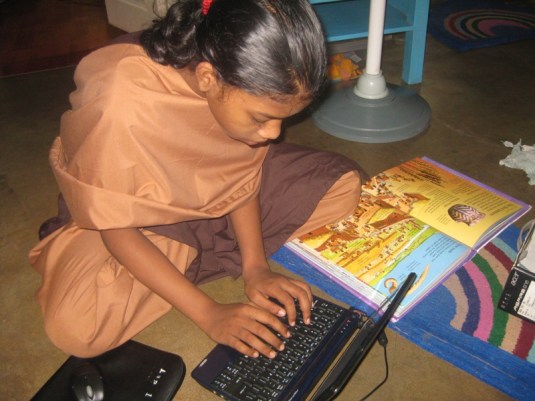
Eager to learn from all sources; eager to learn all skills

Serious Study

Sometimes the girls needed a great deal of support.  They constantly said, “I can’t do this,” and then with a gentle nudge, or a yell, they did it.    But the teachers rarely challenged them.  The Asian Method of holding high standards was very difficult to maintain.  More than one teacher simply said, “‘These children cannot learn.”

Most of the girls have done well in school.  We have had some “first in class” in academics, sports winners, handwriting winners, and of course the girls have done well in dance at school and community celebrations.  We’ve had some girls who required school at home because of learning disabilities and behaviors.
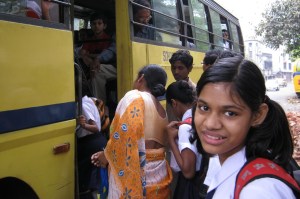
getting on the schoolbus in the morning

Riding a school bus -- regular

Four girls are now in Class V attending a private Bengali Medium School, having passed admission exams for more than one school.

One girl is still at Sabitri School and will finish Class IV in January 2012   She spent several years trying her best not to learn, but seems to have turned a corner.  Sometimes it just happens that way.

One girl is at Sabitri Secondary School in Class V.   She really needed to be in a less stressful academic situation, although she is quite intelligent.

One girl is being educated at Shishur Sevay as she transitions from Bengali Medium to English Medium education.  Her education was impeded by her behavioral difficulties but she has been working well for a while.  She will also be enrolled in the Open Basic Education program of the National Indian Open School.
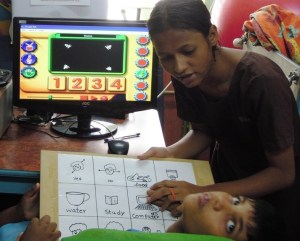
Focus on Competencies

Learning by Teaching; No one is left out.

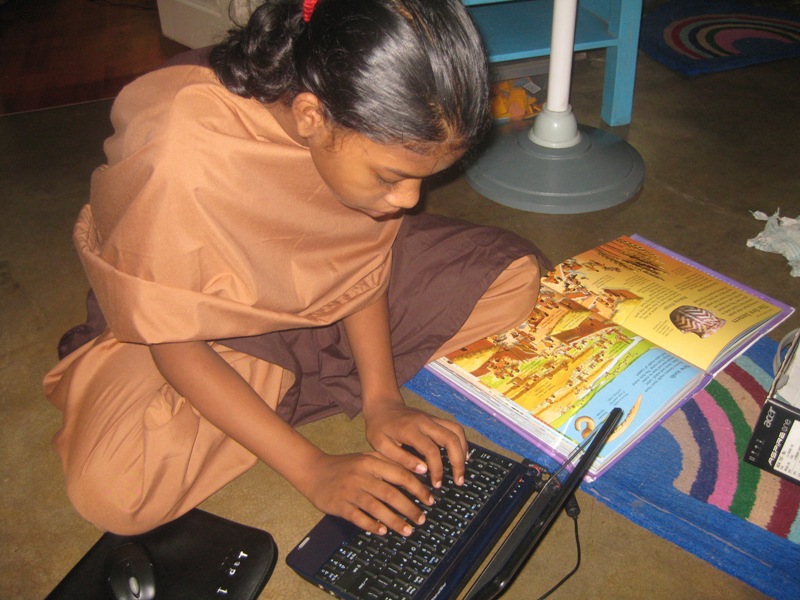
One girl has severe dyslexia and after changing schools and working with a learning disabilities specialist, she is in training at Shishur Sevay as an assistant to the Special educators.  She is learning by teaching and should be employable in some capacity working with children with disabilities.  She manages some of the computer teaching for the children with disabilities.

Education for the Children with Disabilities (Link to come)

Twelve Measures of Success – 1. COMPASSION

I’m working on a website for Shishur Sevay.   I’m trying out words and ideas, thinking about what we are doing and how best to communicate.  So I’ll use this blog to try out ideas and content, pictures… and I’m happy for feedback.

I was asking myself how I want to measure success.    So I came up with a list of what I thought important, and here it is, in alphabetical order.

Twelve  Girls

Twelve Measures of Success


      I.      Compassion

    II.      Confidence

   III.      Curiosity

   IV.      Discipline

      V.      Education

   VI.      Health

VII.      Heritage

VIII.      Love

 IX.      Respect

   X.      Responsibility

   XI.      Security

 XII.      Vision

Compassion

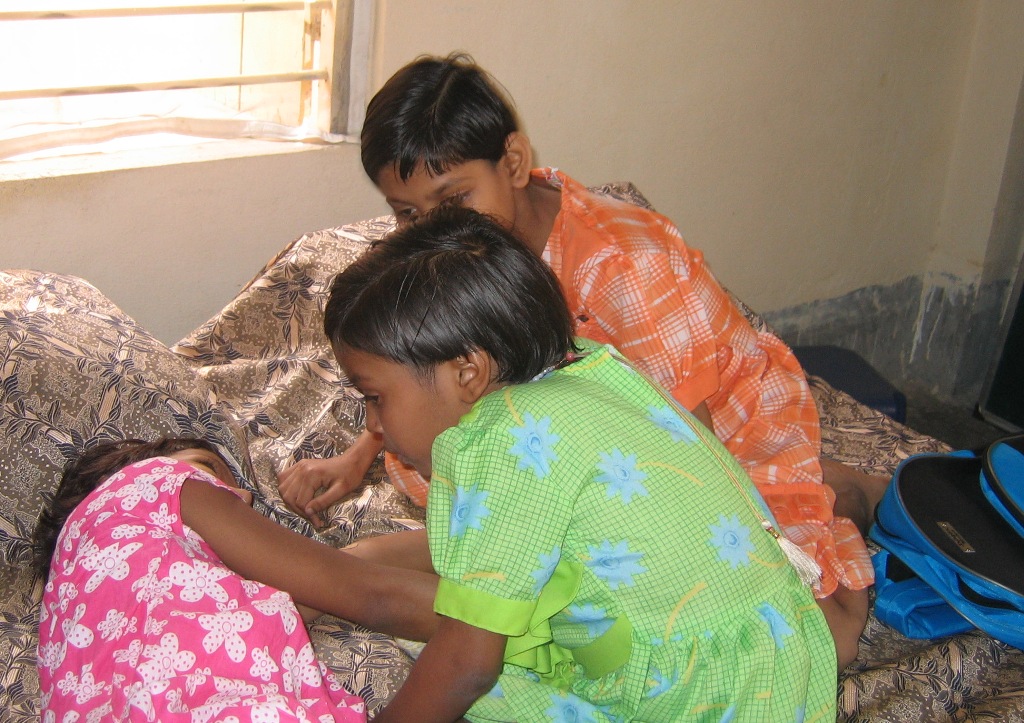
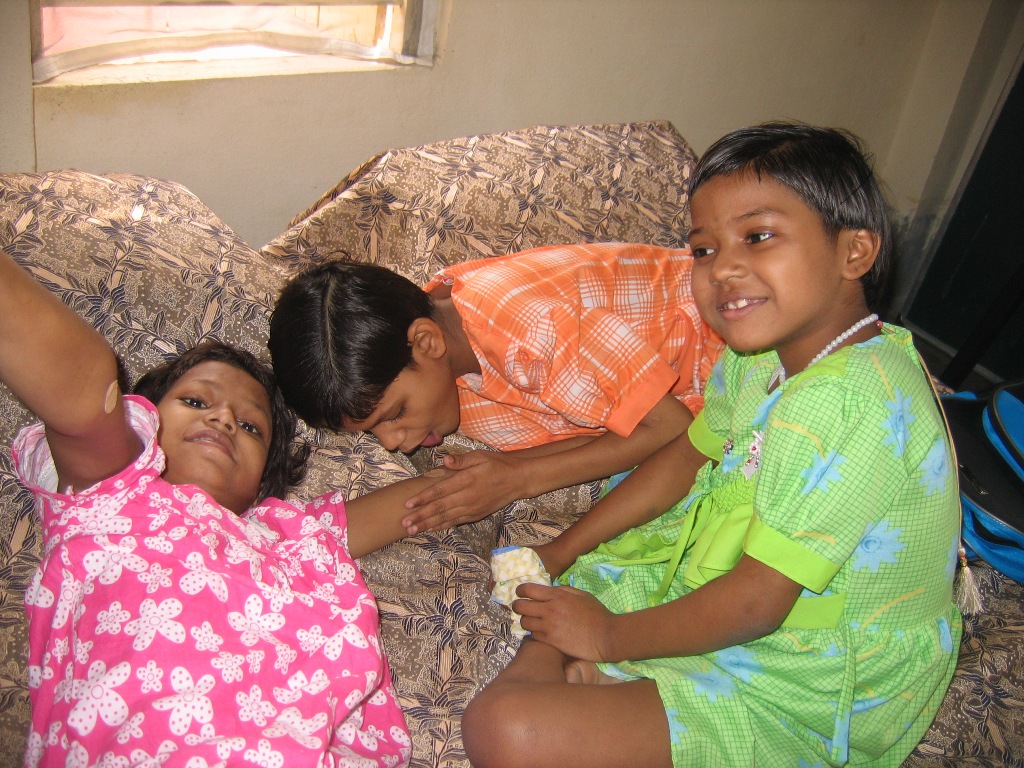
Softly blowing where the blood test had been taken

The girls arrived in February 2007.  One girl came with Malaria, and high fevers that had us cooling her body night after night.  We took blood tests which confirmed the diagnosis, and started her on a full course of medicine.  The day she had her blood tests, and came home, I saw the following:

COMPASSIONATE KIDS

The girls were used to taking care of her, as she had been suffering in the institution.  It was their job to bring her meals when she was not well enough to go to the lunch room.


Happy kids

We were humbled.  We didn’t need to teach them.  This compassion has not wavered.  Children living on the streets alone learn to take care of each other.  The girls have compassion.  They came with it.  We didn’t have to do anything, except to just let them be themselves and let them know always how proud we were.


Previous Older Entries Next Newer Entries

August 2026
S M T W T F S
 1
2345678
9101112131415
16171819202122
23242526272829
3031